A major development priority is the Next Generation Interceptor, which is designed to strengthen U.S. homeland defense against increasingly sophisticated long-range ballistic missile threats. Lockheed Martin said NGI draws on its missile-intercept experience, strategic defense programs and digital engineering capabilities.
The company is also investing in the sensor and space layers needed to detect and track threats before interception. Its LM400 satellite platform supports missile-warning and tracking architectures, while the Long Range Discrimination Radar is designed to detect and precisely track long-range ballistic missile threats.
Sentinel A4 broadens that sensor coverage to cruise missiles, unmanned aircraft systems, rockets, artillery and mortars. Lockheed Martin’s C2BMC system then combines information from sensors around the world into a common operational picture, with artificial intelligence and machine learning supporting threat prioritization and response coordination.
“The challenge today isn’t simply collecting more data, it’s turning that data into actionable information,” said Paul Lemmo, vice president and general manager, Sensors, Effectors & Mission Systems. “Our ability to integrate sensors, networks and decision-making tools gives commanders the clarity they need to respond to increasingly complex threats.”
Lockheed Martin is pairing those development programs with investment in the industrial capacity needed to move new systems into production. Its Missiles and Fire Control, Rotary and Mission Systems, Space and Aeronautics businesses are working across programs to integrate satellites, radars, software, command-and-control systems and interceptors while improving production efficiency.
“Innovation only matters if you can deliver it,” Lemmo said. “That means investing not only in advanced technologies, but also in the manufacturing capacity, facilities and workforce required to move those capabilities from development into production.”
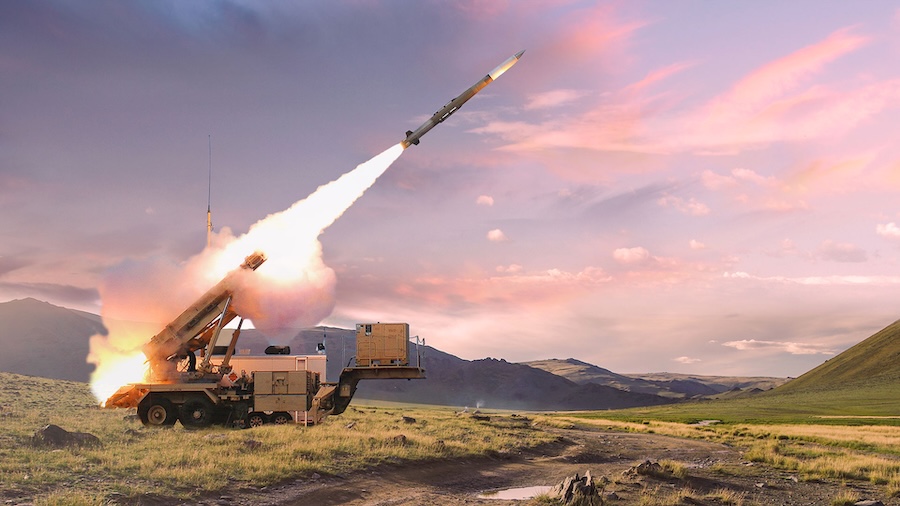
The production strategy also covers existing interceptor programs that form key layers of the company’s missile defense portfolio. PAC-3 Missile Segment Enhancement uses hit-to-kill technology against tactical ballistic missiles, cruise missiles, aircraft and advanced threats including hypersonics, while THAAD is designed to intercept ballistic missiles both inside and outside the Earth’s atmosphere.
“Our customers and the warfighter need confidence in the capabilities protecting them today, not just concepts for tomorrow,” said Jason Reynolds, vice president and general manager, Lockheed Martin Missiles and Fire Control Integrated Air and Missile Defense. “Systems like PAC-3, THAAD and Aegis have demonstrated their value in operational environments and continue to evolve as threats become more advanced.”
Lockheed Martin said its longer-term approach combines development of new technology with continued investment in manufacturing and workforce capacity. The objective is to integrate sensors and interceptors across air, land, sea and space while increasing the company’s ability to move capabilities from development into production.
“The future of missile defense will depend on our ability to innovate, integrate and deliver,” Reynolds said. “By bringing together proven capabilities, new technologies and the strength of our industrial base, we’re helping provide the layered defense architecture our customers need to protect the nation.”
Source: Lockheed Martin.