The exercise comes as the High North takes on greater importance within NATO’s northern defence posture and the wider security of Europe. The RAF said closer operations with allies in the region are becoming increasingly important as threats evolve and place new demands on intelligence and combat capabilities.
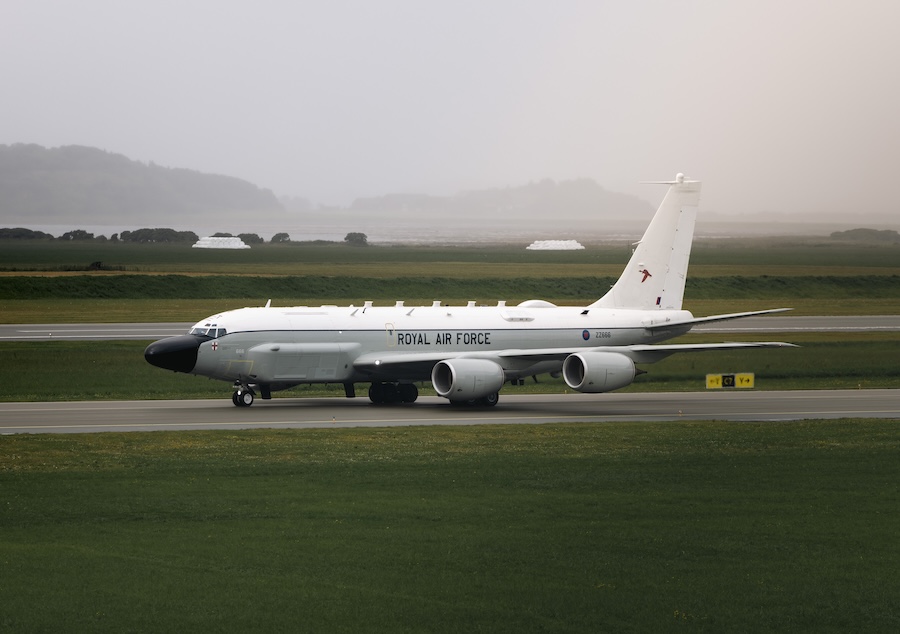
Operated by 51 Squadron, Rivet Joint is a core part of the RAF’s Intelligence, Surveillance, Target Acquisition and Reconnaissance fleet. The aircraft monitors signals across the electromagnetic spectrum to provide commanders with strategic and tactical intelligence in real time.
Aircrew use advanced sensors to intercept and analyse signals while the aircraft is operating. Specialists from No. 54 Signals Unit then process and exploit the intelligence, combining airborne collection with ground-based analysis to improve situational awareness.
The RAF said modern intelligence operations increasingly depend on the ability to collect and analyse several streams of information simultaneously. That approach is intended to give commanders a more complete assessment of the operating environment than can be produced through visual imagery alone.
During Arctic Stone, RAF personnel will train directly with their Royal Norwegian Air Force counterparts. A key objective is to improve interoperability between Rivet Joint and Norway’s F-35A fleet while strengthening the ability of both air forces to operate together.
The deployment is also intended to improve intelligence coverage for senior commanders operating in the region. Information gathered by Rivet Joint will contribute to a broader assessment of the security environment and help inform decisions on how emerging threats should be addressed.
The RAF said joint training of this kind strengthens its ability to operate alongside NATO forces and supports security on the alliance’s northern flank. It also demonstrates the UK’s continued commitment to allied readiness, deterrence and the protection of national interests in the region.
Intelligence-sharing forms a further part of the deployment, giving UK and allied decision-makers access to information collected during operations. The RAF said continued training with NATO partners helps maintain readiness while improving the ability of allied forces to respond to a changing security environment.