
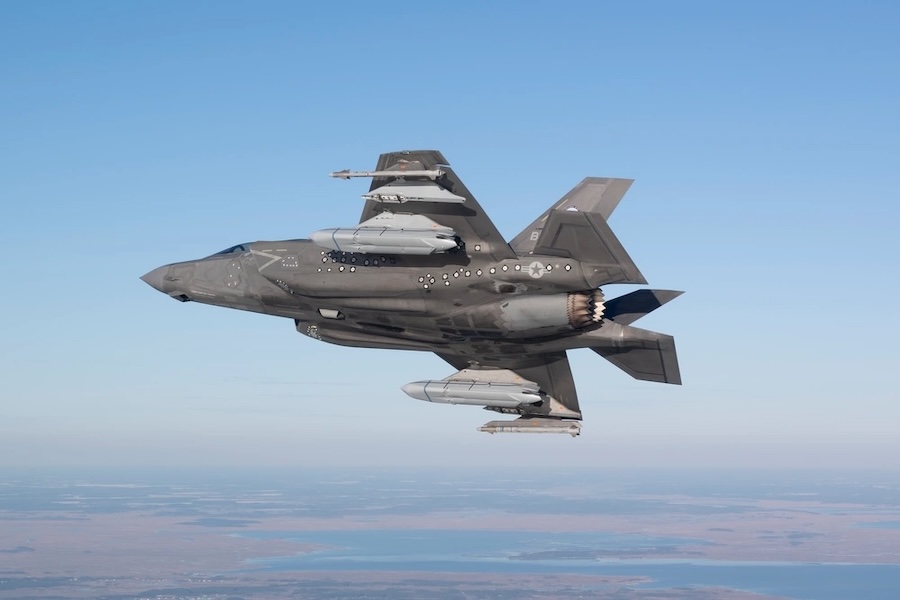
Both subjects came up during U.S. Secretary of State Marco Rubio’s trip to Europe, which took in Iceland, Greece and Portugal. The Greek package was reported after his stop in Athens.
Greece takes Block 70 upgrade to 120 jets
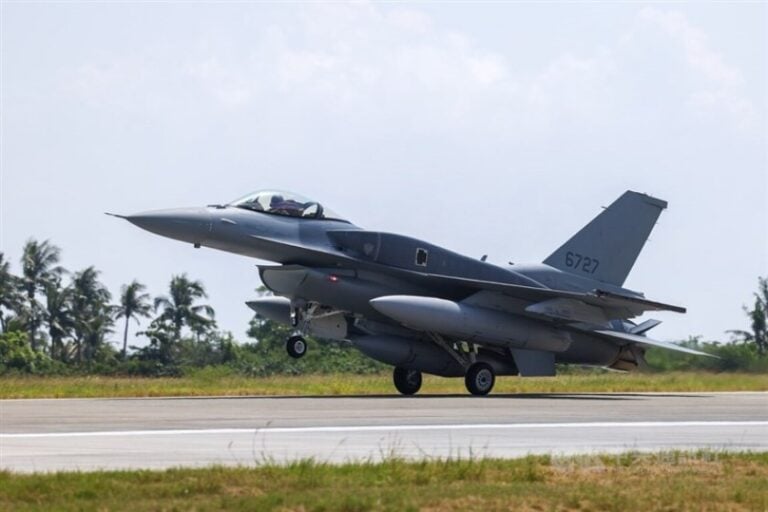
Roughly $1 billion of the money is meant for modernizing 37 F-16 Block 50 aircraft to Block 70. Athens had already ordered the same work on 83 Block 52+ jets, which would take the total to 120.
The handover of the 50th F-16 Block 70 to Greece was reported this spring. The whole program is due to be finished by the end of 2027.
Greece has 152 F-16C/D aircraft in all. Some of the money is set aside to support the older versions.
Weapons that fit both the F-16 and the F-35
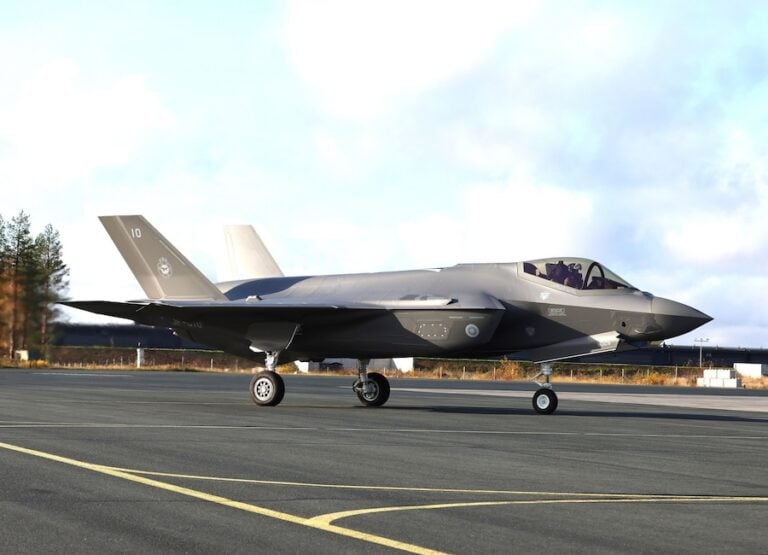
A further $1.2 billion is for air armament, including new missiles and glide bombs. The same weapons can go on the 20 F-35As Greece has on order, which are due to start arriving in 2029.
Another $750 million covers support for MH-60 and Black Hawk helicopters. Those are due to start arriving in Greece next year.
Turkey returns to F-16 talks
The Greek package comes just as Turkey and the United States have resumed talks on modernizing and expanding Ankara’s F-16 fleet. One defense analysis argues that the upgraded Greek jets will have, or already have, much better capabilities than Turkey’s.
It puts that edge down mainly to the new-generation AN/APG-83 SABR radar. Better onboard avionics also play a part, it says.
Portugal: F-35 on the table, no decision yet
In Lisbon, the government is looking at American F-35s to replace the F-16s it flies today. Foreign Minister Paulo Rangel, who met Rubio on Thursday, said no decision on new fighters had been made.
Rubio said the choice was Portugal’s to make. He called the F-35 “the best fighter aircraft in the world, guaranteeing high interoperability.”
The question is not new. Defense Minister Nuno Melo said in March 2025 that “F-16 aircraft are at the end of their life cycle,” adding that Portugal could not ignore the geopolitical environment and had to weigh how predictable its allies were.
Rubio also said Portugal was on track to meet the pledge made at NATO’s Hague summit to spend 5% of GDP on defense by 2035, with 3.5% going to direct military spending. “Countries differ in size, so their contribution will not always be equal,” he said.