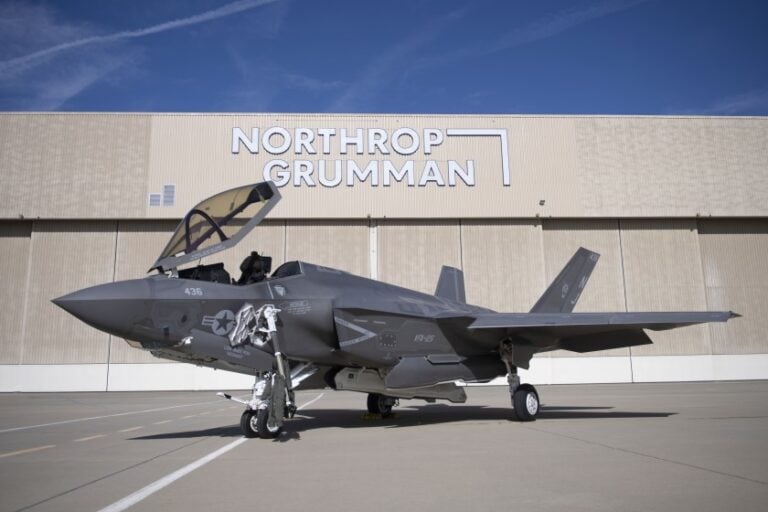
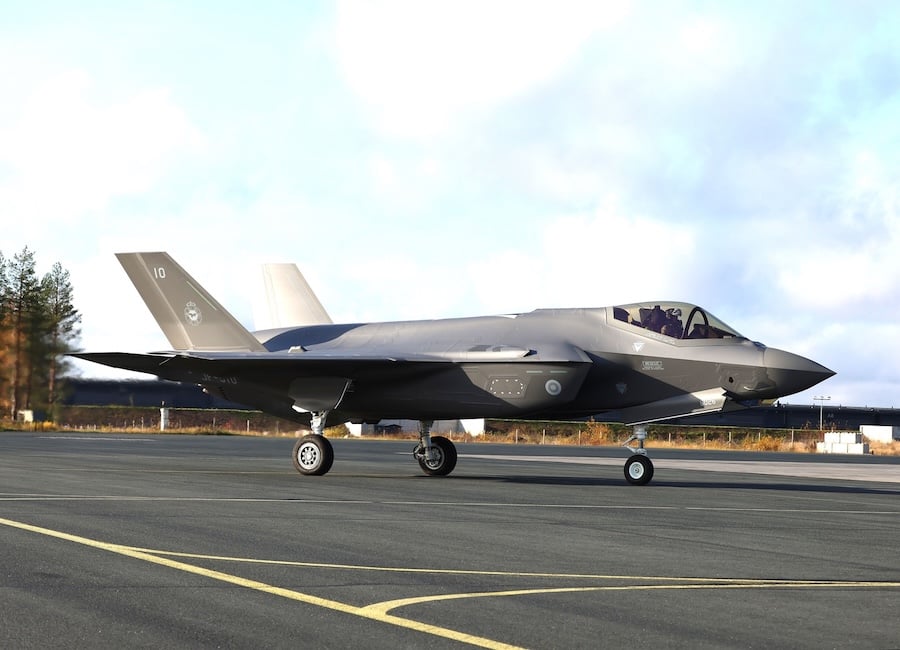
Aircraft JF-510 and JF-512 landed at Rovaniemi Air Base on September 18, 2026. The October ceremony included the first F-35 flight by a Finnish pilot in Finland, flown by Lt. Col. Jaakko Sointu.
Finnish leaders placed the acquisition within the country’s national defence, Arctic security and NATO commitments. The Air Force also stressed that delivery alone does not establish operational readiness.
“Finland getting the F-35 strengthens the transatlantic partnership,” said President Alexander Stubb. “For us, the F-35s are about projecting power, security, and situational awareness in the Arctic.”

“The delivery of F-35s and their integration into Finland’s defence system strengthens both Finland’s and the Alliance’s deterrence and defence,” said Defence Minister Antti Häkkänen. “This capability will have a key role in European, Nordic and especially Finnish security.”
The Finnish Air Force expects the aircraft’s sensors and weapon systems to improve support for other military services and protection of vital societal functions. Its national designation, JF, means “Joint Fighter” and reflects that wider role.
“These aircraft exist so that Finnish airspace remains Finnish, so that deterrence is credible, and so that we can fight, if we must, as part of NATO’s Integrated Air and Missile Defence,” said Air Force Commander Maj. Gen. Timo Herranen. “Rest assured; we will not confuse arrival with readiness.”
Aircraft maintenance training will begin in Rovaniemi later in 2026, followed by pilot training in January 2027. Finnish personnel who completed initial training in the United States will serve as instructors alongside U.S., Norwegian and Danish instructors and experts.
F-35 ‒ Suomen turvana
Ilmavoimat tukee muiden puolustushaarojen taistelua ja suojaa yhteiskunnan tärkeitä toimintoja F-35-hävittäjien monipuolisilla sensoreilla ja asejärjestelmillä.
Katso koko video: https://t.co/lIImPqA0Xl#ilmavoimat #F35 #comcamfi pic.twitter.com/ZaEUKbTGGZ
— Ilmavoimat (@FinnishAirForce) October 1, 2026
Finland’s first eight production aircraft are being used for initial pilot and maintenance training in the United States. The first personnel groups have completed their courses, while U.S.-based initial training will continue until early 2028.
Further aircraft will arrive in Finland during the autumn, with deliveries continuing through the end of 2030. The Lapland Air Wing is scheduled to operate the F-35 exclusively when initial operational capability is achieved in early 2028.
The Karelia Air Wing will receive its first F-35s during 2028. The Air Force will operate Hornets and F-35s in parallel until full operational capability is achieved by the end of 2030.
Finland is also developing arrangements to share aircraft, personnel and weapons with European F-35 operators. The Air Force expects Europe to have more than 700 F-35s in the 2030s, creating a larger base for cooperation and logistical support.
The “Capacity on Call” Memorandum of Understanding signed in 2025 links Finland, Norway, Denmark, the Netherlands and Belgium. U.S. Air Forces in Europe participates through a separate arrangement.
A Finnish pilot flew a Royal Norwegian Air Force F-35 at Ørland on September 17, marking Finland’s first F-35 flight in Europe. The Air Force expects such cooperation to become routine as its fleet enters service.
The longer-term aim is for Finnish, Norwegian and Danish pilots and maintenance personnel to operate, and if necessary fight, as an integrated force. Access to compatible weapons across European operators is also intended to strengthen Finland’s air defence logistics and security of supply.