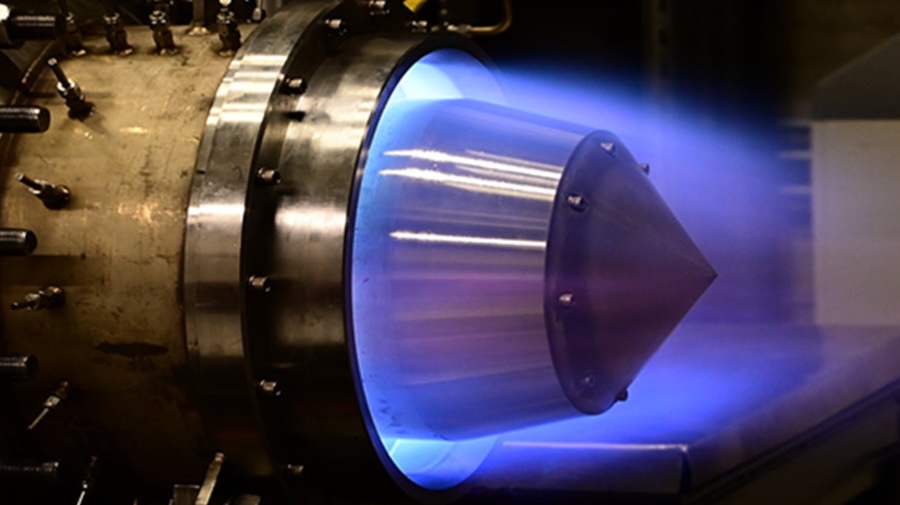
The tests were conducted at Purdue University and focused on two critical areas of rotating detonation engine development. The first test examined long-duration runs to validate the fundamental physics that determine where and how the technology operates most effectively.
The second test used a full-scale rotating detonation engine in a test stand environment. L3Harris said it demonstrated the ability to operate across the entire flight range of a relevant mission.
“Completing two successful rotating detonation engine test series within a year underscores the strength and breadth of L3Harris’ propulsion portfolio,” said Scott Alexander, President, Missile Propulsion, L3Harris.
“From solid rocket motors and highly loaded grains to ramjets, dual-mode ramjets and next-generation advanced cycles, we deliver innovative propulsion solutions that help the U.S. and allied partners extend range, increase speed and field more capable, mission-ready systems,” Alexander said.
Rotating detonation engines are intended to give air-breathing missiles greater range and efficiency compared with traditional systems. L3Harris said air-breathing propulsion systems offer a high-performance, low-cost option for demanding mission requirements.
Critical engine components were produced using additive manufacturing. The company said this approach helped reduce costs and shorten production timelines.
The work supports L3Harris’ long-term strategy to provide mission-critical technologies for aerospace and defense applications. Development of the propulsion technology is managed under the company’s Advanced Missile Propulsion Technology division.
“These tests helped inform the requirements to increase the operating envelope of future RDE-powered systems,” said George Thum, Director of Advanced Missile Propulsion Technology.
“This test series provided valuable feedback on how we make the system applicable for use in the near future, enabling us to deliver next-generation propulsion capability to the warfighter,” Thum said.
L3Harris said it has invested significant internal funds for more than a decade to develop rotating detonation engine ramjet capability. Following the latest tests, the company said it is positioned to integrate the technology into future flight systems.
The company said the testing reinforces its commitment to innovation and operational superiority. It also said the results could support future missile systems designed for longer range, higher speed and improved mission readiness.