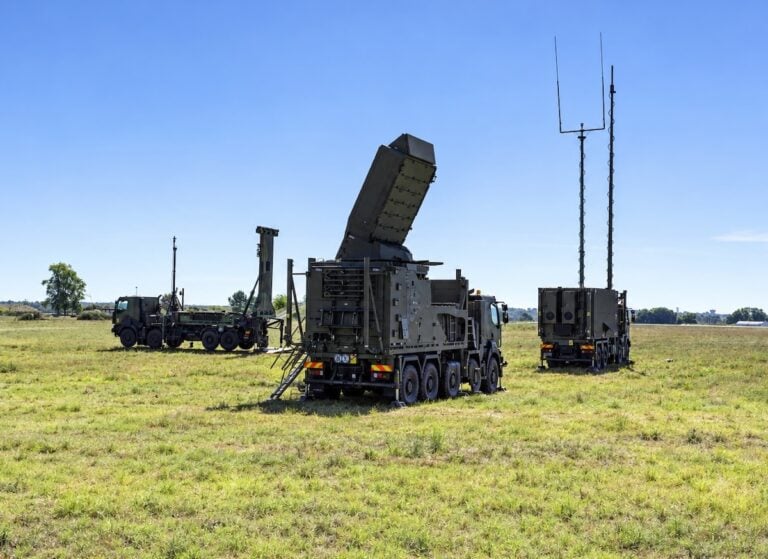

The purpose-built National Integrated Air and Missile Defence Ecosystem will support next-generation IAMD systems and strengthen Australia’s sovereign defense capability. Lockheed Martin Australia said the precinct will also recognize industry’s role across the domain and complement the broader Defence ecosystem.
The precinct will provide critical sustainment capabilities for Australia’s F-35 fleet. It will also support regional sustainment arrangements for other F-35 operators.
Australian-owned contractor Built is set to begin construction immediately. The precinct is due to be operational by 2028.
The purpose-built facilities will include dedicated areas for hardware assembly and installation, integration and validation, end-to-end testing of system-of-systems, sovereign software sustainment and advanced IAMD training. These capabilities include support for Australia’s Joint Air Battle Management System.
The precinct will also provide program management support to Lockheed Martin Australia’s F-35 sustainment team. The company described that operation as its largest international F-35 sustainment activity.
Lockheed Martin Australia said the site will be a critical enabler for Australia to host a dedicated canopy repair capability. The state-of-the-art diagnostic, repair and test infrastructure is intended to reduce reliance on overseas assistance, improve Royal Australian Air Force operational resilience and reinforce F-35 operations across the Indo-Pacific and the global supply chain.
“As Defence’s strategic partner on AIR6500 and F 35, we recognise our duty to uplift Australia’s defence industry from the ground up, turning skilled talent into critical capability,” said Jeremy King, Chief Executive of Lockheed Martin Australia and New Zealand. “This investment demonstrates our enduring commitment to Australia’s military readiness and sovereignty. By building a secure, world class Air Power Precinct we enhance coalition interoperability and safeguard our nation’s way of life through self reliance and advanced technology.”
“For the Hunter region, the Lockheed Martin Australia precinct generates important economic benefits,” King said. “It creates opportunity for jobs growth, small-to-medium enterprise innovation, reinforces supply chain resilience, and positions the Hunter defence community as a strategic hub in the Indo-Pacific F-35 and IAMD ecosystem.”
The precinct is expected to generate more than 200 jobs during construction and create more than 60 new aerospace jobs. Once operational, it will sustain more than 230 ongoing highly skilled engineering and technical roles.
Lockheed Martin Australia said the project will also create opportunities for local suppliers and small-to-medium enterprises to take part in the defense supply chain. The investment is intended to strengthen local industrial capacity while supporting Australia’s air and missile defense and F-35 sustainment requirements.