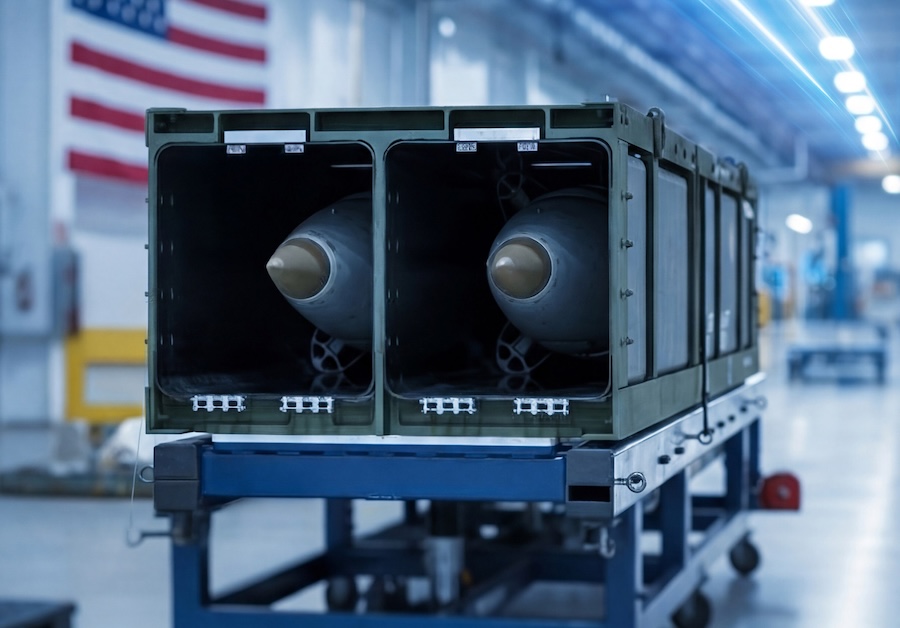
The U.S. Department of War announced the agreement on September 14. Deliveries are due to be completed by September 13, 2031, although the Army did not disclose the number of missiles ordered or the planned start date.
The contract moves PrSM Inc 2 into initial production and includes an option for follow-on deliveries at a fixed price. That provision gives the Army a path to order additional missiles without renegotiating the unit price.
PrSM Inc 2 adds a Land-Based Anti-Ship Missile seeker to the weapon. The seeker is intended to detect moving targets and guide the missile during an engagement, but its operating method has not been disclosed.
The guidance system remains under development. The Army has also not detailed any other differences between Inc 2 and the earlier Inc 1 configuration.
PrSM Inc 1 made its reported combat debut against Iran several months ago. The Army is subsequently reported to have expended nearly its entire inventory of that version.
It remains unclear whether Inc 2 will later receive the planned Inc 1 range increase to between 650 and 700 kilometers. No information has been released on whether the missile will receive a new warhead, and it is believed to retain the existing 91-kilogram payload for now.
The Army plans several further versions within the PrSM family. Inc 3 is intended to carry a warhead with greater destructive effect, while Inc 4 is planned to have a range of about 1,000 kilometers.
Lockheed Martin and a rival team of RTX and Northrop Grumman are developing competing designs for Inc 4. A future Inc 5 is expected to exceed 1,000 kilometers in range, but its contractor has not been selected.
Production capacity is eventually expected to reach 400 PrSM missiles a year. It is not clear whether that target covers a single version or all variants, while export sales are also planned.