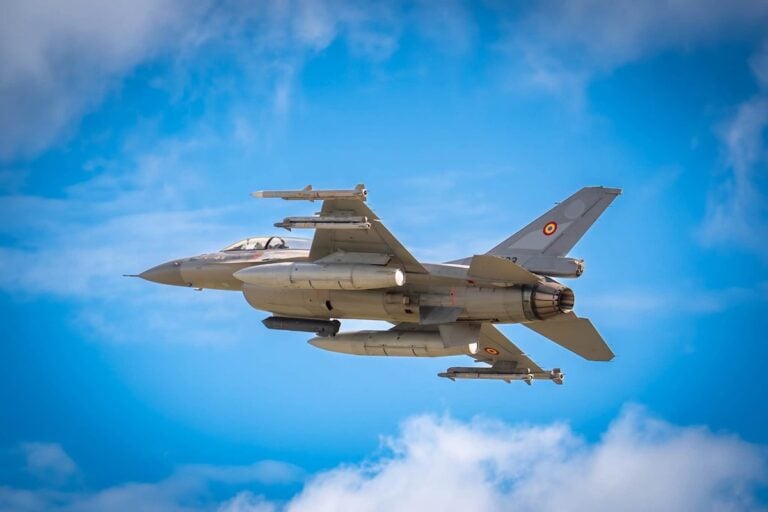

The operation brought together two F-35 Lightning II aircraft, two F-16 Fighting Falcons and a KC-135 Stratotanker from Eielson Air Force Base. An M142 High Mobility Artillery Rocket System, an AN/TPQ-53 radar and soldiers from the 11th Airborne Division also participated.
The mission was conducted under the command and control of U.S. Northern Command and Alaskan Command. Crews integrated offensive and defensive counterair operations, long-range precision fires and aerial refuelling into a single mission.
The fighter aircraft advanced towards the vicinity of Saint Lawrence Island after receiving aerial refuelling from the KC-135. F-35s and HIMARS were then synchronised to engage a simulated target approximately 135 miles away.
F-16 fighters provided defensive counterair protection during the operation. They intercepted F-35s acting as simulated inbound threats.
“This operation demonstrated the power of an integrated joint force capable of layering effects across the air and land domains to strengthen homeland defense,” said U.S. Air Force Lt. Gen. Robert Davis, commander of Alaskan Command, the Alaskan North American Aerospace Defense Command Region and Eleventh Air Force. “By synchronizing command and control, airpower and long-range precision fires, we strengthened our ability to posture combat-ready forces, eliminate operational seams and demonstrate the credible combat capability required to deter aggression across the Arctic.”
Operation TUNDRA MERLIN is designed to integrate joint and multinational forces across the Alaskan theatre of operations. Its stated mission is to strengthen homeland defence and protect the approaches to North America.
The operation combines combat capabilities with synchronised command and control across the region. U.S. Northern Command said the activity is intended to maintain combat-ready forces capable of deterring aggression and defeating potential adversaries in the Arctic.