The demonstrations showed Lockheed Martin’s software-driven integration approach and its ability to support faster and more coordinated decision-making for operators. The company said the work focused on unifying a wide range of systems to improve operational awareness and response options.
“These demonstrations highlight the power of integration to create operational advantage,” said Joe DePietro, Mission Integration Command and Control vice president and general manager at Lockheed Martin. “Our battle management systems and multi-domain expertise are already being applied in real-world operations, providing a strong foundation for innovation.”
“When we combine that operational experience with modern software and digital technologies, we can move faster from innovation to mission impact.” The company said the demonstrations included activity related to a Guam Defense System battle manager, long-range targeting and live tracking with Aegis Guam and TPY-6.
For the Guam Defense System Battle Manager demonstration, Lockheed Martin used its CommandIQ-powered Battle Management application to provide operators with prioritised recommendations. The company said the application was designed to help ensure the right threats are engaged at the right time with the best response options to defend critical assets.
The application is tailored to rapidly integrate new software and align with warfighter pre-planned responses. Lockheed Martin said it can also be modified in real time to adapt to changing battlefield conditions.
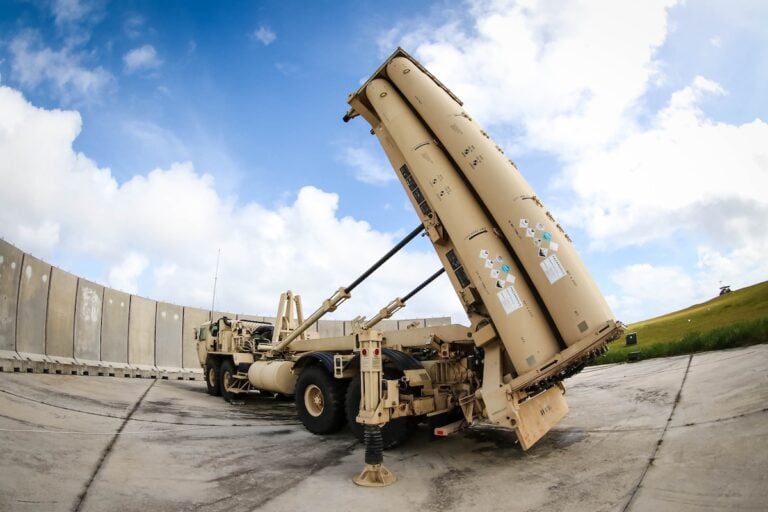
The system integrated live and simulated data from multiple joint integrated air and missile defence systems taking part in Valiant Shield 2026. These included C2BMC, Aegis Guam System, Terminal High Altitude Area Defense, Integrated Battle Command System and Air Base Air Defense System Missile Defense.
Lockheed Martin said this gave the regional air defence commander a common tactical picture of the battlespace. The system displayed planned engagements from participating IAMD systems and used artificial intelligence to evaluate engagement options.
The company said the system provided real-time recommendations to maximise the effectiveness of each system and preserve munitions capacity. After operator review, the application digitally directed the appropriate tactical weapon system to conduct an engagement while coordinating with other systems to maintain readiness.
Lockheed Martin said providing such recommendations for ballistic, hypersonic and air defence engagements across the joint IAMD forces in Valiant Shield 2026 was a first-of-its-kind capability. The company also demonstrated commercial track custody capabilities for long-range targeting.
In that demonstration, Lockheed Martin showed how commercial sensor data and processing can be rapidly integrated into operational workflows. The company said the aim was to expand awareness and accelerate targeting timelines and decisions.
Working with HawkEye 360, Lockheed Martin integrated capabilities to generate unclassified tracks from commercial sensor data and distribute them across the joint force. The company said the effort was among the first to use unclassified, commercial, edge-based processing, exploitation and dissemination and track custody capabilities to provide on-demand signals intelligence.
The capability is intended to maintain continuous awareness, confidence and correlation of a target track across multiple sensors and systems. Lockheed Martin said this supports faster targeting decisions through data shared across the force.
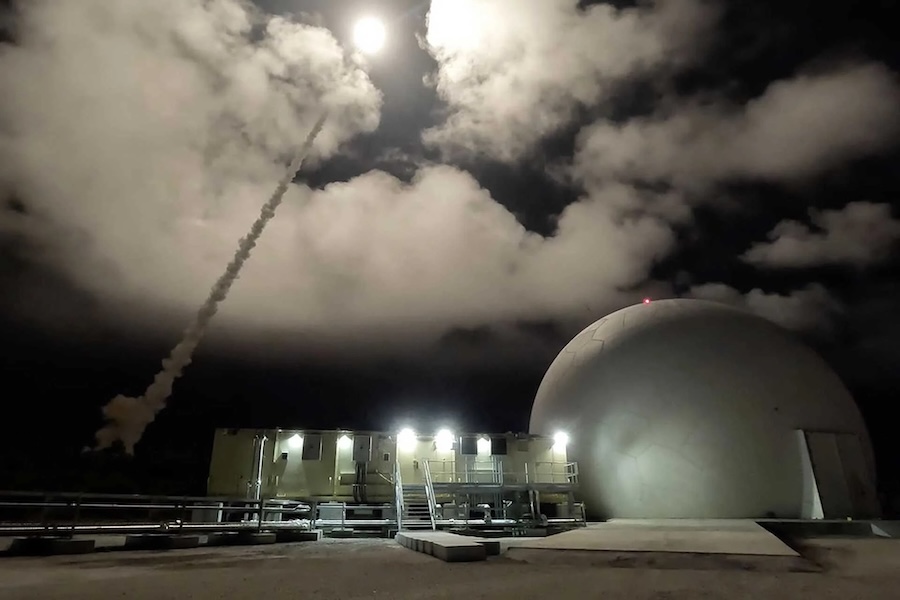
During a live TrackEx with Aegis Guam and TPY-6, Valiant Shield 2026 highlighted proven capabilities in an expeditionary configuration. The demonstration paired the AN/TPY-6 radar with the Aegis Guam system and Vertical Launching System for simulated Guam defence engagements.
Lockheed Martin said the demonstration marked another milestone as the programme moves towards early operational capability. The company described the AN/TPY-6 as a state-of-the-art radar able to detect, track and classify air and missile threats.
The AN/TPY-6 is derived from Lockheed Martin’s Scalable, Supportable, Software Defined S-Band Radar production line. The company said it provides persistent operations even in the presence of threat jamming and continues to show high technical maturity as software development continues.
During the exercise, the AN/TPY-6 radar was fully integrated with the Aegis Weapon System. Lockheed Martin said it demonstrated the ability to detect, track and engage advanced hypersonic threats by rapidly categorising air and missile track data on Guam.
The company said the system’s multi-mission capability can compute engagements against ballistic, hypersonic or cruise threats. It can also select the optimal interceptor from the inventory and launch it at the precise moment to maximise kill probability and protect critical assets.
Lockheed Martin said it used the CommandIQ command and control integration platform, the Aegis Guam system and TPY-6 radar to demonstrate coordinated decision-making at multiple classification levels. The company said the approach improved speed, precision and interoperability for joint and coalition forces in a region defined by distance, complexity and strategic importance.
“In the Indo-Pacific – one of the most challenging operational environments in the world – strategic advantage will belong to those who can rapidly integrate, scale and field the best-of-breed capabilities ahead of evolving threats,” said DePietro. Lockheed Martin said Valiant Shield 2026 underlined the growing importance of interoperability, software-driven capability, integration and real-time data sharing in contested environments.
The company said it has supported US and allied missions across the Indo-Pacific for decades. It said decision advantage in such environments depends on connecting sensors, systems and operators across domains with speed, confidence and precision.