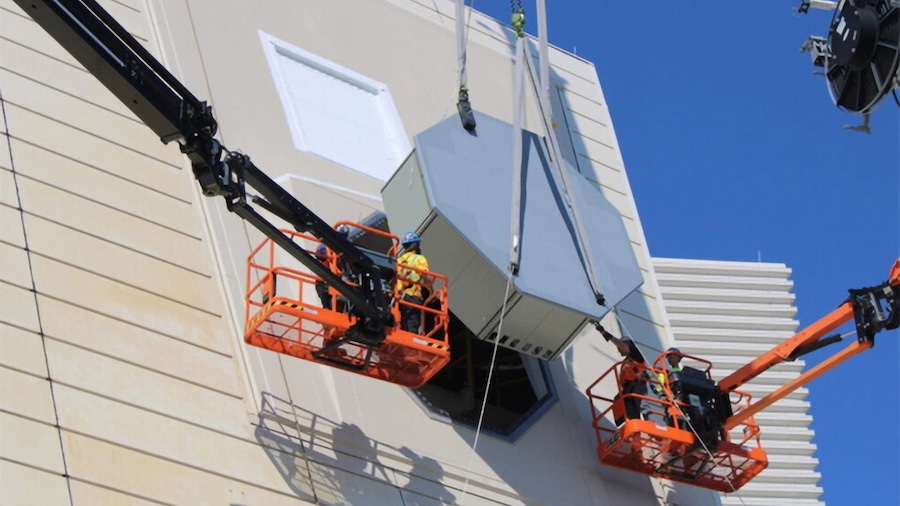
The land-based site provides an open-water environment for evaluating the radar before shipboard installation. Testing will cover the radar’s dedicated power system and interfaces with the Navy’s combat systems.
Initial testing is scheduled to begin later this year and continue through mid-2028. The work will support installation aboard USS Pinckney (DDG 91), the first destroyer selected to receive SPY-6(V)4.
“By leveraging the Wallops test site, we’ll be able to integrate SPY 6(V)4 with its dedicated power system before it reaches the ship, reducing the amount of testing needed on DDG 91,” said Barbara Borgonovi, president of Naval Power at Raytheon. “That means less time in the shipyard, more time dedicated to the mission, and a smoother path for future backfit ships.”
USS Pinckney is scheduled to be available for the radar upgrade from late 2026 through 2028. The Navy and Raytheon are using shore-based testing to meet that timetable and ease the transition to shipboard installation and operation.
SPY-6(V)4 is one of four variants within Raytheon’s SPY-6 radar family. It is the only version designed specifically for installation on existing Flight IIA Arleigh Burke-class destroyers.
The Wallops effort involves the U.S. Navy, NASA’s Wallops team and industry partners. The program is intended to deliver the upgraded radar capability to the surface fleet while limiting testing requirements aboard individual ships.
Other SPY-6 variants are already installed aboard two commissioned U.S. Navy ships. Eleven additional vessels have received the radar and are undergoing testing before commissioning.
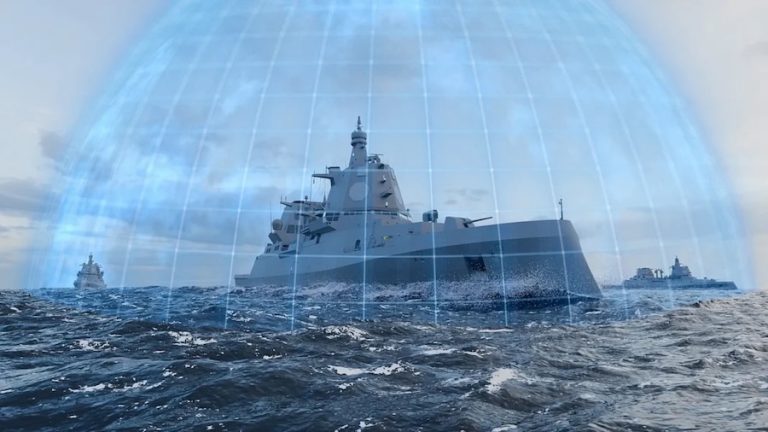
The Navy expects to deploy SPY-6 across more than 50 ships during the next decade. The radar family is designed to improve detection and defense against air, surface, ballistic-missile and electronic-warfare threats.
Raytheon has invested $800 million to modernize its radar manufacturing facilities and increase production capacity. The company expects to double SPY-6 output by 2028, supporting long-term availability and lower costs for the Navy.