Delta Multi-Purpose Company, 1st Battalion, 502nd Infantry Regiment, 2nd Mobile Brigade, integrated the Drone Agnostic Release Kit (DARK) and Broad Lethality Air Deployed Effects (BLADE). The work builds on a soldier-developed grenade-dropping system first created during the company’s deployment to Poland.
“This capability we are demonstrating in collaboration with our maneuver live fire exercise proves that we are closing the gap in capability with lethal UAS,” said Capt. Jacob Moberly, the company commander. His aim is to give infantry soldiers more options for accomplishing their missions with the unmanned systems available to them.
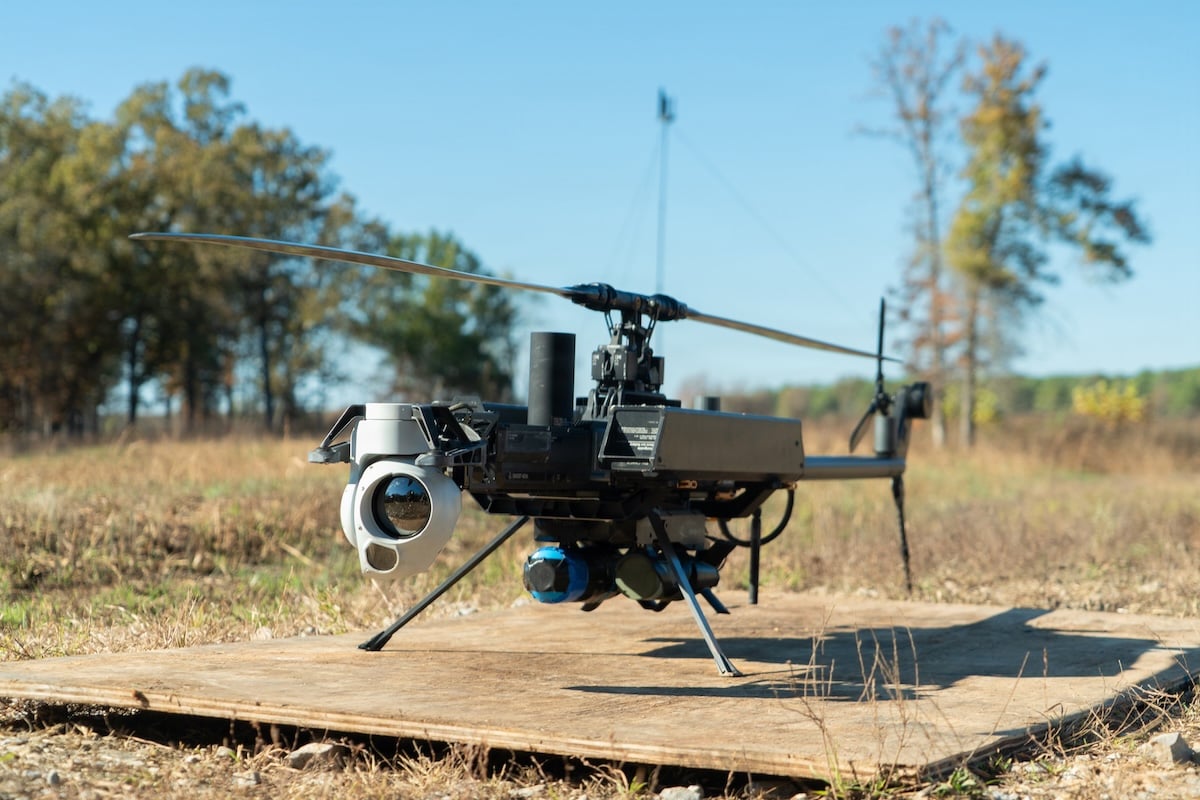
Developed by Orbital Research, DARK allows different drone platforms to carry and release various payloads without requiring a separate release system for each type of aircraft. Its modular design accommodates explosive munitions, smoke grenades and other lethal or nonlethal equipment selected for the mission.
BLADE is an experimental munition designed specifically for unmanned aircraft systems, providing a more advanced option than the company’s earlier improvised equipment. Moberly said it was designed to deliver effects comparable to conventional military munitions and provide options against different battlefield threats.
DARK supplies the release mechanism, while BLADE broadens the effects the aircraft can deliver. Integrating the two lets the company explore additional uses for existing drones without relying exclusively on new aircraft.
The company’s Advanced Reconnaissance and Effects Systems (ARES) platoon is incorporating the technologies into infantry operations. During the exercise, unmanned aircraft gathered information, observed battlefield activity and delivered munitions as part of realistic training scenarios.
The company’s earlier Widowmaker system grew out of Moberly’s encouragement for soldiers to find practical answers to challenges they might encounter in combat. Built using 3D printing and readily available materials, the low-cost grenade-dropping system gave the unit an initial means of exploring missions beyond aerial observation.
Moberly credited leadership support and the freedom to experiment with allowing that work to develop. “Through empowering my Soldiers to innovate and test their ideas,” Moberly said, “our Multi-Purpose Company has been able to tackle complex problems in order to drive solutions that will ultimately save lives on the battlefield and dramatically increase our lethality in combat.”
The Army linked the company’s efforts to lessons from Ukraine, where armed drones have become an increasingly visible part of ground warfare. Moberly said those developments showed why U.S. formations needed to keep adapting their capabilities to emerging threats.
He hopes other units can draw on the company’s experience to expand the roles of their own unmanned systems. “My hope is for every unit in the Army with the UAS we have is able to integrate this capability into their own systems and achieve the same enablement as we have experienced here in Wardog Company,” Moberly said.