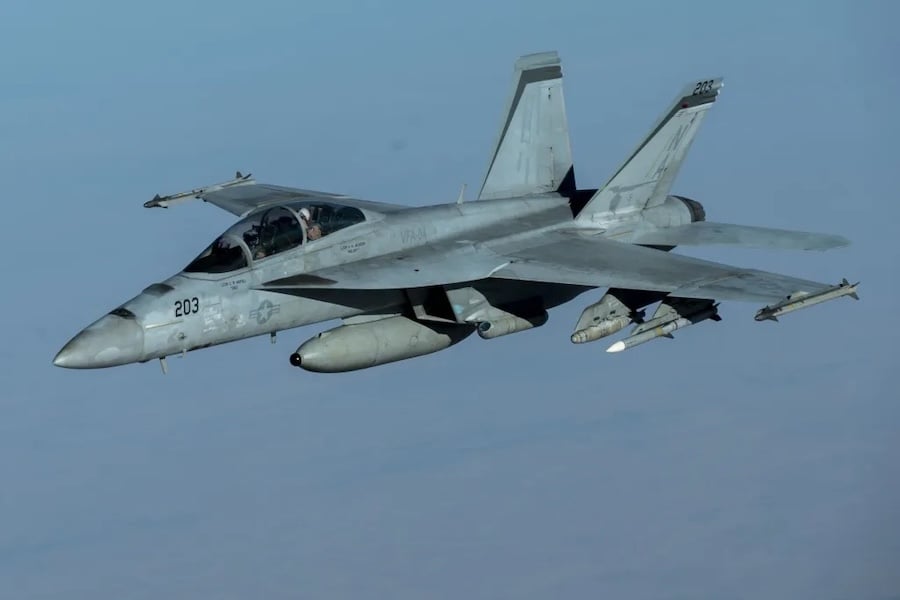
The contract includes three pods for Australia, along with spare parts and diagnostic equipment. Funding was committed in full at signing, including $11 million from Australia through the Foreign Military Sales process.
The systems supplement the Super Hornet’s onboard radar, giving crews an additional means of detecting airborne targets and improving situational awareness. Their passive operation allows fourth-generation fighters to search for targets that include fifth-generation aircraft.
The Block II configuration features a modified electro-optical sensor head, a new central processor and updated software. Production pods entered operational service in 2025.
The sensor is mounted in the forward section of an external fuel tank carried beneath the aircraft’s fuselage. That position provides an increased field of view for the observation system.