
The architecture is built around integration rather than reliance on a single sensor, interceptor or platform. Radar, electro-optical and infrared systems and radio-frequency sensors can be fused to correlate tracks, filter clutter and help operators distinguish genuine threats from decoys.
For maritime defense, Lockheed Martin has demonstrated its JAGM Dual Launcher aboard the autonomous Saildrone Surveyor, extending counter-UAS capability to an unmanned surface platform. The company says larger autonomous vessels could integrate the JAGM Quad Launcher, which can provide 360-degree coverage when vertically launched and engage threats approaching from different directions.
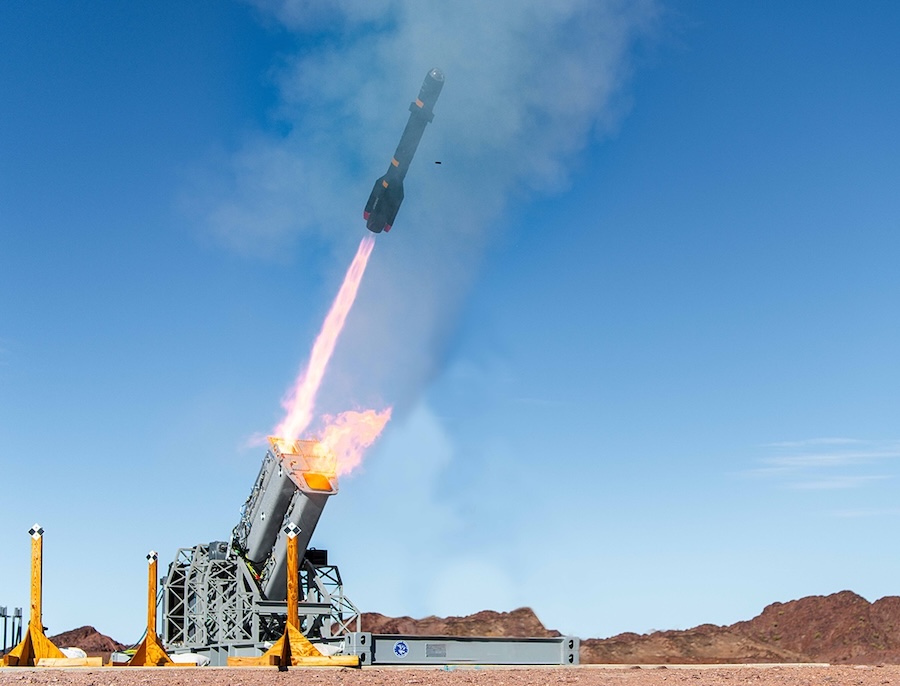
The Joint Air-to-Ground Missile is already in production and operational, replacing its Longbow and Hellfire predecessors. Lockheed Martin says JAGM has demonstrated effectiveness against several unmanned aircraft threats, including Group 3 UAS, when launched from different platforms.

On land, the company is combining its GRIZZLY containerized launcher, JAGM and Sanctum system into a layered defense for maneuver forces and fixed installations. The configuration is designed to detect, track and defeat unmanned aircraft while allowing the architecture to adapt to changing operational requirements.
CommandIQ, integrated with Lockheed Martin’s operational SkyKeeper command-and-control system, provides another layer for ground-based air defense. The combination is intended to give operators a common operational picture for identifying, classifying and tracking drones while providing a baseline command-and-control network for integrated air and missile defense.
Sanctum uses AI-enabled software and integrated command and control to identify and prioritize threats while coordinating responses against multiple drones. Lockheed Martin says the technology is intended to reduce operator workload and accelerate engagement decisions while keeping humans in control of mission decisions.
The company is also positioning MORFIUS as a lower-cost counter-UAS option using high-power microwave technology rather than conventional kinetic interception. Lockheed Martin says MORFIUS can neutralize more than 50 enemy drones during a single flight and can integrate with any command-and-control system.
Together, these technologies form an open-architecture counter-UAS ecosystem spanning land, sea and autonomous platforms. Lockheed Martin says the architecture can incorporate existing capabilities, accept new technologies as threats change and scale from protecting individual installations to defending distributed forces across multiple domains.
Source: Lockheed Martin.