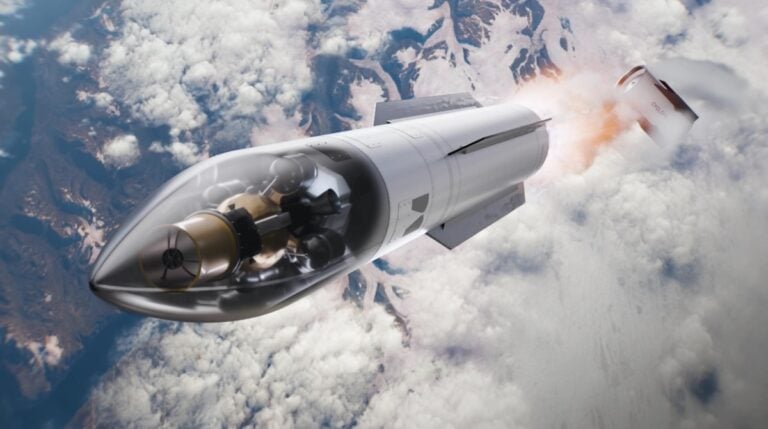

The contract is linked to the Trident II (D5) Life Extension 2 program, which aims to sustain the missile’s operational capability into the second half of the century. The modification to an existing contract reflects continued investment in maintaining the United States’ sea-based nuclear deterrent.
The Trident II is a three-stage, solid-fueled intercontinental-range ballistic missile with a range of between 2,500 and 11,500 kilometers. It is capable of carrying multiple independently targetable reentry vehicles, allowing it to strike several targets with high precision.
The missile is deployed on U.S. Ohio-class submarines and the United Kingdom’s Vanguard-class submarines. Its design enables concealed operations, forming a central component of strategic deterrence.
Eric Scherff, vice president of the Fleet Ballistic Missile Program at Lockheed Martin, said: “Because this system can’t be seen, it forces our adversaries to plan for a threat they can’t detect.” He added: “That’s the ultimate insurance policy. It works not by using force, but by making the cost of aggression too great.”
He further stated: “When adversaries wake up and ask, ‘Is today the day to attack the United States?’ we want the answer to be, ‘Not today,’ every day.” The remarks highlight the role of the system in deterring potential adversaries through uncertainty and capability.
The Trident II D5 entered service in 1990 and represents the most advanced generation of U.S. submarine-launched ballistic missiles. It has undergone multiple upgrades, including improvements in navigation, payload capacity and the ability to engage hardened or underground targets.
The Life Extension 2 program focuses on replacing aging components and integrating new technologies to extend the missile’s service life. The effort is also intended to ensure compatibility with future platforms, including the next-generation Columbia-class ballistic missile submarines.
Recent testing has demonstrated the system’s continued reliability. The latest test flight, conducted off the coast of Florida in September, marked the 197th successful launch of the missile.
Johnny R. Wolfe, Vice Admiral and Director of the U.S. Navy’s Strategic Systems Programs, said: “Our nation’s submarine-launched ballistic missile system has been a critical component of our national security since the 1960s, and these launches continue to demonstrate the credibility and reliability of our strategic deterrence capabilities.”
The contract award comes as the United States maintains a military presence in the Strait of Hormuz following a conflict with Iran. Officials have emphasized the importance of sustaining credible deterrence capabilities to support national security and allied assurance.
Source: The Jerusalem Post.