
Led by the United States and Iceland, the exercise brought NATO and Allied forces together around Iceland to improve readiness and interoperability across the North Atlantic.
The Phoenix supported naval combatants operating in the Greenland-Iceland-United Kingdom Gap, a strategically important corridor connecting the North Atlantic approaches between North America and Europe.
“Northern Viking demonstrates how NATO’s own ISR capabilities can contribute directly to Allied maritime operations,” said Brigadier General John B. Creel, Commander of the NATO Intelligence, Surveillance and Reconnaissance Force.
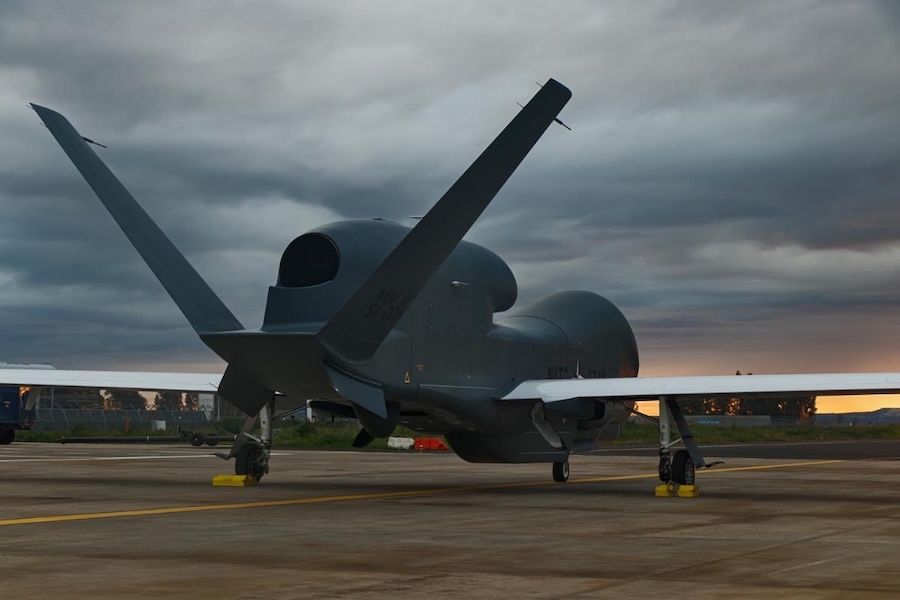
“Operating our RQ-4D Phoenix in support of naval forces in the High North strengthens the shared situational awareness and interoperability our forces need to operate effectively together,” Creel said.
The mission highlighted the Phoenix’s ability to maintain persistent surveillance across a large maritime area while sharing information with NATO and Allied assets operating across the region.
It also showed how the aircraft’s sensor data can support naval decision-making and targeting beyond the direct surveillance range of surface combatants.
Operating from Italian Air Force Base Sigonella, the NATO Intelligence, Surveillance and Reconnaissance Force manages five Alliance-owned RQ-4D Phoenix aircraft.
Each aircraft carries Multi-Platform Radar Technology Insertion Program and synthetic aperture radar sensors for wide-area surveillance.
Its communications suite includes line-of-sight and beyond-line-of-sight wideband data links designed to move information over long distances.
NATO combines information from the Phoenix fleet with other data sources and analysis by multinational personnel to provide commanders with a broader operational picture.
The high-altitude, long-endurance design allows the RQ-4D to remain airborne over large areas and rapidly share surveillance data with other forces.
The Phoenix is part of Northrop Grumman’s high-altitude autonomous aircraft portfolio, which also includes the RQ-4 Global Hawk and MQ-4C Triton.
Northrop Grumman is working with NATO on further technology development and the planned expansion of the Alliance’s ISR force.