The activities brought together fighter aircraft, strategic bombers, surface-based air and missile defence systems, airborne command and control assets, air-to-air refuelling and Joint Terminal Attack Controllers. NATO said the realistic multi-domain training was designed to enhance interoperability and readiness across the Alliance.
On 25 June, Allies conducted a Flexible Deterrence Option over the Black Sea under Eastern Sentry. The activity was coordinated with a Bomber Task Force mission.
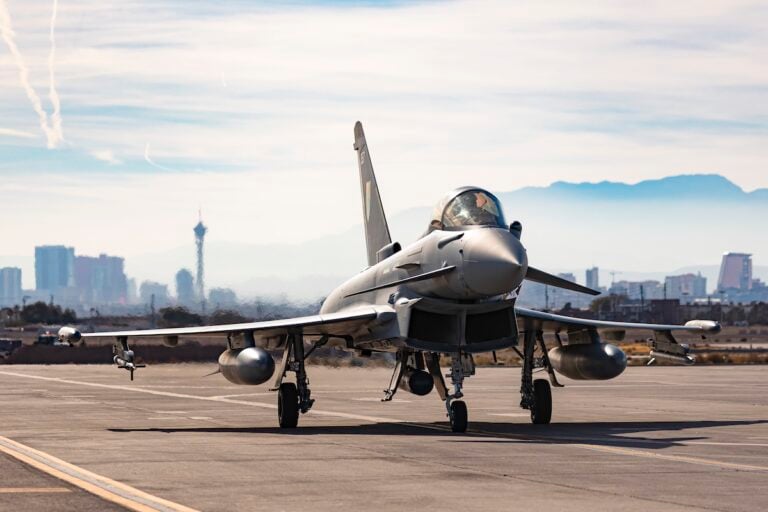
The Black Sea mission integrated Romanian and Greek F-16 Fighting Falcons and Royal Air Force Eurofighter Typhoons deployed to NATO enhanced Air Policing in Romania. It also included U.S. Air Force B-52 Stratofortress strategic bombers, a Romanian Patriot surface-to-air missile system and JTACs coordinating operations from the ground.
A NATO Multi Role Tanker Transport aircraft from the NATO Multinational MRTT Fleet supported the mission. The aircraft provided air-to-air refuelling for Allied fighters.
The mission was coordinated by NATO’s Combined Air Operations Centre Torrejón. NATO said the activity demonstrated the Alliance’s ability to synchronise air and ground-based capabilities across multiple domains.
“Training in this kind of environment, alongside a mix of air and ground assets, really brings out how effectively we can operate together,” said an RAF Typhoon pilot from No. 3 (Fighter) Squadron. “It’s challenging, realistic, and ensures we can defend NATO airspace whenever called upon.”
On 30 June, a second Flexible Deterrence Option extended Allied integration into the Baltic region. Romanian and Portuguese F-16s deployed on NATO enhanced Air Policing missions from Šiauliai in Lithuania and Ämari in Estonia took part in the activity.
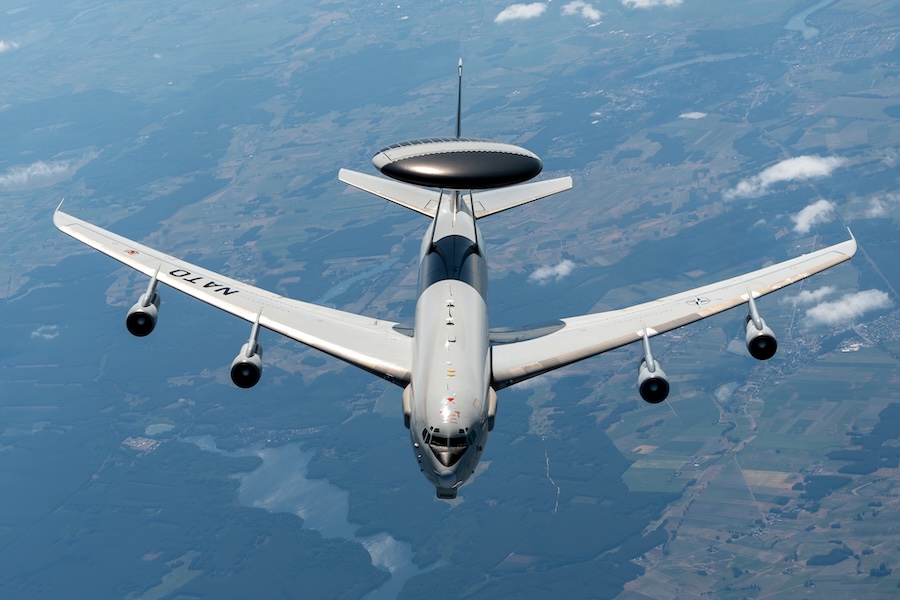
The Baltic mission integrated those aircraft with a Spanish National Advanced Surface-to-Air Missile System. A NATO Airborne Warning and Control System aircraft from the NATO Airborne Early Warning and Control Force provided airborne command and control throughout the mission.
NATO said the two activities demonstrated its ability to integrate air and missile defence capabilities across geographically separated regions. The missions maintained a coherent defensive posture while combining Allied aircraft, surface-based air defence systems and command-and-control assets.
The Alliance said the missions strengthened collective readiness and reinforced its capacity to respond to evolving security challenges. The activities also complemented NATO’s permanent Integrated Air and Missile Defence system.
Flexible Deterrence Options are joint and combined activities intended to strengthen long-term cohesion across the Alliance. They improve interoperability between Allied air and surface-based air and missile defence units, enhance multi-domain integration and ensure forces can operate together.
NATO Integrated Air and Missile Defence is a continuous defensive mission that safeguards NATO airspace through a 360-degree approach across NATO territory. Conducted in peacetime, crisis and conflict, it coordinates and employs Allied air and missile defence capabilities against the full spectrum of air and missile threats.