
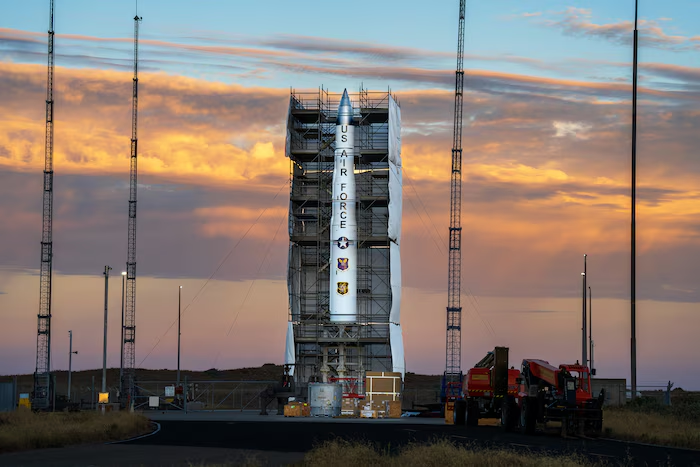
The two milestones move Sentinel beyond digital design and individual component testing toward evaluation as a complete missile system. They are part of the Air Force’s effort to modernize the ground-based element of the U.S. strategic nuclear triad.
Engineers safely stacked the missile stages, propulsion elements, shroud and related components in the orientation intended for operational use. The work demonstrated that the procedures required to assemble a complete Sentinel missile can be executed on a test pad.
The assembly was conducted during a four-month dry run called Pathfinder. Northrop Grumman transported missile components from sites across the United States to Vandenberg, where the inert vehicle was stacked and later taken apart.
The campaign covered specially designed transport vehicles, mobile crane operations and mechanical interface checks. Engineers also verified connections across the integrated missile to ensure the procedures met Air Force performance and safety requirements.
In parallel, Northrop Grumman and the Air Force’s 719th Test Squadron completed the first flight-test Critical Design Review. The review assessed the missile’s design, hardware testing, safety and schedule against the requirements for the 2027 test.
Amanda Davis, Northrop Grumman’s vice president and general manager for strategic deterrent systems, linked the work to the program’s flight-test and deployment schedule. “This vertical assembly demonstrates the momentum toward test launching Sentinel in 2027 and having missiles on alert by the early 2030s, ensuring the United States’ ground-based nuclear capabilities remain strong and reliable for decades to come.”
Sentinel is intended to become an operational missile system capable of standing alert in a silo. The Air Force and Northrop Grumman are targeting initial capability in the early 2030s.
Northrop Grumman leads a nationwide industrial group of more than 500 suppliers and partners under an engineering and manufacturing development contract. More than 10,000 people are working across missile testing, infrastructure prototyping, production planning and supply-chain readiness.
The Air Force plans Sentinel as a replacement for the current ground-based element of the nuclear deterrent. The new ICBM system is being designed to remain operationally viable through 2075.