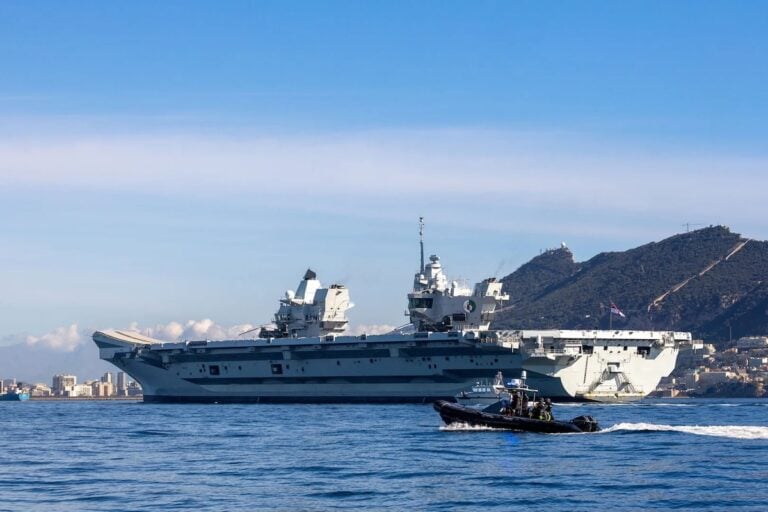
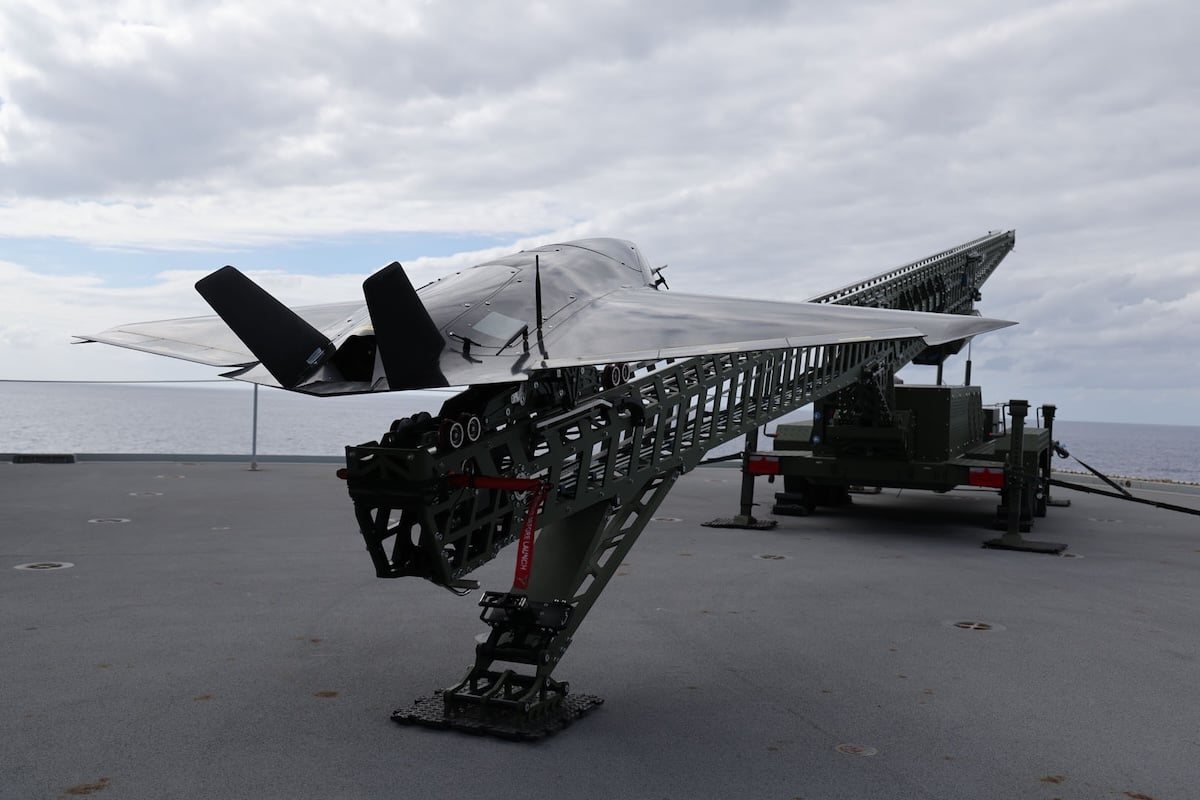
Military and industry teams supported several flights from the carrier in mid-October using Nyan Maritime drones built by Callen-Lenz in Wiltshire. The drone first flew from a ship at sea earlier in the year, when it was launched from the navy’s experimental vessel XV Patrick Blackett.
“The threat environment we are facing is fundamentally different from that of recent decades,” Defence Secretary Wes Streeting said. “A major determinant of military power now is who can innovate fastest.”
The carrier also hosted Heavy Lift Challenge 3, during which Tekever’s fixed-wing AR5 drone operated from an aircraft carrier for the first time. The AR5 has a seven-metre wingspan and can carry up to 80 kilograms, allowing it to support logistics and operational missions.
The two trials gave the navy a chance to assess how surveillance and strike drones could complement each other in a carrier air wing. The navy wants to use uncrewed aircraft to extend the reach of its carriers and give commanders more options while keeping personnel farther from danger.
“These trials give us the evidence and confidence to decide how uncrewed systems can work alongside crewed aircraft,” said Lieutenant Commander David Burton, the trials sponsor for Navy Capability. “The lessons will help us build a hybrid Navy that gives commanders greater choice and ensures our carriers remain at the cutting edge of naval warfare.”
The UK’s Defence Investment Plan allocates more than £5 billion to autonomous systems by 2030. That includes almost £250 million for Project Pantheon, which is developing autonomous systems for a mixed carrier air wing, and for trials of jet-powered drones intended to operate alongside F-35Bs.
The plan also allocates at least £1.3 billion to a fleet of crewed and uncrewed ships, with the first large autonomous vessels due to enter service by 2030. At least £210 million is earmarked for low-cost, long-range one-way attack drones for the Royal Navy, British Army and Royal Air Force.