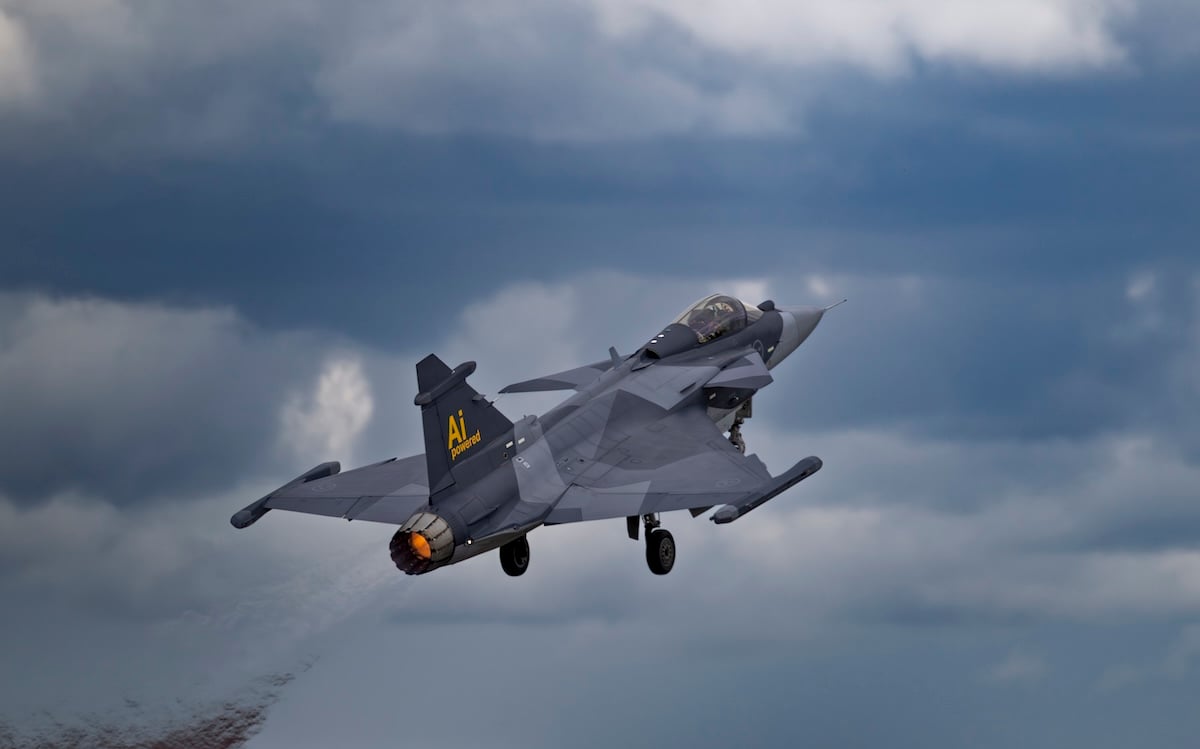
Johansson said the two fighters would give Canada’s air force different strengths. The F-35, he said, is “good at certain things”, while Gripen would add combat mass and more flexibility in where the aircraft can be based.
“On the Gripen side, we are running a campaign to convince everyone that it is a good match to have a dual fleet,” he said. According to Johansson, Saab’s industrial package includes a manufacturing hub in Canada and cooperation with Canadian companies.
Decision rests with Ottawa
Johansson stressed that the outcome depends on whether Canada wants to build up its own defence capabilities. No such decision has been made, and he gave no indication of when an order might come.
“But that is a political decision to say, ‘Yes, we want this sovereign capability in Canada,’ and then I think we are the best partners,” he said.
He added that he would be attending an aerospace summit in Canada the following week and expected to come away with a clearer picture of Saab’s chances.
“We have a fantastic offer, but it is still a political decision to take for Prime Minister Carney,” Johansson said. “But we are campaigning as much as we can to make it happen.”
GlobalEye talks advance
Saab is also negotiating a contract with Canada for six GlobalEye airborne surveillance aircraft. Johansson said the two sides had signed a term sheet setting out the framework for a final agreement, but he did not say when it would be concluded.
That proposal also includes a production hub in Canada, although Saab would remain responsible for delivering the aircraft to the customer. Johansson said setting up the operation would take time and investment.