The Swedish government has instructed the Swedish Defence Materiel Administration, FMV, to begin negotiations with France on the procurement of four FDI frigates. The programme is valued at about 40 billion Swedish kronor, or roughly $4.25 billion.
Prime Minister Ulf Kristersson described the move as part of an effort to triple Sweden’s ground- and surface-based air defences. Defence Minister Pål Jonson and Supreme Commander Michael Claesson also attended the announcement.
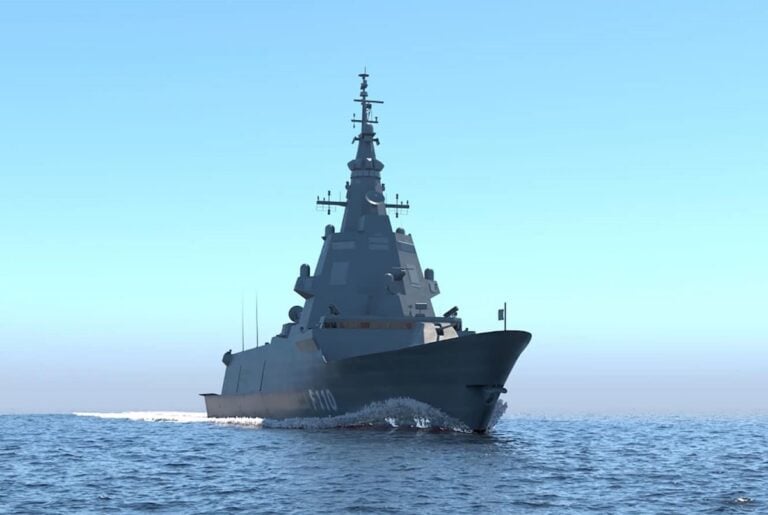
The French design was selected over the Arrowhead 120 offered by Britain’s Babcock and the ALFA 4000 proposed by Spain’s Navantia. According to the available information, Sweden’s choice was driven by the maturity of the FDI design, the expected delivery schedule and the possibility of sharing costs with other operators, including France and Greece.
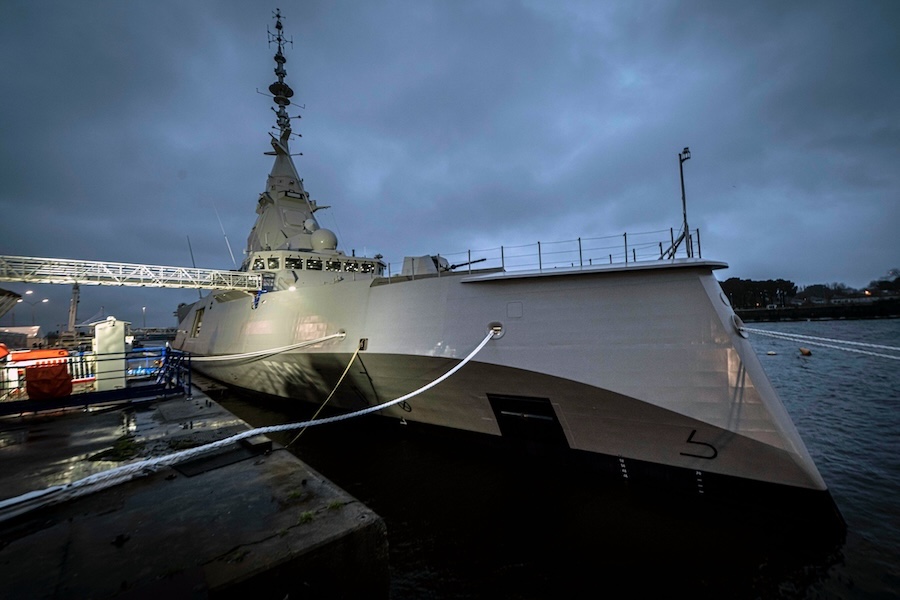
The first fully equipped ship could be delivered as early as 2030, with one vessel expected each year after that. The FDI is already being built by Naval Group at its Lorient shipyard for the French Navy and has also been ordered by Greece.
The Luleå-class programme began in 2021, when Saab received a contract for preliminary design work on four air defence corvettes based on an enlarged and improved version of the Visby class, known as Visby Generation Two. The programme later evolved as Sweden’s security situation changed following Russia’s full-scale invasion of Ukraine in 2022 and Sweden’s accession to NATO.
In 2023, Babcock joined the effort as the planned ship grew into a larger surface combatant. The procurement later shifted towards the evaluation of foreign frigate-sized designs, with the French FDI emerging as the only existing design among the three main contenders.
The new frigates are expected to displace around 4,000 tonnes and measure roughly 120 metres in length. They are intended to provide air defence and anti-submarine warfare capabilities while also supporting anti-surface and broader naval operations.
The ships are expected to include several Swedish systems, including Saab’s RBS 15 anti-ship missile, Torped 47 anti-submarine torpedo, Giraffe 1X radar and Trackfire remote weapon stations. They are also expected to carry BAE Systems Bofors 57 mm and 40 mm deck guns.
The vessels are expected to retain the French SETIS combat management system. For air defence, Jonson confirmed that the ships will be equipped with Aster 30 missiles, which provide ballistic missile defence capability, and CAMM-ER missiles, in line with the configuration of French vessels.
The Aster 30 will represent a significant increase in capability for the Swedish Navy. Sweden has not operated a naval air defence missile system since the retirement of the Seacat in the early 1980s.
FMV has emphasised the importance of the future frigates as mobile air defence platforms for protecting maritime routes. These routes are critical for military and civilian logistics to Sweden, Finland and the Baltic states.
The FDI frigates are designed as first-rank warships able to operate independently or as part of a naval task group. Their mission set includes air defence, anti-submarine warfare, anti-surface warfare and operations against asymmetric threats, including advanced submarines, supersonic missiles and cyber threats.