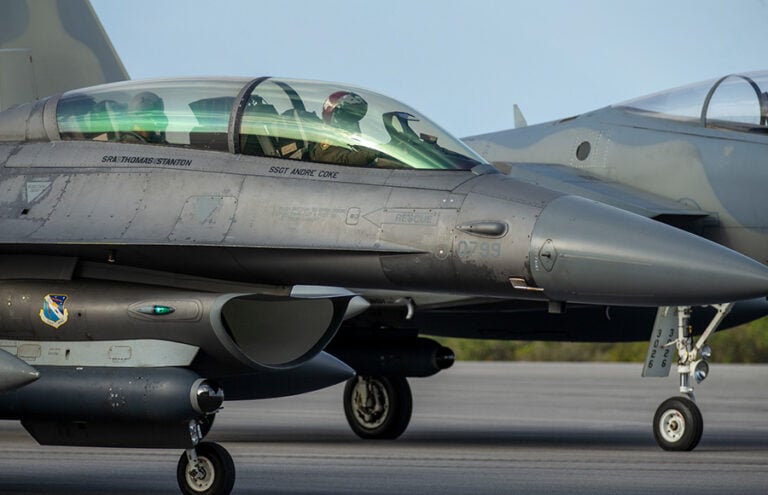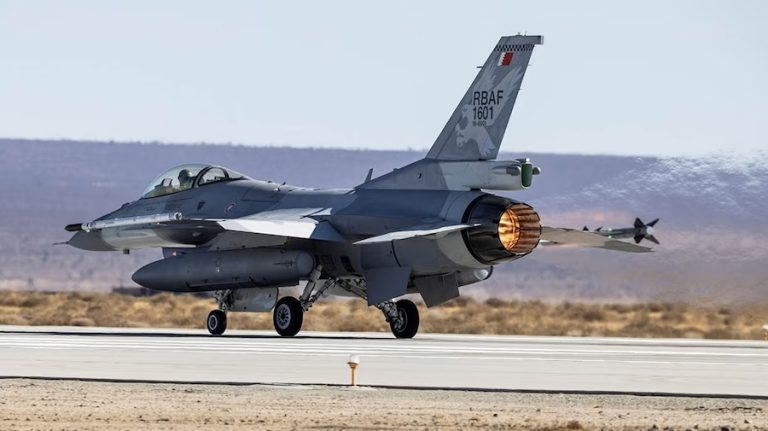

The first F-16s arrived at Hahn Air Base in Germany on Sept. 14, 1981, as the 50th Tactical Fighter Wing prepared to replace older combat aircraft. The deployment opened a new phase in the modernization of U.S. Air Forces in Europe during the Cold War.
The initial aircraft were non-flying F-16s loaned by Tactical Air Command. They allowed maintenance and support personnel to learn how to generate and sustain the new fighter while pilots trained at MacDill Air Force Base in Florida.
USAFE’s first operational F-16 arrived at Hahn on Dec. 30, 1981, flown by Col. David Goodrich, commander of the 50th Tactical Fighter Wing. The staged introduction reflected the importance of having trained ground crews ready before operational aircraft entered service.
The European F-16 program was multinational from its early years. Belgium, Denmark, the Netherlands and Norway joined during development, while European industry participated in production.
Belgium and the Netherlands had already begun receiving F-16s when USAFE accepted its first aircraft. Their experience helped the U.S. command establish its own operations and laid the foundation for decades of cooperation around the fighter.
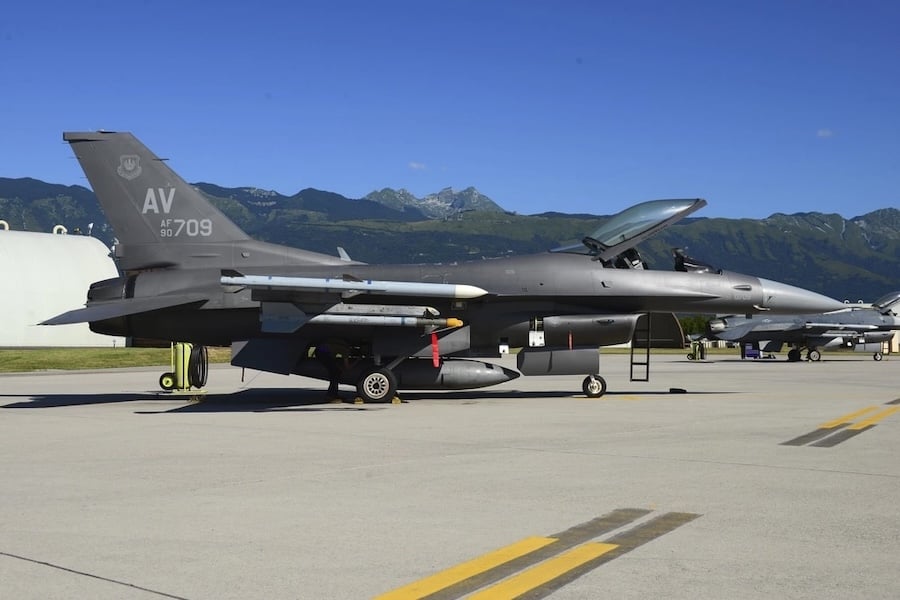
F-16s later served with the 31st, 50th, 52nd, 86th and 401st Fighter Wings in the USAFE area of responsibility. Over that period, the aircraft moved from being a new Cold War platform to a fighter used in combat operations worldwide.
The current European force is centred on the 31st Fighter Wing at Aviano Air Base in Italy and the 52nd Fighter Wing at Spangdahlem Air Base in Germany. Their F-16s train and operate with NATO allies while supporting deterrence, collective defense and Agile Combat Employment.
The fleet has continued to receive new sensors and communications systems. At Spangdahlem, the 480th Fighter Squadron became the first active-duty U.S. Air Force F-16CM squadron to complete an upgrade to active electronically scanned array radar systems.
The AESA upgrade increased the aircraft’s combat capability and survivability against evolving threats. In 2026, the 52nd Fighter Wing also began installing a new communications suite intended to reduce pilot workload and improve mission effectiveness.
F-16s from Aviano demonstrated the aircraft’s mobility during operations at Câmpia Turzii in Romania in December 2025. Romanian Air Force personnel rapidly refueled and relaunched the fighters, showing how U.S. and allied forces can sustain combat airpower together from dispersed locations.
The aircraft’s sensors, communications, weapons and tactics have changed significantly since 1981. The requirement to maintain, modernize and disperse the fleet while operating with allies has remained constant.
Forty-five years after the first F-16s reached Hahn, the fighter remains integral to U.S. Air Forces in Europe – Air Forces Africa. Its continued operations across NATO’s eastern flank link the aircraft’s Cold War origins with the alliance’s current readiness and deterrence mission.