
Budget documents show the service is seeking $12.6 billion through multiyear contracts to acquire the munitions. Initial procurement is expected to begin with $355 million allocated for 1,000 missiles in fiscal year 2027.
Spending is projected to increase significantly in subsequent years as production scales up. The programme outlines rising annual investments through 2031, supporting a steady expansion in missile quantities.
The FAMM programme is divided into two categories, including munitions carried by fighter and bomber aircraft and palletized systems deployed from cargo aircraft. The Air Force has indicated that palletized munitions are its initial priority.
Current requirements focus on weapons capable of striking targets at ranges between 250 and 500 miles. However, future programme phases may include extended-range capabilities and beyond-line-of-sight communications.
The Air Force Life Cycle Management Center has also issued a request for information on a longer-range cruise missile capable of exceeding 1,200 miles. The proposed system, referred to as FAMM-Beyond Adversary Reach, is intended to target slow-moving ships and operate across multiple platforms.
According to the notice, the missile would need to travel at least 537 mph and support midcourse navigation updates. It is also expected to be deployable from fighters, bombers, cargo aircraft, naval vessels and Army ground launchers.
The palletized concept builds on earlier efforts such as the Rapid Dragon programme, which explored using cargo aircraft as launch platforms. Tests conducted by the Air Force Research Laboratory included live-fire demonstrations using palletized munitions deployed from aircraft.
The Air Force has also explored lower-cost alternatives to existing high-end systems such as the AGM-158B Joint Air-to-Surface Standoff Missile-Extended Range. These efforts aim to reduce costs while maintaining operational effectiveness across a range of mission scenarios.
Lt. Gen. Michael G. Koscheski said the earlier Franklin programme sought to deliver a “$100,000 weapon that can go about 500 miles and can punch a hole in a ship.” The programme reflects ongoing efforts to develop more affordable, scalable strike capabilities.
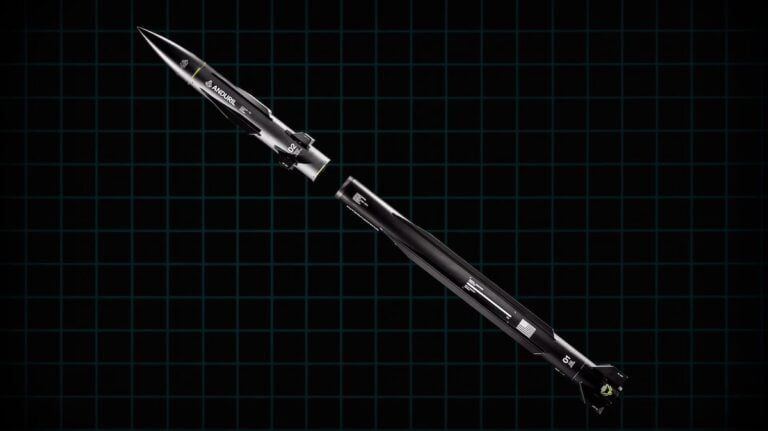
Several companies have introduced low-cost cruise missile concepts in response to the Air Force’s requirements. These developments highlight increasing industry competition to support future demand for affordable, long-range munitions.
Source: Air & Space Forces Magazine.