
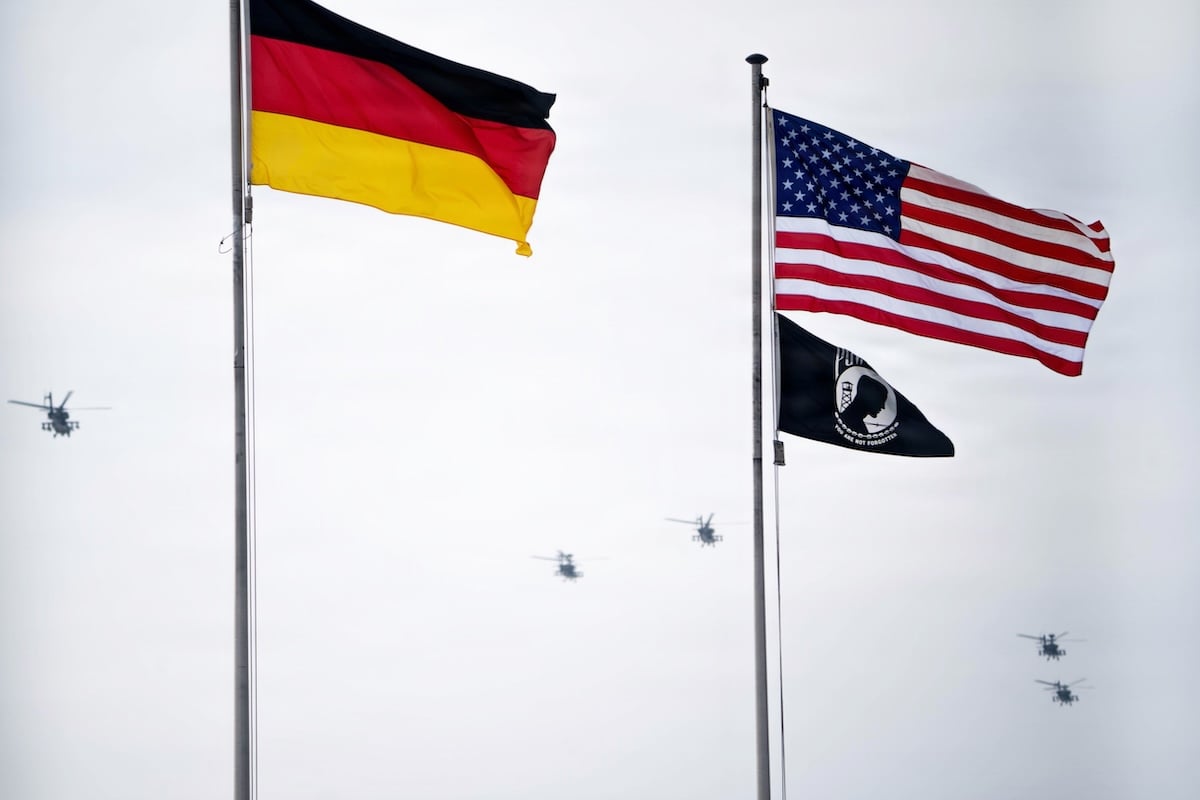
Secretary of War Pete Hegseth and German Defense Minister Boris Pistorius signed the document during a Sept. 15 meeting at the Pentagon. The initiative links Washington’s drive to overhaul military procurement with Berlin’s efforts to accelerate defense acquisitions and expand Europe’s industrial base.
“We’re here to take another strong step in advancing our defense industrial cooperation between the United States and Germany,” Hegseth said. He described the agreement as part of a broader NATO 3.0 vision under which Europe would assume primary responsibility for its conventional defense.
Germany has moved to the forefront of that effort by sharply increasing military expenditure and investing in additional capabilities. Hegseth said Berlin was moving closer to the NATO commitment to spend 5% of gross domestic product on defense agreed at the alliance’s summit in The Hague.
“And Germany has been front and center in taking that lead and we appreciate that,” Hegseth said. “And today we see major progress that no one would have thought possible, we believe before President Trump returned to office.”
Hegseth cautioned that higher budgets alone would not produce the forces, weapons and readiness required by the alliance. The next step would be to convert spending commitments into greater industrial output and faster deliveries.
“So NATO 3.0 will also require putting Germany’s very large and historic industrial base to work for the common defense,” Hegseth said. He compared Germany’s planned industrial expansion with the U.S. “arsenal of freedom” initiative to rebuild domestic manufacturing and create American jobs.
The statement of intent aligns the Department of War’s acquisition transformation strategy with Germany’s Procurement Acceleration Act and Security and Defense Industrial Strategy. Washington and Berlin expect that alignment to create more opportunities for their companies to cooperate on weapons production and long-term support.
“So when we align the two, you expand opportunities for joint development, production, license manufacturing, and expanded maintenance and sustainment capacities, exactly what allied countries should be doing,” Hegseth said. “The objective is straightforward, deliver capable systems to American, German and allied forces at scale and at speed for maximum lethality.”
Hegseth said the two governments also shared an interest in controlling costs and protecting taxpayer money while expanding military capacity. “So we look forward to our discussion today, and we look forward, mostly, to putting this agreement into practice,” he said.
Pistorius said Germany had raised defense spending by 25% from 2025 to $147 billion, bringing expenditure to roughly three times its level a decade ago. He said the increase reflected Berlin’s effort to assume more responsibility for conventional deterrence in Europe and reduce the burden on the United States.
“Germany is strengthening its defense capabilities and acts as a driving force in Europe,” Pistorius said. “We Europeans want to take some of the burden of the US and assume primary responsibility for conventional deterrence in Europe over time.”
Germany is spending about $50 billion on purchases and investments in the United States, supporting American production and employment, according to Pistorius. Berlin is also investing €35 billion in space capabilities and contributing to European expenditure on deep-precision strike systems.
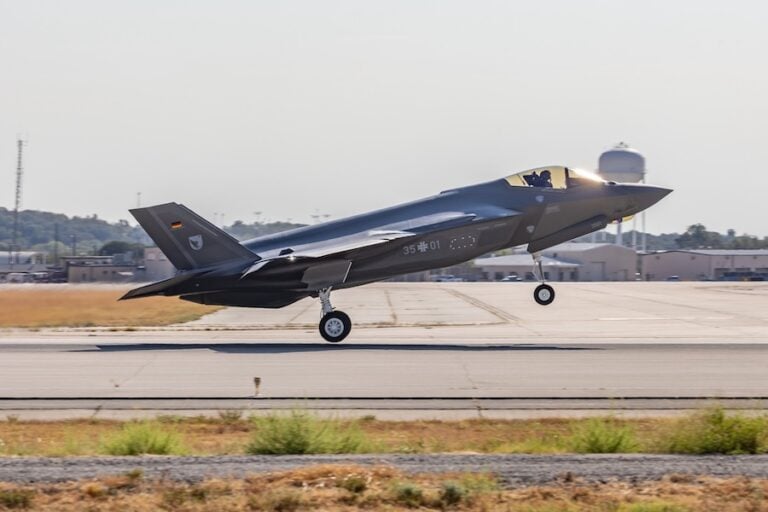
The country is supporting Ukraine and reinforcing NATO’s eastern flank through the deployment of an armored brigade in Lithuania. Germany was also preparing to roll out its first F-35A, marking what Pistorius described as a new phase in the development of the Bundeswehr’s capabilities.
“The rollout of the first German F-35A this Friday marks a new era for the Bundeswehr capabilities build up and just one example of our close cooperation,” Pistorius said. He said the new bilateral framework would create a stronger foundation for armaments cooperation between Germany and the United States.
“It creates a strong basis for a closer armament cooperation between our two nations, with one clear aim, increasing our production capacity, which is crucial,” Pistorius said. He argued that a larger European role within NATO would reinforce rather than weaken the alliance’s transatlantic character.
“NATO needs to become more European in order to stay transatlantic,” Pistorius said. “Burden shifting is progressing. Together with our allies, we are working towards a stronger Europe and a stronger NATO. And together, with our American friends, we are working on strengthening our common defense and resilience.”