
The Army demonstrated the concept at Fort Irwin by linking air-launched reconnaissance systems with a lethal Long-Range Precision Munition, or LRPM. Two Active/Passive Infrared Launched Effects detected, identified, located and reported a threat before a third lethal system carried out the terminal strike.
The test was designed to show how Army Aviation could find and engage targets from outside an adversary’s air-defense threat ring. The broader objective is to create access for joint systems, precision fires and other manned and unmanned platforms operating in contested airspace.
Project Convergence-Capstone 6 is the Army’s main experimentation event for integrating U.S. forces with multinational allies and partners. It brings personnel, equipment and technologies together to test concepts intended for fast-moving and technology-intensive operations.
The Army views Launched Effects as a family of systems rather than a single drone. The portfolio spans short-, medium- and long-range platforms with lethal, non-lethal, electronic-warfare and reconnaissance payloads.
During PC-C6, medium-range reconnaissance assets used the Integrated Tactical Network within the Next Generation Command & Control ecosystem to send real-time targeting coordinates to the corps echelon. That data supported decisions on follow-on kinetic operations before a lethal element was assigned to complete the engagement.
The Army is also developing the systems for collaborative autonomous operations. Multiple Launched Effects can network as a “wolfpack” to deliver synchronized effects against adversary air defenses.
The systems are intended to be low-cost and attritable for operations inside Anti-Access/Area Denial environments. That approach is designed to extend persistent sensing and strike capability while reducing the need to expose manned aviation platforms to higher-risk areas.
The LRPM is the primary lethal asset within the portfolio described by the Army. In a separate PC-C6 demonstration, a manned aircraft employed one of the first production-line LRPMs, which independently identified and struck a high-priority threat in a contested environment.
The Army said the test moved LRPM beyond the prototype phase and established a path toward targeted fielding in fiscal 2027. The production milestone also separates the weapon from earlier standoff concepts that remain at the prototype stage.
Standardization is another part of the Army’s effort to move the portfolio into operational units. The Launched Effects Dispenser for Ground and Rotorcraft and Universal Vehicle Control architecture are designed to provide common interfaces for launching and controlling different systems.
The modular approach is intended to avoid building dedicated launch tubes and cockpit hardware for each new payload. The Army expects those integration tools to support employment of Launched Effects at scale by fiscal 2027.
“Launched Effects are not just stand-alone tools; they are networked combat enablers,” said Dan Bailey, Deputy Director, Aviation Future Capability Directorate (AFCD). “By standardizing our launch and control systems, we’re giving the Combat Aviation Brigades the flexibility to dynamically deploy multiple capabilities, share critical targeting data on the fly, and secure a decisive overmatch against peer adversaries.”
The Army’s operating concept is built around placing autonomous systems in higher-risk areas instead of manned aircraft. The service also sees Launched Effects as a way to attack long-range artillery, drone networks and rocket systems that threaten ground maneuver forces.
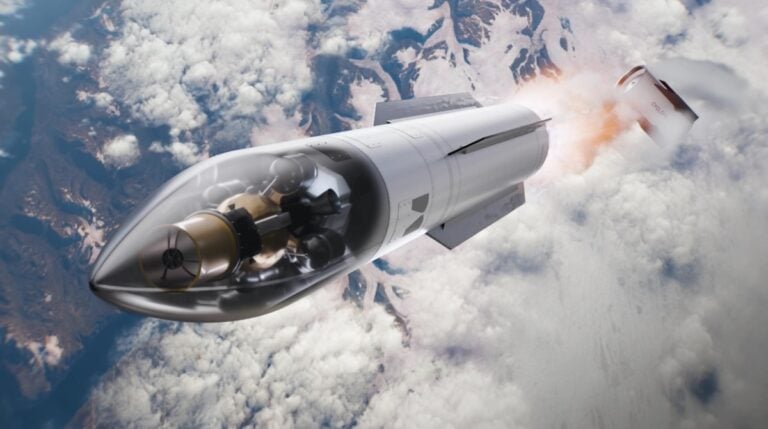
PC-C6 also included assessments of future technology demonstrators in the medium-range Launched Effects category. The Army evaluated concepts designed for greater speed and range that could carry lethal or non-lethal payloads.
Those systems remain technology demonstrators and are not formal programs of record. The Army said continued experimentation will shape how future Launched Effects capabilities are developed before they reach operational forces.