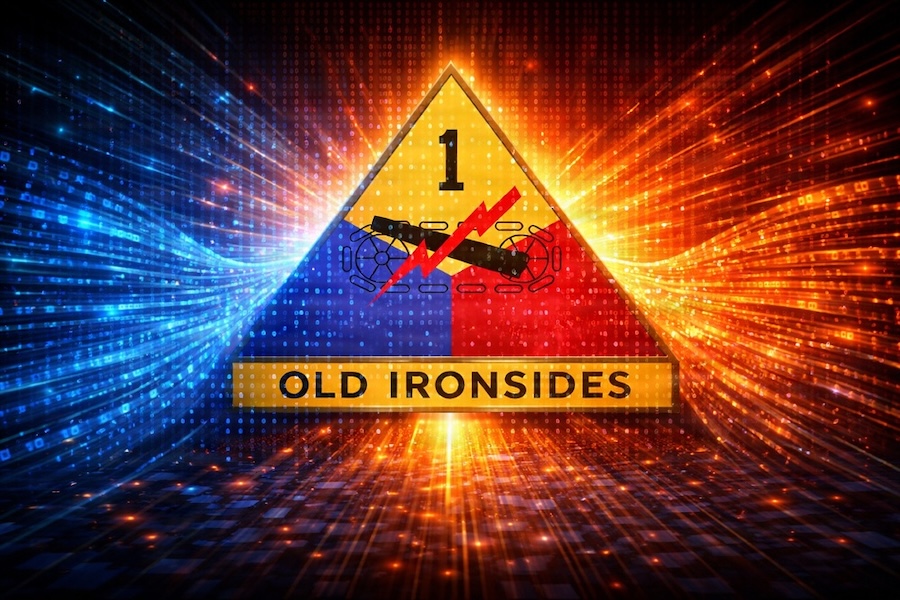
Army officials said AI tools are being integrated into daily workflows across personnel, logistics and operations functions. The effort aligns with recent guidance from the Secretary of War and forms part of a broader modernization push focused on future battlefield requirements.
“We are fundamentally changing the character of staff work,” said Maj. Gen. Curtis Taylor. “Our division is leaning forward, embracing innovation to ensure we can think faster, plan more effectively, and operate with greater precision than any adversary.”
“This is about harnessing technology to empower our people,” Taylor added.
The division’s personnel section, known as G1, has used AI to analyse thousands of soldier pay records to identify recurring financial issues affecting junior personnel. Army officials said the system automated a process that previously required weeks of manual work.
“The AI allowed us to rapidly identify the top three pay issues affecting our formations and, more importantly, predict when they were most likely to occur,” said Lt. Col. Ken Horton.
“We then produced a simple, one-page guide for command teams that outlines the problem, the steps a soldier will face, and exactly how to solve it,” Horton added. “We’re now preemptively solving problems before they impact a soldier’s readiness.”
The division’s logistics section, or G4, has also used AI to accelerate planning and improve fleet management. Officials said the technology helped generate draft operational orders and analyse non-tactical vehicle usage.
“We are leveraging AI to gain significant efficiencies in our planning and staffing processes,” said Lt. Col. Crystal Hines. “For instance, our team uses it to generate initial drafts of operation orders, which reduces our preparation time by roughly five days.”
The operations section, known as G3, has used AI to summarise meetings and reduce administrative workloads. Army officials said the technology helps produce executive summaries from commanders’ briefings more quickly.
“The operations section uses AI tools to analyze and summarize meetings like the Division’s commanders update brief and brigade update briefs,” said Mike Pierce. “One of the benefits of using AI for this is the time saved generating an executive summary from the meeting.”
Pierce said human oversight remains essential to ensure accuracy. “This ‘human-in-the-loop’ approach ensures the accuracy and context of every product before it reaches commanders,” he said.
Army officials said the technology allows soldiers and staff officers to focus more on critical decision-making rather than routine administrative tasks. The division said the initiative is expected to improve operational tempo both in garrison and during deployments.
“Every hour a soldier spends on a preventable finance issue or waiting for a part is an hour they are not training for combat,” Taylor said. “Research and implementation like this directly increase the division’s lethality by freeing our warfighters from necessary but routine tasks.”
“There is no staff process in our division that should not be reimagined in light of the potential of AI,” Taylor added. “This is about saving time, managing data, and getting soldiers focused on the complex business of warfighting readiness.”