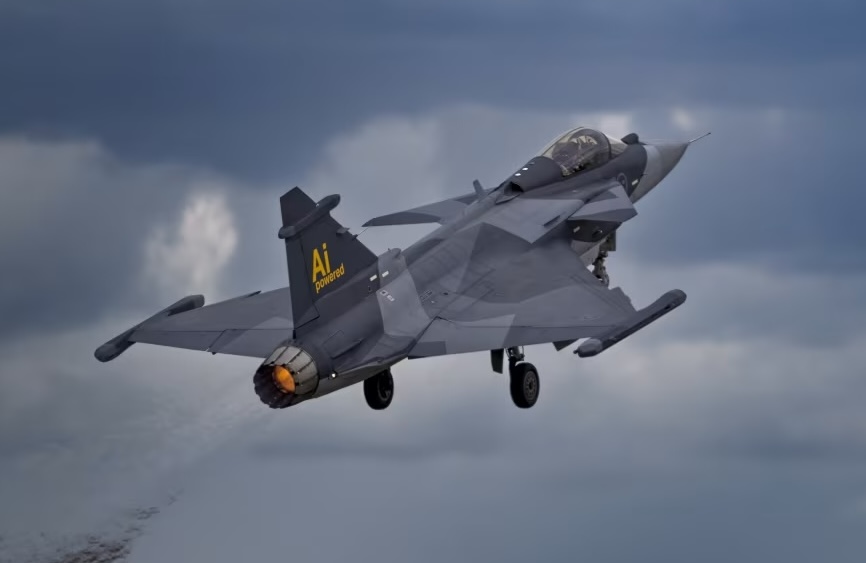
Saab had previously stated it planned to raise annual Gripen production to between 20 and 30 aircraft. Johansson said during the company’s April 23 first-quarter earnings call that output would likely initially reach the lower end of that range.
“The goal is to achieve that as quickly as possible,” Johansson said. He added that Saab is scaling up production capacity in response to growing demand.
The company currently operates two Gripen production lines. One is located in Sweden, while a second line is operating in Brazil, where Embraer has begun deliveries of the aircraft.
Saab has also indicated it could establish Gripen production in Canada if it secures a contract there. Canada is currently assessing future fighter procurement options.
Johansson said discussions with Canada were “intensive”. He added that any final decision would likely be made at the prime ministerial level.
Ottawa is considering whether to purchase Gripen aircraft alongside the F-35 Lightning II or expand its existing acquisition of the U.S.-built jet. The Canadian government has not announced a final decision.
Saab is also advancing negotiations with Ukraine. Kyiv said last year it was considering the purchase of up to 150 Gripen aircraft.
Johansson said a potential agreement with Ukraine is closely linked to European funding support. He noted that the European Union has approved a €90 billion loan package, with around two-thirds allocated to defence modernisation.
The funding situation is moving “in the right direction,” Johansson said. He added: “We are working on the proposal and the negotiations as we speak.”
Johansson said Saab is also assessing what investments may be required to begin deliveries to Ukraine between 2028 and 2029. The company continues to prepare for potential long-term production expansion.
Source: Aviation Week.