The decision follows a year of testing by Operational Test and Evaluation Squadron VX-31, which conducted live-fire trials of the missile.
Although specific procurement figures remain classified, the funding confirms the Navy’s commitment to adopting the AIM-260A. The missile has been described as offering greater range and capability than the current AIM-120D AMRAAM, particularly when paired with the recently deployed AIM-174B.
The Navy’s shift to JATM coincides with a significant reduction in AMRAAM purchases, with FY2026 funding dropping to $59 million for 51 missiles—down from 181 in the previous year. However, the service acknowledged that AMRAAM stocks remain insufficient, stating: “Due to AMRAAM inventories being critically low, the program will procure the maximum quantity of missiles with the provided funding in accordance with Title 10, US Code Section 2308 Buy-to-Budget acquisition.”
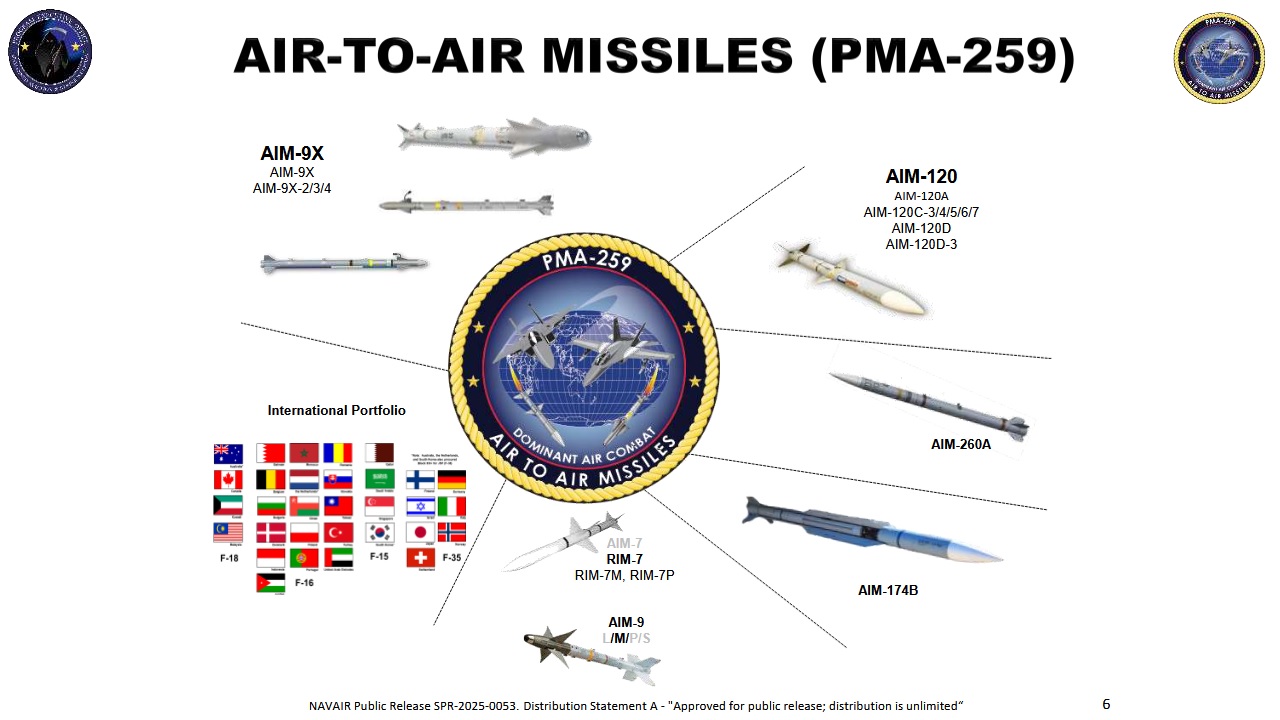
Details on JATM have been limited due to classification, but more information has gradually emerged throughout 2025. In February, a rendering of the missile was released by the Navy in a NAVAIR portfolio document, with The War Zone verifying its accuracy.
The AIM-260A is expected to enter service with Carrier Air Wings CVW-1 and CVW-5, embarked on the USS Carl Vinson and USS George Washington, respectively. These air wings are part of the Navy’s Pacific-based ‘Advanced Air Wings’, which are positioned to integrate new capabilities ahead of wider fleet deployment.