
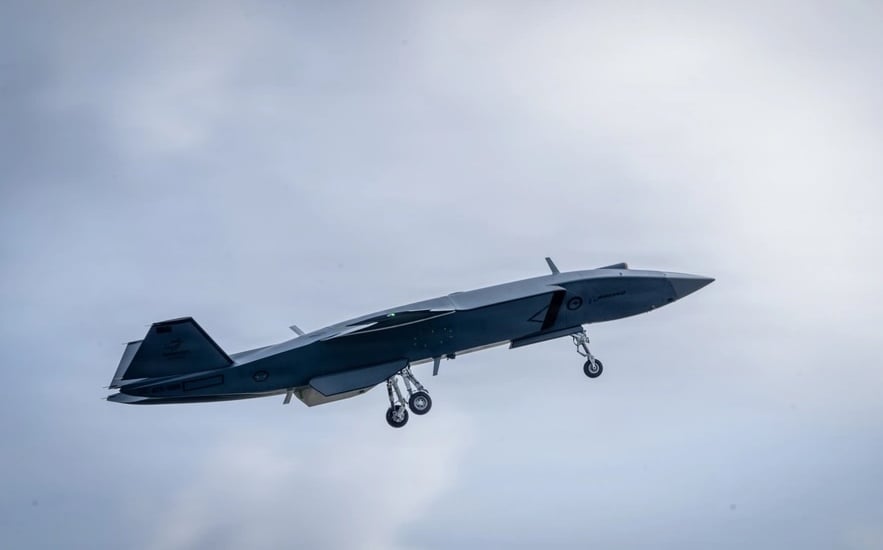
The Naval Air Warfare Center Aircraft Division, or NAWCAD, supplied the first version of the Joint Digital Autonomy Range framework, known as JDAR. It allows engineers to assess how autonomous software and flight maneuvers respond to high-threat scenarios in a simulated environment.
“In the future of aerial combat, unmanned systems will fly wing-to-wing with crewed fighters, and our aviators must be able to trust those systems implicitly,” said NAWCAD Commander Rear Adm. Todd Evans. “A digital test range provides the secure environment to test and trust these technologies before flight, ultimately improving readiness and protecting warfighters.”
Aircraft evaluation has traditionally relied on physical flights that are costly, complex and time-consuming. NAWCAD said the digital range can run millions of simulated flights quickly at a fraction of that cost.
Physical flight tests remain an important development milestone. Virtual testing gives engineers faster feedback, helping shorten program schedules, improve safety and refine tactics before aircraft undertake operational missions.
JDAR’s open architecture allows engineers to swap in new software without rebuilding the system. That flexibility supports continued testing and updates as threats and operational requirements change.
The range also addresses a central requirement for autonomous collaborative platforms: confidence that unmanned aircraft will perform reliably alongside human pilots. According to NAWCAD, mastering tactics in simulation can help crewed fighters approach targets and bring more weapons into the fight safely.
NAWCAD plans to expand the Australian capability with an autonomy-enabled, unclassified Joint Simulation Environment, or JSE. The upgrade will move testing beyond individual aircraft to complete missions involving multiple platforms.
Developed by NAWCAD, JSE will simulate a large battlespace where those platforms interact simultaneously. The center said this would provide a more realistic representation of the conditions encountered during actual missions.
NAWCAD identified Australia as the first international partner to receive the JDAR framework capability. It plans to extend digital testing capabilities to other allies to help joint air forces operate and fight together.
The center has already expanded digital test and training ranges across the Department of War. Based in Patuxent River, Maryland, it supports testing, evaluation, research, development and sustainment for all Navy and Marine Corps aviation platforms.