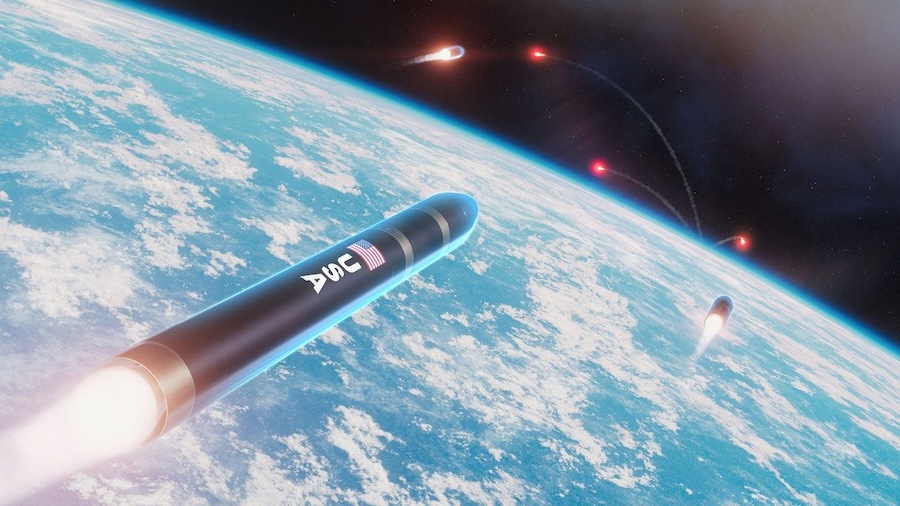
The program is developing a proliferated low-Earth orbit constellation of interceptors. The system is designed for boost, midcourse and glide-phase engagements.
Johns Hopkins APL will serve as an independent technical direction agent. It will help maintain a consistent architecture across competing industry teams.
The laboratory will manage technical interface documents linking the program’s major elements. Those elements include fire-control systems, ground infrastructure and the orbital interceptor constellation.
APL will also coordinate interfaces between participating companies. The role is intended to support data-driven government decisions during development.
“This is another great example of our ongoing strong partnership with APL and highlights the critical nature of University Affiliated Research Centers and Federally Funded Research and Development Centers to the success of these vital space programs,” said Col. Bryon McClain, acting Portfolio Acquisition Executive for Space Combat Power. The appointment adds independent technical oversight to the multi-contractor program.
The Space Force established the interceptor effort to address faster and more maneuverable missile threats. The target set includes ballistic, hypersonic and other advanced weapons.
Executive Order 14186 identified missile and advanced aerial attacks as a major threat to the United States. The Space Force said new interceptors must work with space-based tracking and artificial intelligence.
Space Systems Command awarded 20 Other Transaction Authority agreements in late 2025 and early 2026. The agreements carry a potential combined value of up to $3.2 billion.
The Space Force said 12 companies received the agreements. The supplier group includes established defense contractors and newer space technology companies.
The program uses a prize-based acquisition model. Companies invest during early development and compete for further funding at designated milestones.
“Adversary capabilities are advancing rapidly, and our acquisition strategies must move even faster to counter the growing speed and maneuverability of modern missile threats,” McClain said. The contracting structure is intended to preserve competition and government flexibility.
“Utilizing Other Transaction Authority agreements, we attracted both traditional and non-traditional vendors, while harnessing American innovation, and ensuring continuous competition. With the commitment and collaboration of these industry partners, the Space Force will demonstrate an initial capability in 2028.”
The Space-Based Interceptor program office operates within Space Systems Command. It is based at Redstone Arsenal in Huntsville, Alabama.
The Space Force said no additional program details would be released. It cited operational security requirements.