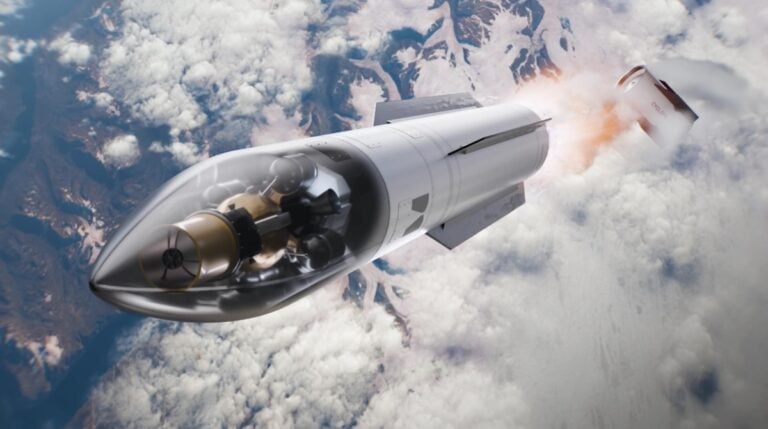
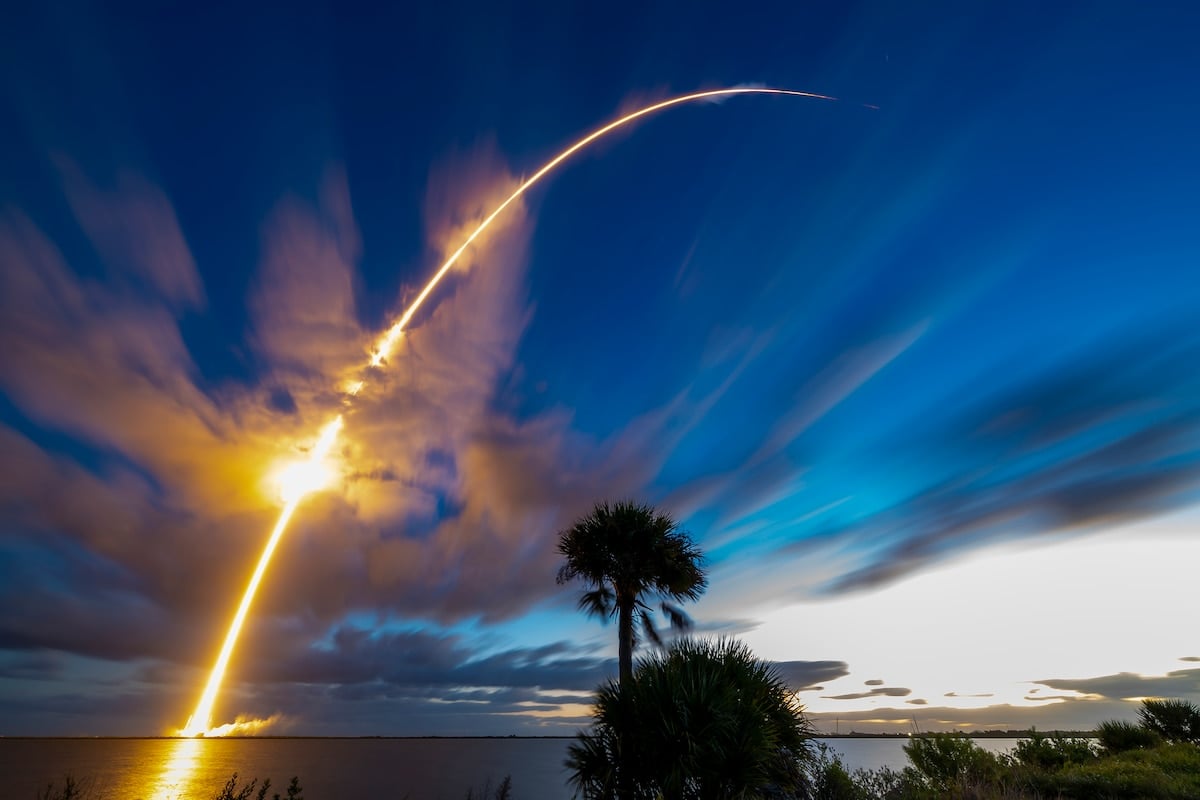
The U.S. Department of War disclosed the test on October 20, identifying Starfall as one of several payloads aboard a SpaceX Falcon 9 Block 5 rocket. The concept calls for placing supply capsules in Earth orbit and directing them to designated areas when military personnel need urgent assistance.
Starfall carried electronics, a SATCOM locator, batteries, a reverse-osmosis water desalination device, a survival kit and emergency medical equipment. Engineers also checked whether a UNI-PAC III life raft would fit, ahead of possible testing in later trials.
“This was a critical achievement to demonstrate the potential of Rocket Cargo delivery for point-to-point rapid global mobility for the Future Force,” said Adam Remaly, director of AFRL’s Technology Transition Office. “The cross-discipline collaborations and ability to unleash the speed of our defense industrial base are key to maximizing capability and winning the future.”
The broader Rocket Cargo program envisages delivering tens of tons per launch. AFRL said that capacity could eventually support missions in contested environments and austere locations without conventional transport infrastructure.
Potential uses include military resupply, expeditionary operations, rescue and disaster relief. The laboratory also identified responses to chemical, biological, radiological and nuclear hazards as a possible mission.
The effort seeks alternatives to transport infrastructure serving ships and aircraft that could be detected or destroyed. Further testing will assess how rockets and reentry capsules could deliver essential cargo quickly and at scale.
AFRL is working with commercial suppliers and small businesses, including SpaceX, Blue Origin, Rocket Lab, Sierra Space, Anduril, Inversion Space and Outpost Space. It continues to assess rocket and reentry capsule capabilities across those suppliers.
The laboratory is also exploring how to use commercial investment in launch vehicles and capsule reentry technologies for in-space manufacturing. Those assessments will help determine their potential for transporting Department of War materiel worldwide.