That successor is expected to come through the Future Air Superiority Effectors programme. The project is likely to include a new long-range air-to-air weapon within a wider family of future air-combat missiles.
The decision gives Meteor a defined role into the 2040s, but not a major modernisation path. The missiles are expected to remain in production and service, supported mainly through maintenance work.
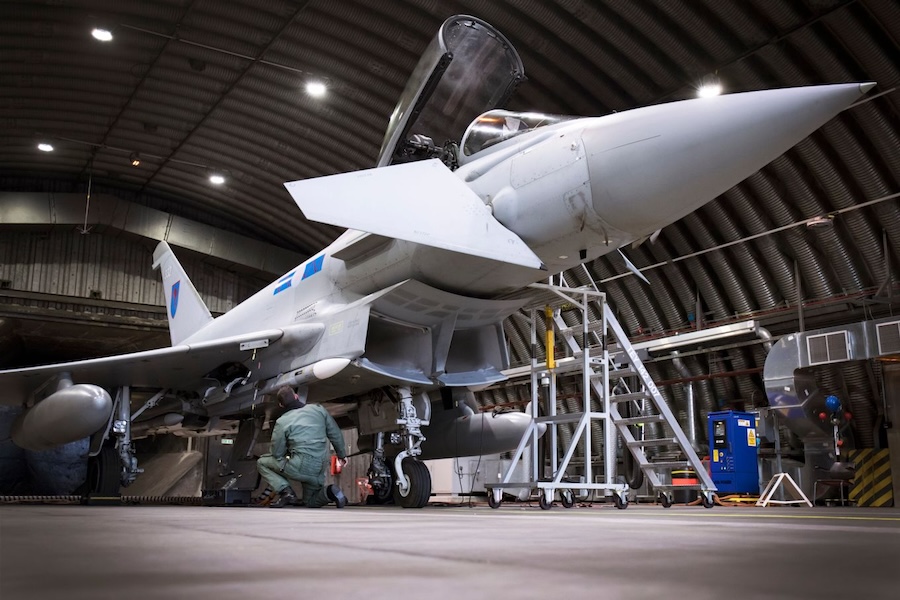
Meteor is currently integrated with the Royal Air Force’s Eurofighter Typhoon fleet. The F-35B is expected to become the second RAF combat aircraft type able to carry the missile after ongoing integration work is completed.
MBDA describes Meteor as a Beyond Visual Range Air-to-Air Missile developed with European partners. The programme was led by MBDA with the UK, Germany, Italy, France, Sweden and Spain.
The missile is already in service with those partner nations. It is integrated with Typhoon, Rafale and Gripen, and is being integrated on the F-35A, F-35B and KF-21.
Meteor’s main performance feature is its solid-fuel variable-flow ducted rocket, or ramjet propulsion system. MBDA says this gives the missile continuous thrust until interception and a very large no-escape zone.
The weapon uses an active RF seeker for all-weather engagements. It also has inertial mid-course guidance, a data link and autonomous terminal guidance.
That data link allows Meteor to use third-party target data. This supports networked air combat and gives aircrew more flexibility during long-range engagements.
The missile carries a blast-fragmentation warhead. It uses both impact and RF proximity fuses to increase the chance of target destruction.
MBDA lists Meteor at 190 kilograms, with a length of 3.7 metres and a diameter of 178 millimetres. The missile has rail and ejection launch capability, supporting integration across different fighter platforms.
For the RAF, the choice is less about replacing Meteor quickly than planning the next step in air superiority. Future Air Superiority Effectors would have to offer a clear jump in performance against future aircraft, missiles and electronic warfare threats.
The approach also ties missile planning to Britain’s wider combat air roadmap. Meteor will cover the current long-range requirement, while Future Air Superiority Effectors shapes the next weapons layer for Typhoon, F-35B and future combat aircraft.
The absence of a Meteor mid-life upgrade narrows the UK’s near-term path. It also places more weight on the schedule, funding and technical maturity of Future Air Superiority Effectors.