

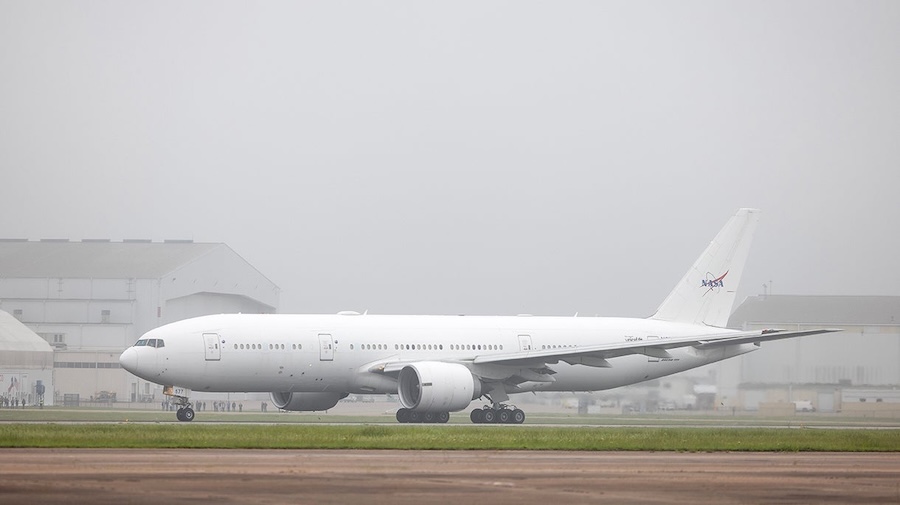
The upgraded platform is based on a Boeing 777 and will serve as a flying laboratory for NASA’s Airborne Science Program. It will support global research efforts by collecting Earth science data across a wide range of environments.
The aircraft has undergone extensive structural modifications to integrate advanced scientific instruments. It can accommodate between 50 and 100 onboard operators and conduct missions lasting up to 18 hours at altitudes of up to 43,000 feet.
The platform will be based at NASA’s Langley Research Center in Hampton, Virginia. It is designed to support studies of atmospheric composition, ocean health, natural disasters and broader Earth system interactions.
Jason Lambert, President of Intelligence, Surveillance and Reconnaissance at L3Harris Technologies, said: “This platform represents a leap for NASA’s airborne science mission.” He added: “The enhanced range, capacity and flexibility accelerate the pace of scientific discovery and help translate observations into actionable insights for policymakers, emergency responders and communities worldwide.”
L3Harris said it applied advanced engineering methods during the modification process. These included 3D scanning and specialized installation tooling to enable integration of a wide range of scientific payloads.
The aircraft will become NASA’s largest airborne science platform. It will replace capabilities previously provided by the retired NASA DC-8, while expanding mission flexibility and performance.