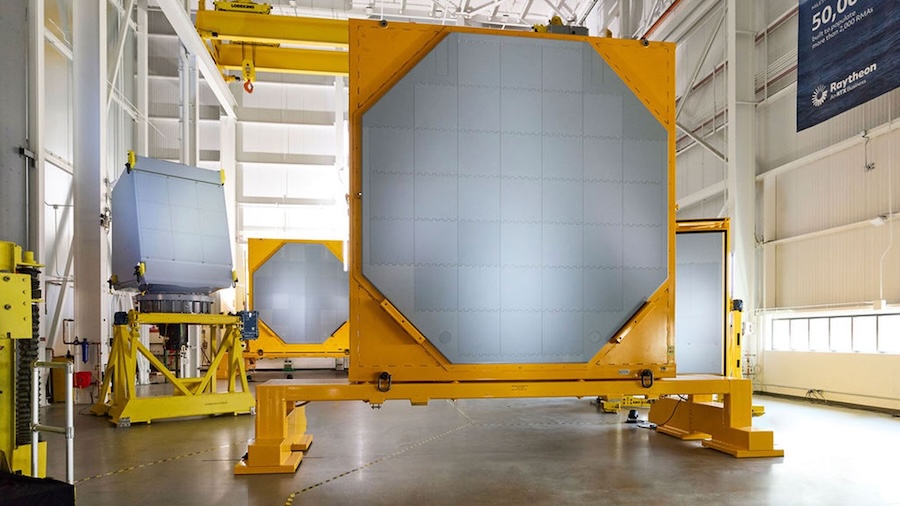
Under the contract, Raytheon’s Advanced Technology team will develop software that allows each building block within a radar to operate independently. According to the company, this would enable a single radar to conduct multiple missions at the same time.
Raytheon said the approach treats each radar building block as an individual software-defined aperture. This architecture is intended to help radars adapt quickly to changing operational requirements and operate more effectively in crowded frequency bands shared with commercial networks, including 5G.
“The electromagnetic spectrum is more crowded than ever, and our systems have to be smarter about how they operate in it,” said Colin Whelan, president of Advanced Technology at Raytheon.
“With precise, software-driven control over where and how we radiate, we’re taking an important step forward in how we use software defined apertures to keep pace with evolving mission demands,” Whelan added.
Raytheon said the effort builds on its long-standing work in software-defined apertures. The company said the modular architecture is designed to deliver capability improvements through software updates rather than hardware redesign.
According to Raytheon, that approach can allow radar performance to be adapted and expanded over time with greater speed, lower cost and reduced risk. The company said the flexibility is intended to support evolving naval mission requirements.
After completing software development, Raytheon plans to conduct demonstrations to validate independent control of radar modules. The demonstrations will also assess related capabilities, including multi-mission operations and spectrum sharing.
If validated successfully, the technology is expected to transition into operational naval radar systems. Raytheon said the contract supports the development of next-generation radar capabilities for future naval operations.