The company said the activity supported nearly 60,000 job-years. That equals about 20,000 average annual jobs across Canada.
The figures come from Airbus’ first broad Canadian economic assessment. PwC Canada prepared the study before the Farnborough International Airshow.
The report gives Airbus a stronger industrial case in Canada. It also highlights aerospace supply chains tied to civil and military markets.
Airbus spent more than $2.2 billion in Canada in 2025. About 70% went to Canadian dual-use suppliers.
Those suppliers support both civil and defence applications. Airbus said they help preserve industrial and technology capacity.
The company now works with about 1,000 suppliers in Canada. More than half are small and medium-sized businesses.
Canada ranks seventh among Airbus’ main supplier countries. The base supports aircraft components, engineering and aeronautical systems work.
“Today, Canada is where Airbus has the most significant presence outside Europe with all its business units – Defence and Space, Helicopters and Commercial Aircraft being present”, says Guillaume Chevasson, CEO of Airbus in Canada.
“Not only does Airbus contribute significantly to Canada’s aerospace ecosystem, but Canada also provides Airbus with world-class talent, expertise, major aircraft components and access to strategic raw materials availability, to name but a few.”
The study said Airbus supports 27% of Quebec aerospace jobs. It also pointed to higher wages inside Airbus’ Canadian workforce.
Average income for Airbus employees is about 60% higher. The comparison is with Canada’s all-industry average salary.
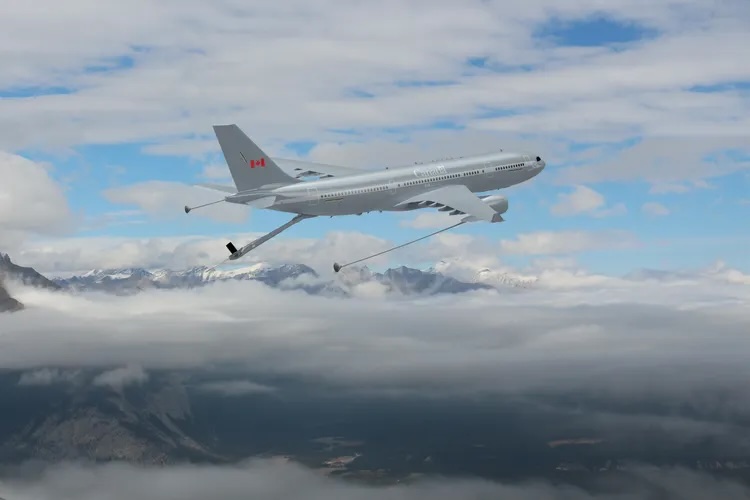
Canadian exports show the scale of Airbus’ local production. Last year, nearly 60% of aircraft exports were Airbus products.
That figure covers all aircraft sizes and weight classes. The exported aircraft were assembled locally in Canada.
Each delivery draws on a broad Canadian supplier network. Airbus said this links local suppliers to global aerospace programmes.
Airbus now employs more than 5,300 people in Canada. Most work in Quebec, Ontario and Nova Scotia.
Its Canadian footprint began with Fort Erie helicopter operations in 1984. The business expanded after Airbus acquired the A220 programme in 2018.
Airbus’ commercial aircraft unit contributed $5.5 billion to Canadian GDP. The figure includes direct, indirect and induced economic benefits.
The A220 programme is still increasing output. Airbus targets 13 aircraft per month in 2028.
Airbus Helicopters contributed $237.5 million to Canadian GDP. The business supports more than 350 suppliers across the country.
Its helicopter activities also support nearly 2,000 jobs. The Fort Erie site serves more than 230 domestic operators.
Airbus Defence and Space generated $778.4 million in Canadian spending. Its Ottawa unit works on Canadian government and Armed Forces projects.
Skywise, Airbus’ digital aviation services business, contributed $184 million. The subsidiary is based in Waterloo, Ontario.
Airbus Atlantic Canada contributed $617 million through aerostructures work. Its activities are based in Mirabel, Quebec.
The PwC study presents Airbus as a pan-Canadian aerospace investor. It links regional industrial strengths to global aviation demand.