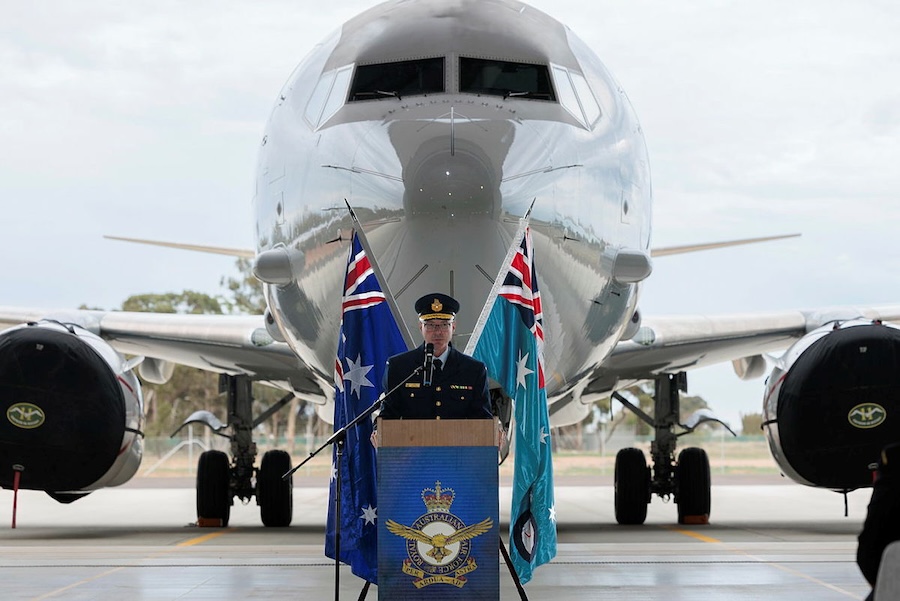
The facility was officially opened by the Albanese and Malinauskas governments and was delivered on time and on budget. It will enable long-term deep maintenance and modification of the Royal Australian Air Force’s P-8A Poseidon maritime patrol aircraft to take place in Australia.
The P-8A Poseidon is a cornerstone of Australia’s anti-submarine warfare, anti-surface warfare, and search-and-rescue capability. It also delivers maritime and overland intelligence, surveillance and reconnaissance.
Deputy Prime Minister and Defense Minister Richard Marles said the facility demonstrated the government’s commitment to strengthening sovereign sustainment capability. “This facility is a critical investment in Australia’s ability to maintain and sustain key capabilities for our Defence Force here at home,” Marles said.
“By embedding deep maintenance and upgrade work for the P-8A Poseidon fleet in Australia, we are strengthening sovereign capability, improving force readiness, and reducing reliance on overseas sustainment, exactly as set out in the National Defence Strategy,” Marles said.
“Just as importantly, this facility will support a skilled defence workforce and a resilient defence industrial base in South Australia, ensuring our Defence capability and Australian industry can continue to grow together,” Marles added.
The 240-meter-long building has been designed to support the P-8A Poseidon as well as other RAAF platforms. It includes a four-bay hangar suitable for Boeing 737-derivative aircraft, aircraft docking systems, workshops, secure infrastructure, and logistics and support areas for long-duration maintenance work.
The workshops will support structural, mechanical, avionics and mission-system maintenance and modifications. Secure systems and infrastructure will support sustainment and upgrade activities for sensitive equipment.
Construction of the facility over the past two years created about 450 jobs. More than half of the structural steel used in the project came from South Australia’s Whyalla Steelworks.
Defense Industry Minister Pat Conroy said the facility would support Australian industry and long-term employment. “This facility, built with steel from Whyalla, will sustain hundreds of long-term, secure defence jobs for South Australians,” Conroy said.
“This is about more than infrastructure. It’s a testament to the cooperation between the Albanese Government and Malinauskas state government, whether that be in saving the Whyalla steelworks or our commitment to a future made in Australia,” Conroy said.
“The DMMF will sustain high value defence industry jobs in South Australia, grow a highly skilled workforce, and ensure Australian businesses play a central role in delivering advanced Defence capabilities,” Conroy added.
The Royal New Zealand Air Force will also maintain and repair its P-8A fleet at the South Australian facility from 2028. The arrangement is intended to strengthen ANZAC interoperability and reinforce shared commitments to regional security and collective maritime capability.
In March 2025, Defence signed a $291 million support contract with Boeing Defence Australia to deliver upgrades to the P-8A Poseidon fleet. The upgrades include an improved combat system, enhanced anti-submarine warfare capability, and upgraded satellite communications to improve integration across the Australian Defence Force.
The first two P-8A Poseidon aircraft are being modified by the United States Navy to ensure continued commonality and interoperability with Australia’s alliance partner. The remaining aircraft will be modified by Boeing Defence Australia at the new facility, embedding the critical workforce in Australia.
South Australian Premier Peter Malinauskas said the opening marked a major step for the country’s defense sustainment capability. “The opening of this huge new defence aircraft maintenance facility in South Australia is a major milestone for Australia’s defence sustainment capability,” Malinauskas said.
“It is going to create important long-term careers right here in South Australia in the highly-technical field of aero skills,” Malinauskas said.
“Students at The Heights Technical College will graduate not only with their high school certificate and an in-demand trade qualification – they will be able to walk straight into a highly-skilled career in aero skills at this new facility,” Malinauskas added.
The new facility is also set to become a workplace for students from The Heights Technical College, a new technical college established by the Malinauskas Labor government. Boeing has signed on as an employer partner, and more than 20 students are studying aero skills to become aircraft maintenance technicians and engineers.
South Australia Minister for Defense and Space Industries Chris Picton said the facility would shift work previously conducted overseas into the state. “The opening of this $200 million facility is an important milestone for defence jobs in our state,” Picton said.
“Previously these planes were sent offshore for maintenance and upgrades, now South Australians will be performing this work,” Picton said.
“This partnership between the Albanese and Malinauskas Labor Governments will create ongoing, highly-skilled, secure and well paid jobs in our state for decades to come,” Picton added.
South Australia’s defense industry generated a record $2.015 billion in economic activity last financial year. That was more than double the $977 million recorded in 2019-20.
The governments said the facility would allow defense capability, Australian industry and South Australia’s skilled workforce to grow together. They said the investment would deliver long-term benefits for national security, the defense industrial base and international partnerships.