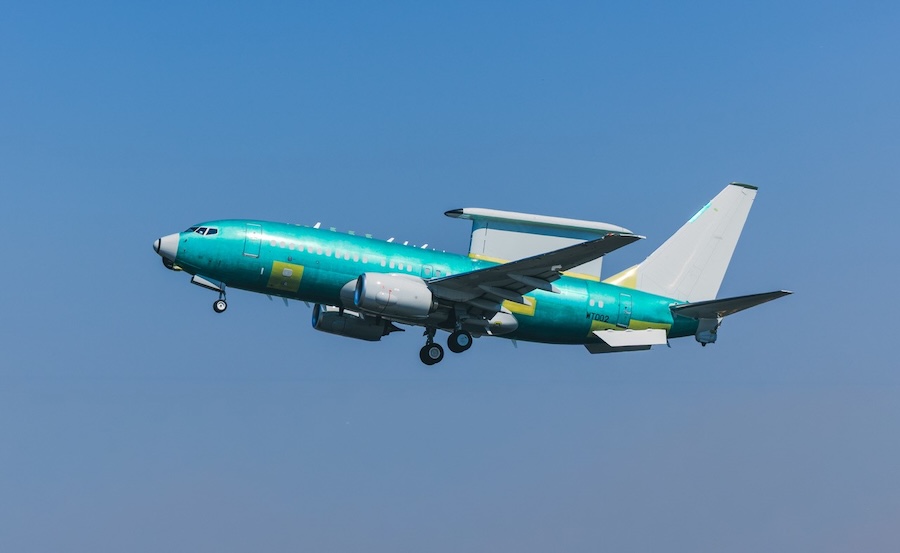
The second UK E-7 #Wedgetail has completed its first functional check flight (FCF).
In partnership with @UKArmaments, the FCF took off from Birmingham Airport and lasted about 2 hours.
Another step forward for the @royalairforce fleet. pic.twitter.com/zwR4cOIMY5
— Boeing UK (@BoeingUK) July 16, 2026
The flight is a measured but important step for a program built around only three aircraft. It shows the second converted Wedgetail is now progressing from industrial modification toward the staged testing and delivery process required before handover to the Royal Air Force.
The aircraft will be transferred in the coming months to London Southend Airport. There, as with the first RAF Wedgetail, it is expected to receive its final paint finish before continuing through the program sequence.
The second aircraft follows the same acquisition route as the first. Both were sourced from the secondary market, bought from previous owners and flown to the United Kingdom for conversion into the E-7A Wedgetail configuration.
The third British aircraft is different. It is based on a newly built Boeing 737-700 airframe, produced after the model’s production line was restarted solely for military needs.
STS Aviation Services is now carrying out conversion work on two more Wedgetail aircraft at its Birmingham facility. Those aircraft are the third example for the Royal Air Force and the first aircraft intended for the U.S. Air Force.
The British procurement covers the introduction of three E-7A Wedgetail aircraft into Royal Air Force service. The first aircraft has already begun trials and evaluation work led by a joint Boeing UK and U.K. Ministry of Defense team.
Delivery will start only after that evaluation cycle is completed with a positive result. The second aircraft’s first post-conversion flight therefore marks progress, but also underlines the controlled pace of a program still dependent on testing, painting and final acceptance before operational transfer.