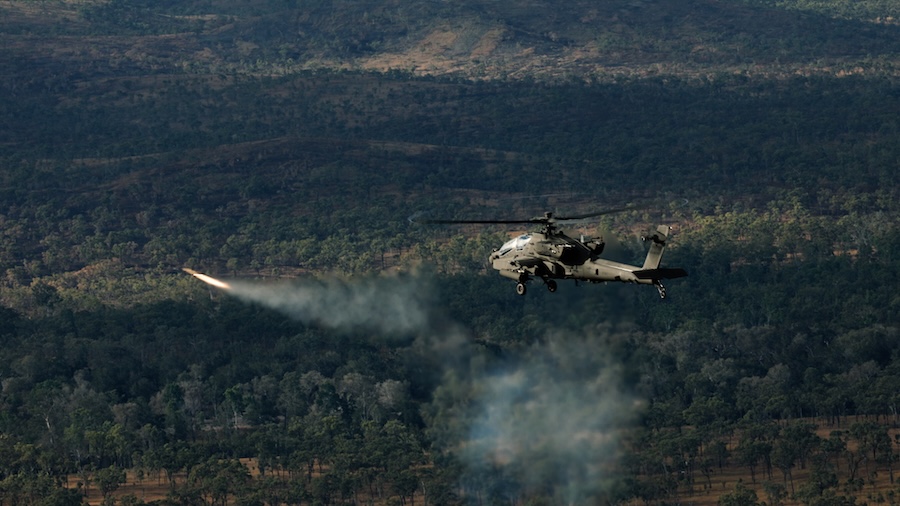
The live-fire missions took place during Exercise Possum Guns in Townsville. Army crews fired the helicopter’s 30mm gun, rockets and Hellfire missiles.
The weapons were used against simulated targets during the exercise. Defence said the activity showed growing operational readiness for the Apache fleet.
Australia is acquiring 29 AH-64E Apache attack helicopters through the United States. The first six aircraft have already arrived in Townsville.
All 29 aircraft are expected to be delivered by 2029. The fleet is entering service with the Australian Army and ADF.
“Live-fire training is a vital part of preparing our aviation crews for operations. Conducting it regularly in Australia helps maintain the high level of proficiency needed to operate effectively,” said Major General David Hafner, Commander Australian Army Aviation.
“This is a significant milestone for Army Aviation. Conducting our first live-fire in Australia demonstrates that we are building a capable, safe and sustainable Attack Helicopter capability,” Hafner said.
“Our aircrew, maintainers and support personnel will now conduct routine live-fire training and continue to integrate the Apache’s advanced capabilities into joint force operations,” he said.
The training involved crews, maintainers and support personnel. It tested procedures for safe training, sustainment and employment.
The live-fire work was supported by the 1st Aviation Regiment. The 16th Aviation Support Battalion also supported the activity.
Personnel trained in refueling, rearming and gunnery techniques. Defence said that work supports expansion of Apache capability.
The AH-64E is central to Army’s modernization plans. Defence said it supports littoral maneuver and long-range strike capability.
Those roles were identified in the 2026 National Defence Strategy. They were also highlighted in the Integrated Investment Program.
The Apache will provide attack aviation effects for the integrated force. These include reconnaissance, communications, networking, firepower and offensive support.
For Australia, the live-fire event moves the fleet beyond arrival. It begins regular domestic weapons training for the new aircraft.
The program also supports closer integration with joint force operations. That matters as Australia reshapes Army aviation for regional missions.