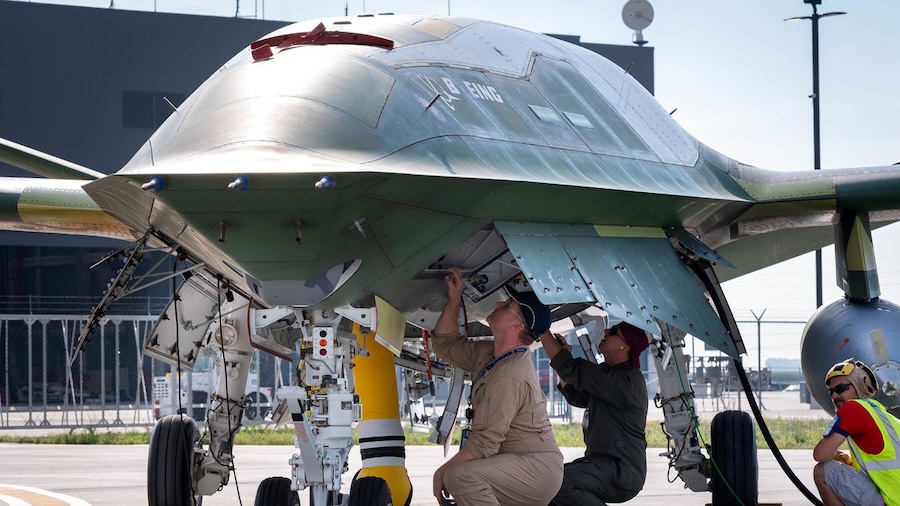
The flight was facilitated by Boeing and U.S. Navy Air Vehicle Pilots. They sent commands to the aircraft from the Unmanned Carrier Aviation Mission Control System MD-5 Ground Control Station at MidAmerica St. Louis Airport.
The MQ-25A received the commands and autonomously managed the propulsion, subsystems, guidance and flight controls needed to complete the mission plan. Boeing said the aircraft achieved both landing gear up and landing gear down phases during the flight.
The first @USNavy MQ-25A Stingray™ completed its second test flight, featuring the aircraft’s first airborne landing gear cycles. The milestone further validates the autonomous flight controls and performance capabilities, moving it closer to carrier operations. pic.twitter.com/UmqXk6Wufl
— Boeing Defense (@BoeingDefense) July 10, 2026
The second flight built on the success of the aircraft’s first test flight. It included landing gear cycles and used a new software load intended to support future flight envelope expansion tests.
Before the second flight, Boeing teams coordinated with the Navy test team to upload the new software to the aircraft. The software included improvements to the vehicle management system and mission computer.
Boeing said the flight moves the MQ-25A another step closer to carrier operations. The aircraft is being developed as an unmanned aerial refueler for the U.S. Navy.
The company said its teams will next apply U.S. Navy livery to the aircraft. Additional test flights will then be conducted from MidAmerica St. Louis Airport.