
The analysis focuses in particular on a Ukrainian strike during the night of June 26-27 against the Titan-Barrikady research and production center in Volgograd. Hoffman described the attack as arguably one of the most successful individual Ukrainian long-range strikes into Russia during the war.
According to Ukrainian sources cited in the analysis, five FP-5 Flamingo missiles were launched during the attack and three struck the Titan-Barrikady facility. The fate of the other two missiles has not been disclosed, although the analysis said interception or system error was the likely explanation.
Volgograd governor Andrey Bocharov acknowledged damage to a production facility and at least ten injuries. Ground-level imagery showed collapsed girders, flattened walls and wrecked machinery, which the analysis said was consistent with the detonation of roughly half a ton of high explosive per warhead.
One missile struck workshop 38, described in the analysis as the plant’s main production building and reportedly home to machine tools, cranes and assembly equipment. A second missile hit workshop 2, while a third struck an unidentified workshop.
The analysis said the effect on Russian production capacity depends on redundancy inside the facility. Titan-Barrikady is described as a node for Iskander-M short-range ballistic missile launcher assembly and as contributing to Russian strategic missile programmes, including the RS-24 Yars road-mobile intercontinental ballistic missile.
Hoffman said damage to workshop 38 and other affected halls could in principle cause delays if they contained non-substitutable machine tools or fixtures. However, he also said the available evidence does not currently support a confident battle damage assessment.
The analysis noted that previous Ukrainian strikes on high-value industrial targets have generally suggested local disruption rather than lasting production bottlenecks. It said Russia’s ballistic missile launch cadence decreased for two months after a previous Flamingo strike on the Votkinsk plant, but later rebounded.
Hoffman said the continuing frequency of Russian ballistic missile attacks suggests current production capacity may be as high as ever. Even so, the analysis said the effects of Ukraine’s strategic air campaign could become more severe if Kyiv can expand the scale and intensity of Flamingo attacks against Russian industrial targets.
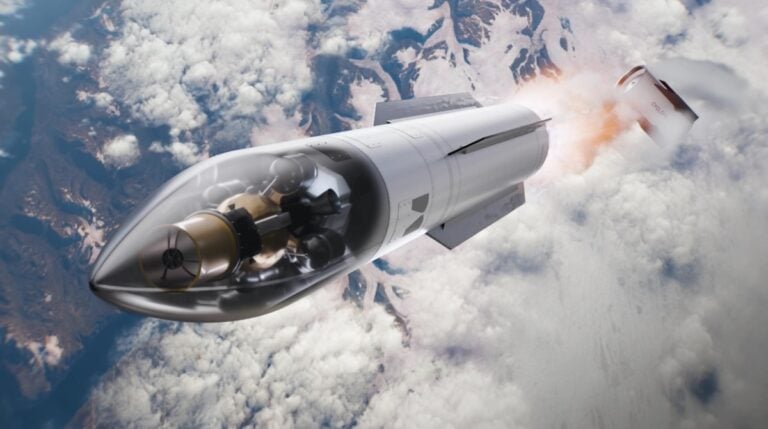
The article counts ten confirmed FP-5 Flamingo use cases since the missile was first announced in August 2025, including the Titan-Barrikady strike. Hoffman said that number almost certainly undercounts the real total, especially because unsuccessful strikes receive little or no open-source coverage or official confirmation.
The data remains too limited for broad conclusions, but the analysis identifies several trends. It said the Titan-Barrikady strike was the first confirmed case in which several missiles clearly reached and hit within the target area.
In most other confirmed cases, at most one missile hit its target, according to the analysis. The main possible exception was a September 2025 strike against the Skif-M production plant, where Ukraine may have achieved several hits, although Hoffman said that remains contested and underreported.
The analysis said Flamingo targeting appears to have narrowed towards Russia’s missile production base. Early strikes included an FSB security outpost, a power plant and a munitions depot, while later attacks focused more on production facilities such as Votkinsk, VNIIR-Progress and Titan-Barrikady.
Hoffman said this suggests the missile’s primary operational role may now be centred on degrading Russia’s war-industrial output. At the same time, he noted that Ukraine does not appear to be using the Flamingo against oil and gas infrastructure, instead relying on long-range drones for that mission.
The analysis also said volley sizes remain relatively small. Available data suggests Ukraine has launched at most six Flamingo missiles in a single strike, with the three most recent confirmed attacks reportedly involving five missiles each.
Hoffman said this remains inconsistent with FirePoint’s stated output of three missiles per day, which he said continues to appear exaggerated. He also noted that strikes remain relatively spaced, although the cadence may be increasing.
Confirmed Flamingo attacks have occurred on average every 4.5 weeks, according to the analysis. The last four confirmed strikes averaged about 3.5 weeks apart, while the last three were clustered within an eight-week period.
The reason for that possible acceleration remains unclear from available data. Hoffman said it could reflect increased production capacity, reduced Russian air defence coverage improving the chance of successful strikes and open-source confirmation, or both.
The analysis said significant uncertainties remain around the FP-5 Flamingo programme. One key question is how many repurposed AI-25TL turbofan engines remain available to FirePoint for missile production under the current design.
Hoffman said FirePoint is reportedly building an in-house engine production facility, but open sources do not make clear how far that effort has progressed. He also said overall production capacity still appears to fall short of the company’s stated ambitions.
Accuracy also remains a concern, according to the analysis. Across the last four confirmed use cases, Hoffman said the Flamingo reached its target twice but failed to cause significant damage because the missiles missed their likely intended aimpoints.
The analysis said improvements could come either through better sensor components to reduce circular error probable or through higher production capacity. Larger volleys would improve the statistical chance of hitting intended aimpoints even if accuracy does not improve.
Despite those limits, Hoffman said the recent operational record is encouraging and suggests the gap between manufacturer claims and actual performance may have narrowed. He described the Flamingo as Ukraine’s most promising heavy missile programme of record and a critical capability if Ukraine wants to threaten larger industrial facilities and supply chains linked to Russia’s war effort.
Source: Missile Matters – with Fabian Hoffmann.