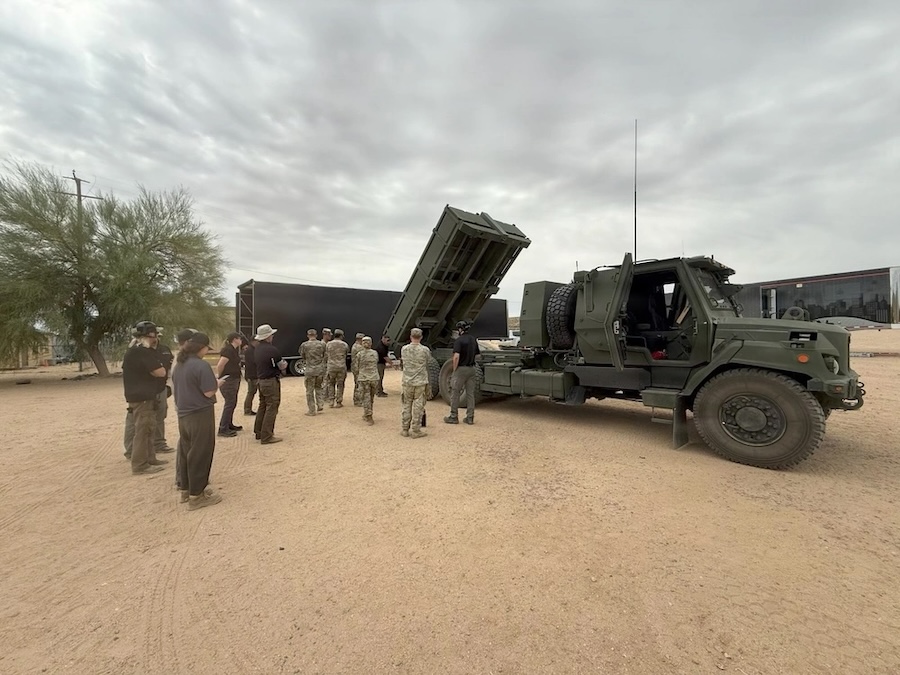
Soldiers from the 2nd Battalion, 18th Field Artillery Regiment, 75th Field Artillery Brigade, conducted the testing at the National Training Center. The Fort Sill-based unit worked directly with developers to assess the system under operational conditions.
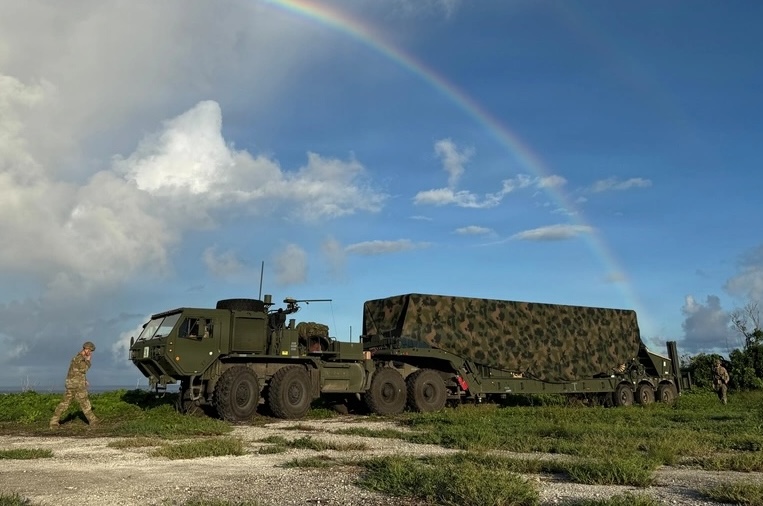
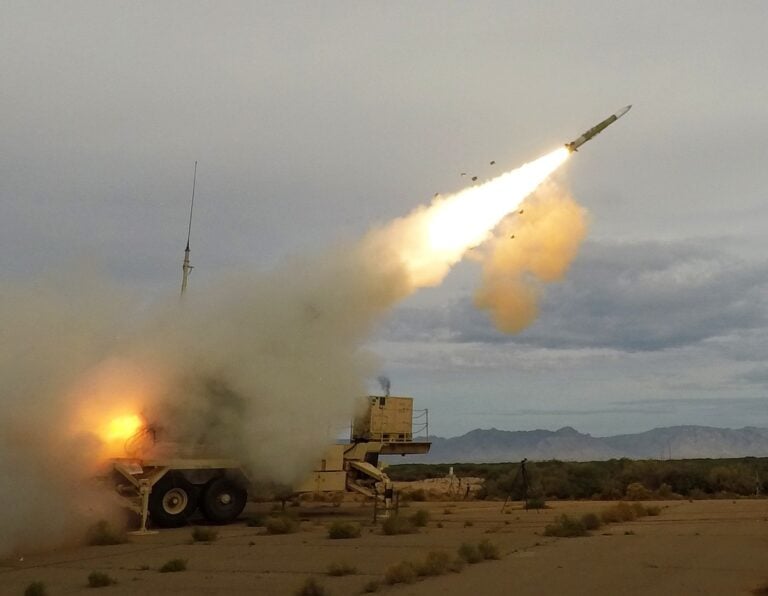
The experiment centered on DeepFires, a highly mobile autonomous launcher designed for multiple missions. The project was developed with the Army, Oshkosh, Forterra, Corvid Technologies and Collins Aerospace.
DeepFires builds on work conducted during Project Convergence Capstone 5 and the Contested Force Integration Warfare Exercise. The latest phase examined how autonomous platforms could improve firepower, survivability and operational flexibility.
The Army used a leader-follower configuration during the evaluation. A manned Joint Unmanned Autonomous System Multi-Payload System Command and Control vehicle directed two robotic platforms.
The followers included a DeepFires autonomous Multiple Launch Rocket System Family of Launchers platform and an Autonomous Resupply Vehicle. Soldiers retained control of all tactical decisions from inside the protected JUMPS C2 vehicle.
The approach transfers forward launching and heavy ammunition handling to autonomous machines. It is intended to reduce the number of soldiers exposed during artillery and resupply operations.
“This is a tremendous capability and it allows leaders to provide a higher quality training to the Soldiers with increased ROI,” said Maj. Abner Gonzalez, executive officer of the 2-18 Field Artillery Battalion. “Now Section Chiefs can theoretically plan for, operate, and supervise multiple launchers from one JUMPS C2 vehicle.”
“It provides multiple options and flexibility for the commander and allows much more mass from a single Battalion with the same number of Soldiers,” Gonzalez said. The configuration could allow a small crew to direct several launchers and resupply vehicles from one mobile command position.
Separating the command crew from the robotic platforms could also improve battlefield survivability. If an enemy detects a launcher, the soldiers controlling it could remain concealed several kilometers away.
The concept addresses threats from drones, satellites, counter-battery radars and precision weapons. These systems have made stationary artillery positions and visible crewed convoys increasingly vulnerable.
The command vehicle uses a multilayered communications architecture for denied, degraded, intermittent and limited environments. The network is designed to maintain mission commands and operational data under electronic warfare pressure.
Soldiers also participated in direct field evaluations known as Soldier Touchpoints. Developers used their feedback to adjust software and address operational concerns during the testing process.
“Having the opportunity to be here and affect the future of artillery in such a meaningful way by integrating technology that will save Soldiers’ lives feels amazing to myself as well as all of the Soldiers here,” said 2nd Lt. Elizabeth Jones, a platoon leader with 2-18 Field Artillery. “The autonomous technology will remove future Soldiers from dangerous situations altogether in the rocket world.”
“The developers take our feedback and often immediately take action to fix what any one of us may be concerned about, and it feels like we are certainly making a difference for future Soldiers,” Jones said. The process is intended to connect prototype development more closely with operational requirements.
The shift toward autonomous launchers could also change the duties of noncommissioned officers. Traditional hands-on crew management would increasingly move toward remote emplacement and computer-based supervision.
“It essentially removes our role from the equipment physically altogether, and all we need to think about is how to emplace the equipment,” said Staff Sgt. Baylee Hopper, a section chief with 2-18 Field Artillery. “We really have to think about how the future of this equipment is entirely autonomous and will be from a computer screen.”
“Our role is certainly changing, and this exercise will help us determine where our role lies in the future of autonomy in the rocket world,” Hopper said. The testing will inform how the Army organizes and trains future autonomous artillery units.
Under Secretary of the Army Michael Obadal visited the unit on July 24, 2026, alongside Army Futures Command leaders. The delegation received an orientation on DeepFires and inspected the Juggernaut Launcher and JUMPS C2 vehicle.
Obadal tested the systems’ autonomous and remote-control functions during the visit. Representatives from III Armored Corps also briefed the delegation on the project’s Long Range Maneuver capabilities.
Future phases are expected to allow one manned command vehicle to control up to four autonomous launchers. The same command element could also direct multiple autonomous resupply vehicles simultaneously.