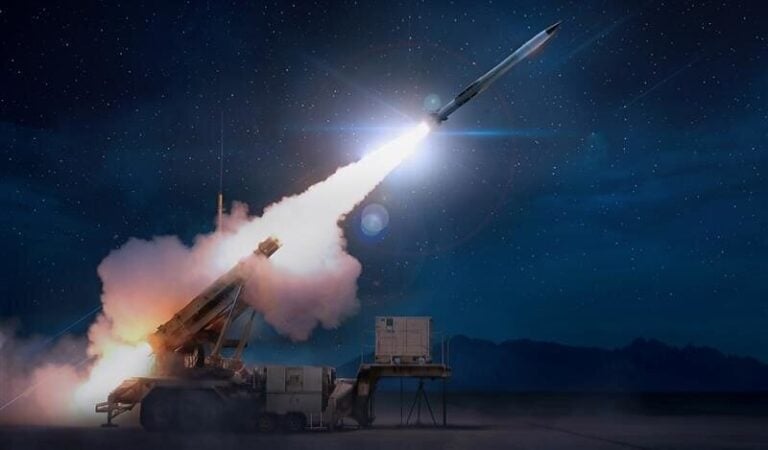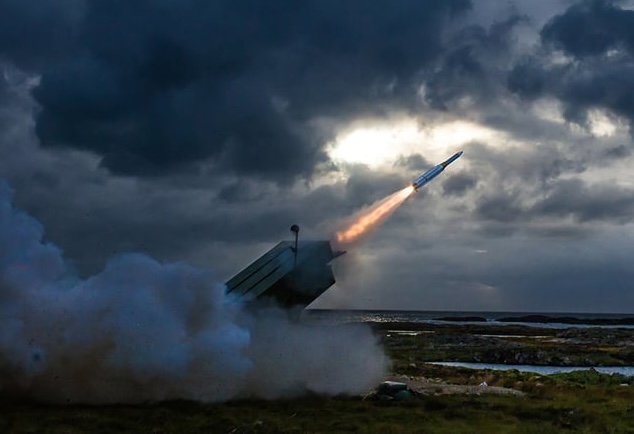
Recent months have left little doubt that conflicts in which an adversary launches massed raids of one-way attack drones and cruise missiles cannot be won with traditional, costly weapons alone. More economical solutions are essential.
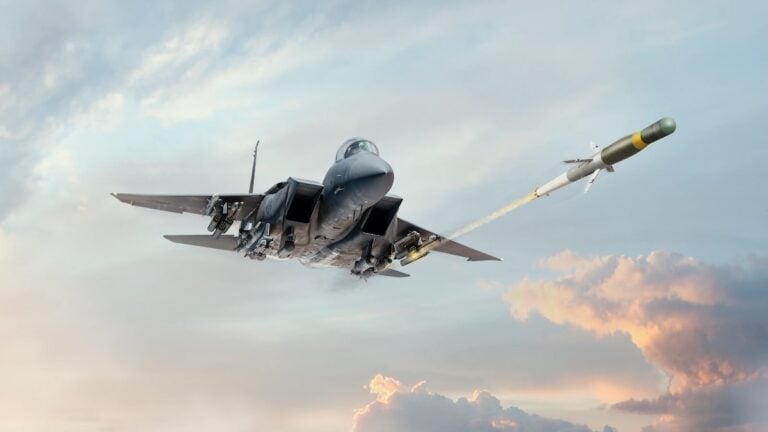
For at least two years, the United States has been relying not only on advanced and expensive missiles such as the AIM-9 Sidewinder and AIM-120 AMRAAM, but also on the long-established, inexpensive 70 mm (2.75-inch) rocket, carried by fighters in underwing launchers. Adapting it for the counter-drone role took several years of development and extensive testing. The result is the configuration now used by the US Air Force: the Advanced Precision Kill Weapon System (APKWS) II.
From unguided rocket to drone killer
The key change is guidance. Thanks to a guidance section developed by BAE Systems and installed mid-body, between the motor and the warhead, the formerly unguided rocket now homes in on a target illuminated by a laser designator, including targets in the air. The kit can be used by aircraft such as the F-16, F-15 and A-10.
Because the weapon demands considerable skill, particularly in designating airborne targets, pilots need dedicated training and exercises before using it in combat.
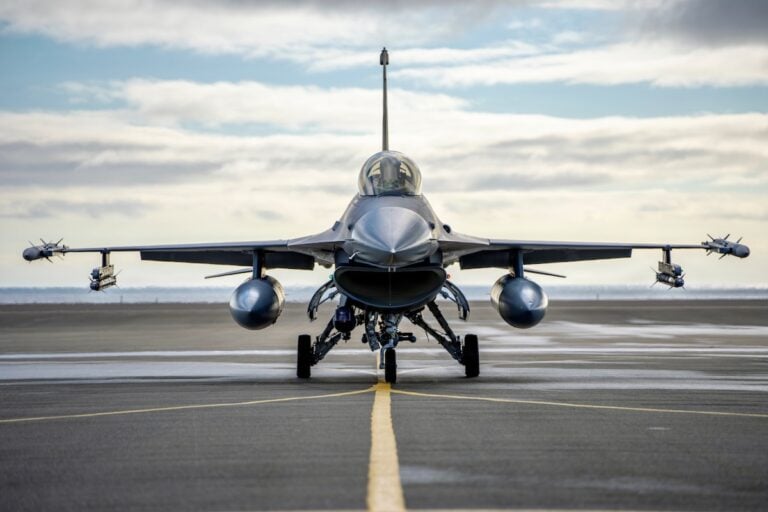
The most striking feature is the sheer number of rounds a single aircraft can carry. An F-16 – a type that has frequently used this capability against drones launched by the Houthis in Yemen – can be fitted with up to six seven-round launchers, giving it 42 guided rockets on a single counter-drone sortie. Combined with the internal cannon, this loadout meets the air force’s current requirements for countering massed raids.
Lessons from April 2024
The lack of such a capability was painfully exposed during Iran’s massed drone and missile attack on Israel on the night of 13–14 April 2024. Allied fighters, typically carrying around four air-to-air missiles each, were forced out of the engagement once their weapons stations were empty. Attempts to engage drones with guns proved largely unsuccessful. The lessons learned from that night contributed to the wider adoption of APKWS in the air-to-air role.
France: MICA stocks run dry
In recent months, France has begun employing a similar solution based on its own 68 mm rockets, close in calibre to the American 70 mm round. Like every country confronted with cheap drones in recent conflicts, France urgently needed a less expensive domestic weapon. By spring 2026, its stocks of MICA IR/EM missiles were running low.
While protecting the airspace of the United Arab Emirates, French Rafales expended a significant share of their MICA inventory, at an estimated unit cost of around USD 700,000. For a time, these medium-range missiles were used against Shahed-type drones costing an estimated EUR 50,000–80,000 each, despite the unfavourable cost-exchange ratio. Once missiles ran short, pilots were left with the far cheaper but risky and demanding option of engaging drones with the cannon.
The interim domestic solution, which has proved successful, was developed jointly by the French defence procurement agency (DGA) and the French Air and Space Force’s test and evaluation centre. The programme, named LADAC (*Lutte Anti-Drone sur Avion de Combat* – counter-drone warfare from combat aircraft), is set to equip both the Rafale and the Mirage 2000 RMV.
The 68 mm rockets will be integrated on the Rafale in 12-tube launchers, compared with the seven-tube launchers used by US F-16s for APKWS. Thales has also proposed the Telson JF12 launcher, which works with the aircraft’s radar and the company’s TALIOS targeting pod, used to track and laser-designate targets. The associated munition is most likely the Aculeus LG laser-guided rocket, with a range of up to 7 km.
Light jets as drone hunters
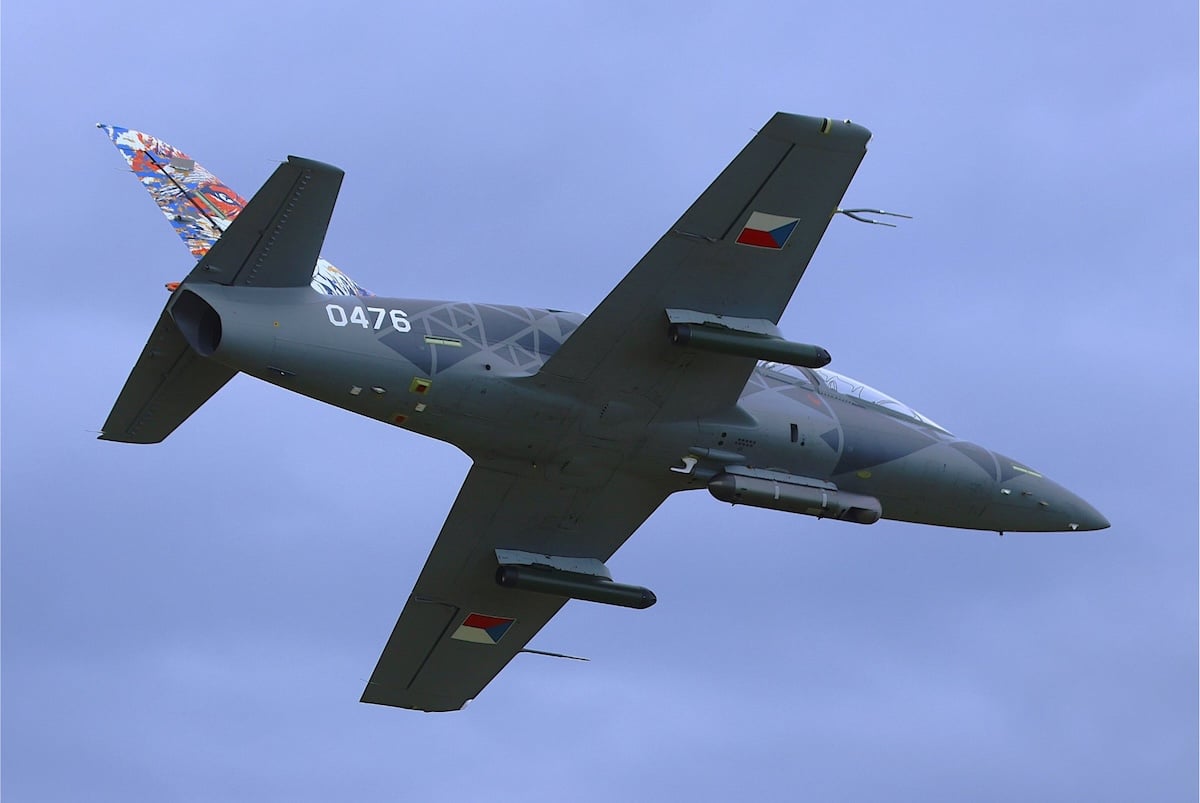
It is not yet clear whether lighter, cheaper aircraft are being considered in France. Elsewhere in Europe, however, interest is growing in light combat and advanced jet trainers as a way of reducing the cost of airborne drone hunting – among them the Czech L-39 Skyfox, the Italian M-346 and the Korean FA-50, which Poland has recently begun using for quick reaction alert duties.
Czech manufacturer Aero Vodochody recently announced that it had signed a letter of intent with Thales Belgium covering the integration of Thales guided rockets on its platform. The agreement could pave the way for a low-cost European drone hunter in the same class as the M-346 and the FA-50GF/PL used by Poland.
Such a combination could significantly cut the cost of counter-drone missions by pairing long-undervalued trainer and light attack aircraft with some of the cheapest drone-capable munitions on the market. These aircraft are considerably cheaper to operate – reportedly around half the cost of an F-16 – but their limited payload restricts the weapons they can carry. The L-39 Skyfox, for example, can carry around 1.6 tonnes on five hardpoints, two of which may be occupied by external fuel tanks – essential for the long endurance that counter-drone patrols demand.
That leaves little room for air-to-air missiles such as the AIM-9 Sidewinder, which cost several hundred thousand dollars apiece. Rockets costing in the low tens of thousands of dollars each are therefore an attractive option, especially as seven FZ275 LGR rounds fit into a single Thales FZ800 launcher.
FZ275 LGR: range and lethality
The rockets allow drones to be engaged from several kilometres away, far safer than closing to a few hundred metres to fire a 12.7 mm gun pod from an L-39. The FZ275 LGR is a 2.75-inch (70 mm) rocket fitted with deployable fins, a semi-active laser seeker and a warhead optimised against drones and similar aerial targets.
The 4.1 kg warhead consists of several thousand steel balls surrounding about 1 kg of explosive, producing a fragment cloud with a lethal radius of several tens of metres. The quoted range of up to 7 km most likely applies to ground targets or to launches at high altitude, where the rocket can glide after its motor burns out roughly one second into flight. Against airborne targets, the effective range may be as little as half the advertised figure.
About the author
Col. (Ret.) Józef M. Brzezina, a former Polish Air Force officer, is a defense writer and analyst with more than 25 years of experience contributing to leading military publications and online outlets. His work focuses on unmanned aircraft systems (UAS), manned combat aviation, and the employment of weapons and military equipment in modern armed conflict.