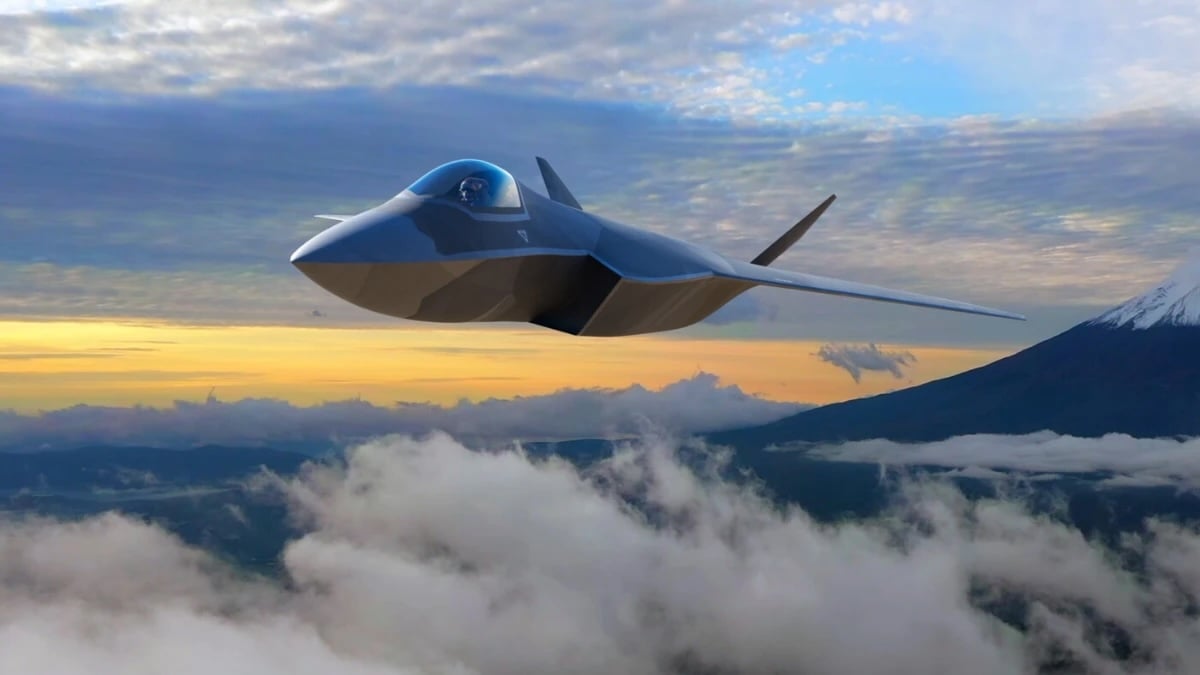
Airbus is set to hold talks with BAE Systems in the coming weeks on the possibility of joining the Global Combat Air Programme (GCAP), as Europe’s combat aviation sector seeks a new equilibrium following the unexpected breakdown of Franco-German industrial cooperation on a sixth-generation fighter.
The end of FCAS
The Future Combat Air System (FCAS) programme, pursued by France and Germany for several years and later joined by Spain, was intended to deliver the Next Generation Fighter (NGF) together with accompanying unmanned systems. It was Europe’s greatest hope of competing at the top tier of the global combat aircraft market, and a continuation of decades of achievement by the continent’s aerospace industry.
However, the two lead nations and their industrial champions, Dassault Aviation and Airbus, held diverging visions of the project. Complicating an already difficult situation, India had been working towards a decision to join FCAS as the dispute unfolded.
Months after the very public split between Dassault and Airbus, the dust has yet to settle across Europe’s combat aviation sector.
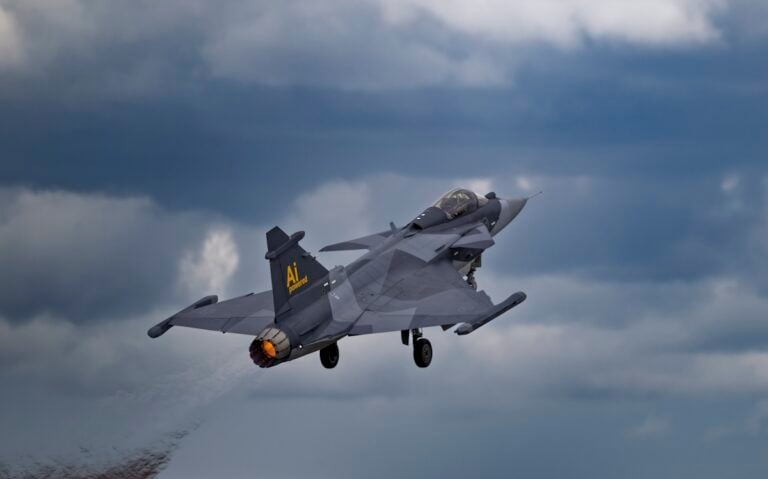
European output, meanwhile, is improving year on year. In 2025 European manufacturers delivered around 50 combat aircraft, roughly half of them for export. France accounted for 26 Rafales (against a target of 40 a year), Germany and the UK together for 15 Eurofighters, and Sweden for 12 Gripens (with a longer-term target of 36 a year). Order books for European fourth-generation fighters continue to swell. They remain fourth-generation because Europe has fallen behind the world powers that already produce fifth-generation aircraft.
Germany’s route into GCAP
GCAP has been pursued steadily for several years by the United Kingdom, Italy and Japan. With the Franco-German fighter project having ended earlier this year, Germany, which saw no way of continuing FCAS with France, could join GCAP at an already advanced stage, provided the talks with BAE succeed. Discussions between Airbus and BAE Systems are expected to centre on several options for potential cooperation.
The programme is led by a joint venture of BAE Systems, Leonardo and Mitsubishi Heavy Industries, with Rolls-Royce, MBDA and Avio Aero among the other industrial partners. Airbus Defence and Space intends to play a significant role in future, and several new stakeholders are showing interest at various levels.
Some industry commentators warn that the programme could be disrupted if Berlin pushes too hard for a large design role, and that the terms of cooperation would then need careful restructuring.
On 8 October 2026, UK Prime Minister Andy Burnham said Britain was open to German membership. “I’ve indicated to the Chancellor … our openness to Germany joining GCAP,” Burnham said at a joint press conference with German Chancellor Friedrich Merz. He added that he would pursue the idea “in the coming period” together with Italy and Japan.
Both sides recognise that the alternative for Germany and Airbus is cooperation with Sweden’s Saab, which has continued to build the Gripen largely apart from both FCAS and GCAP. Like its European rivals, Saab carries growing weight in this segment, and its interests increasingly extend beyond Europe. Further changes to the architecture of major programmes, both GCAP and what remains of FCAS under French control, cannot be ruled out.
Uncrewed wingmen on the agenda
Semi-autonomous uncrewed Collaborative Combat Aircraft (CCA) will also feature prominently in the talks. Sixth-generation fighters can no longer be discussed without considering mixed crewed–uncrewed formations.
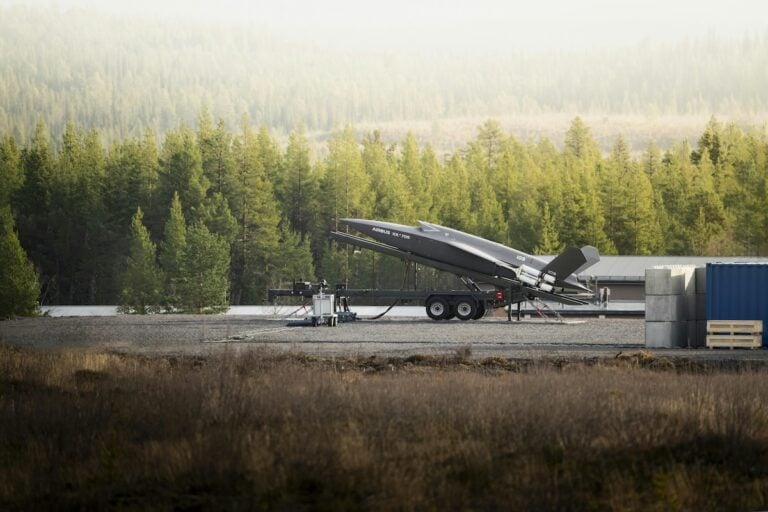
Airbus has recently begun testing CCAs in Europe with U.S. company Kratos. Germany aims to begin integrating its Eurofighters with European CCAs from 2029, using the Valkyrie, a hybrid combining a U.S. airframe with European mission systems. Since the start of this year, CCAs intended to operate first with German Eurofighter Typhoons have been undergoing intensive trials at an industrial site near Munich and at a range in northern Germany.
The field of contenders offering similar capabilities remains open. It includes Boeing Australia with the MQ-28 Ghost Bat and General Atomics with the YFQ-42A.
Poland eyes an observer seat
Poland has not, until now, been regarded as a strong partner in international ventures of this kind, particularly alongside nations with real industrial capacity behind established combat aircraft brands. That is set to change. Poland’s investment in its armed forces has grown to the point where Warsaw carries weight even without a developed aerospace industry.
The Polish daily Rzeczpospolita recently reported that Poland has received informal approval to join GCAP as an observer, subject to a financial contribution scaled to its level of participation. The signal first emerged at the Ministry of State Assets early this year. The next step would be a formal application, but the government has yet to take a decision with major implications for Poland’s international, scientific and industrial standing and its long-term security.
The main obstacle is the weakness of Poland’s aerospace sector, which lacks capabilities comparable to those of its European partners. These would first have to be rebuilt, focusing on selected niches suited to a project of this scale and to an economy of Poland’s size.
Poland’s current priority is to build the strongest air force in its region around the F-35. Aircraft are arriving in successive batches, with the tenth F-35A recently delivered, and supporting infrastructure is being expanded. The jets are currently based at Łask, with a possible second base in the longer term for a further batch of 32 F-35As.
Warsaw also needs to plan seriously for a fleet of CCAs to operate alongside crewed aircraft, for example in support of F-35 pilots.
Building leverage for the sixth generation
Whatever the scale of the fifth-generation integration work now under way, Poland should already be preparing a strong negotiating position for the procurement of sixth-generation aircraft, expected in around two decades. That may seem a long way off, but the architecture of a future air force has to be built well in advance.
Before then, Poland will need to choose a successor to its F-16s, which, despite their mid-life upgrade, are likely to be replaced by aircraft two generations newer. Finding that successor is a task for the next decade.
The F-35 programme offers a lesson. A nation’s place in its hierarchy determines the benefits it receives: the core partners, the US and the UK, gain the most, junior partners less, while customers outside the programme’s core, such as Poland, have little negotiating leverage. Warsaw would do well to secure the strongest possible position early.
About the author
Col. (Ret.) Józef M. Brzezina, a former Polish Air Force officer, is a defense writer and analyst with more than 25 years of experience contributing to leading military publications and online outlets. His work focuses on unmanned aircraft systems (UAS), manned combat aviation, and the employment of weapons and military equipment in modern armed conflict.