

The 30th iteration began on June 24 under the theme “Partners: Integrated and Prepared.” Participating forces also included 30 surface ships, five submarines and 15 national land forces.
“No single nation can ensure security in the Pacific alone,” said U.S. Navy Vice Adm. Jeff Jablon, commander of the RIMPAC 2026 Combined Task Force. “The global maritime environment is too large and too complex for any one country to safeguard by itself.”
The exercise included in-port planning, at-sea operations and a final free-play scenario. Opposing forces reacted dynamically during the closing phase.
Participating forces conducted more than 500 maritime training events. They also flew more than 2,400 sorties and handled over 5,000 operational problem sets.
Training covered anti-submarine warfare, maritime strikes and integrated air and missile defense. Forces also conducted amphibious operations, logistics missions and command-and-control activities.
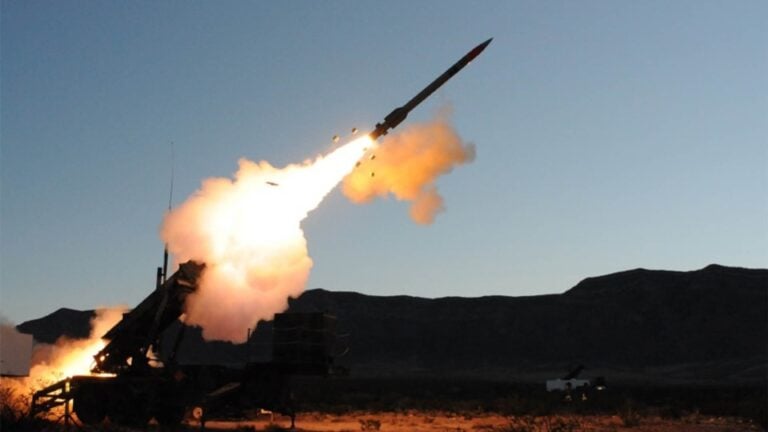
Two live-fire sinking events involved Australia, Canada, Italy, Japan, New Zealand, Spain and the United States. U.S. Army, Navy and Air Force units contributed to the combined maritime strikes.
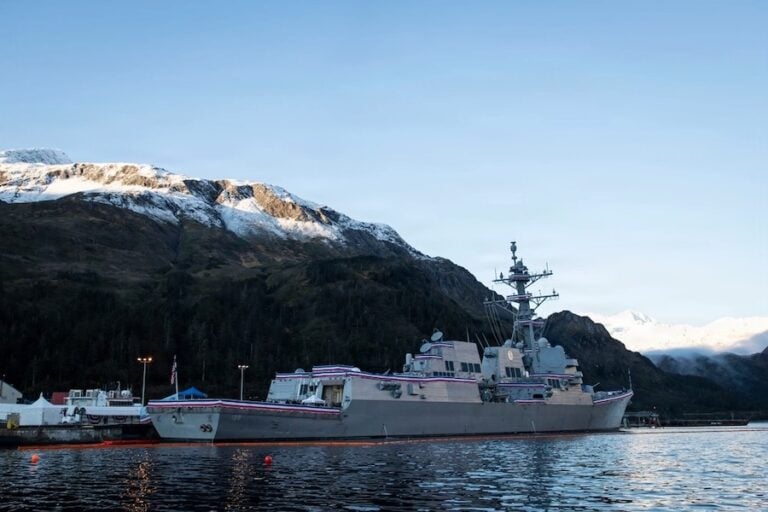
The U.S. Navy and Royal Australian Air Force conducted dual Long-Range Anti-Ship Missile launches. A Royal Australian Navy MH-60R detachment also operated from a U.S. Navy destroyer.
The Republic of Korea Navy deployed its P-8A Poseidon during combined anti-submarine operations. U.S. Army helicopters operated from USS Essex during preparations for an amphibious raid.
An unmanned surface vessel entered the well deck of USS Essex during the exercise. It delivered supplies produced through additive manufacturing.
The Joint Advanced Manufacturing Cell deployed containerized production systems aboard USS Theodore Roosevelt, USS Essex and MV Asterix. The systems supported onboard manufacturing and repair while the ships were underway.
“The network of allies and partners in the region is an asymmetric advantage,” Jablon said. “The work participating nations do at RIMPAC builds the combined and joint ability to deter conflict and supports all nations in exercising their sovereign rights and freedoms in the maritime domain.”
The Philippine Coast Guard, Fiji, Greece, Guatemala, Poland and Spain joined RIMPAC for the first time. Partner nations also held senior maritime, air, logistics and anti-submarine command positions.
“Interoperability is something we must continue to develop,” said Japan Maritime Self-Defense Force Rear Adm. Takuo Kobayashi. “RIMPAC brings together allies and partners committed to strengthening security and stability across the region.”
“By training together in these complex scenarios, nations improve readiness, refine warfighting skills, and build the teamwork needed to operate effectively side by side,” said Republic of Korea Navy Rear Adm. In-ho Kim. RIMPAC has been held since 1971.