
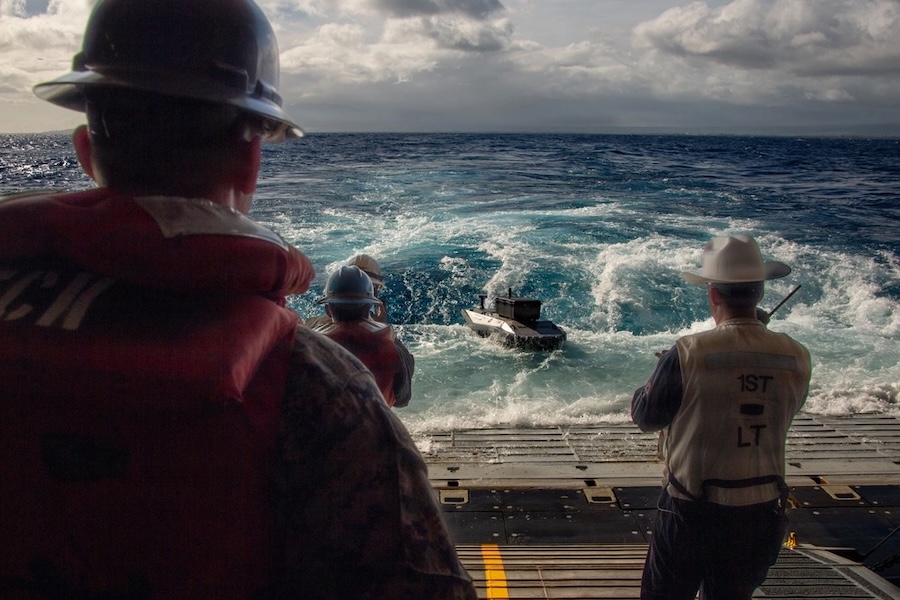
The vessel transported parts for the amphibious assault ship’s 3D-printing program. It also collected 3D-printed drones manufactured aboard the Wasp-class ship.
“This delivery is a proof of concept for unmanned vehicles,” said Gunnery Sgt. Samuel Maragini, 3D Printing Team NCOIC with Combat Logistics Battalion, 13th Marine Expeditionary Unit. “This is the first time this has been done on a ship like this.”
The demonstration connected onboard manufacturing with unmanned maritime logistics. The Navy said the approach could shorten supply times and reduce dependence on ports.
Producing replacement parts aboard ship could support repairs during extended operations. Unmanned delivery vessels could then move those components between ships at sea.
Essex normally uses its well deck for landing craft, amphibious vehicles and logistics vessels. The trial showed that existing amphibious ships could also support emerging unmanned systems.
The Navy used the event to assess how uncrewed vessels could sustain forces across large maritime areas. Future applications could reduce personnel risk and support ships operating far from port.
“It’s showing that an unmanned vehicle could be used to supplement supply chains,” Maragini said. The demonstration also supported wider Navy and Marine Corps work on unmanned platforms.
Unmanned and remotely operated vessels can extend the reach of sensors aboard crewed platforms. The Navy said those systems could increase capacity across multinational maritime forces.
RIMPAC 2026 involves 29 nations and 40 surface ships around the Hawaiian Islands. Three submarines, more than 150 aircraft and about 25,000 personnel are also participating.
The maritime exercise runs from June 27 through August 1. The 2026 event is the 30th RIMPAC since the series began in 1971.
Participating forces are conducting combined operations across air, land and maritime domains. The training is intended to strengthen cooperation and support maritime security in the Indo-Pacific.