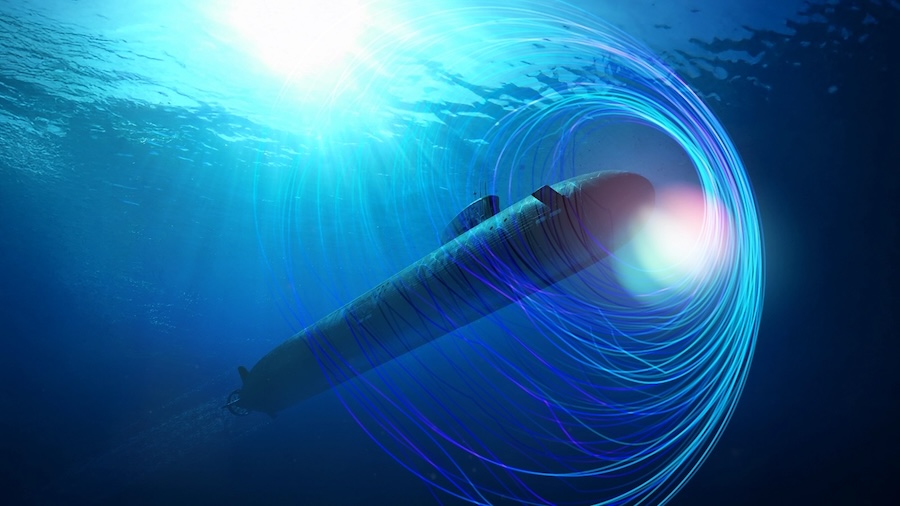
Under AUKUS Pillar 2, Britain will invest in weapons and sensor payloads for underwater drones. The government identifies the effort as its signature project under that part of the trilateral partnership.
AUKUS-developed payloads will also support Britain’s planned Hybrid Navy. By 2030, the Royal Navy aims to introduce its first large autonomous vessels, including a prototype uncrewed missile platform and extra-large uncrewed underwater vehicles.
Artificial intelligence will form another part of Britain’s cooperation through AUKUS. Separately, the plan allocates £20 million to AI for underwater dominance, providing greater capacity to process the large volumes of data generated by maritime surveillance.
Nuclear-powered attack submarines remain a major element of the partnership. Britain plans to build up to 12 conventionally armed SSN-AUKUS boats, while Australia will construct the same class and steel is scheduled to be cut on the first British submarine in 2027.
The government will invest £6 billion between 2025/26 and 2029/30 to expand and transform submarine manufacturing. The programme is intended to increase production capacity and productivity while supporting Britain’s AUKUS commitments.
Reactor-core manufacturing at Raynesway in Derby will also be expanded for next-generation attack submarines operated by the British and Australian navies. The investment establishes a shared industrial foundation for one of the partnership’s largest long-term programmes.
The wider Defence Nuclear Enterprise is expected to account for about 20% to 25% of the Ministry of Defence budget. The plan lists £47 billion for submarines, maintenance and infrastructure from 2026/27 to 2029/30, although that figure covers the entire submarine enterprise rather than AUKUS alone.
Britain’s nuclear sector includes more than 6,000 UK-based suppliers, with skilled employment expected to reach 65,000 by 2030. More than £290 million will be invested in nuclear skills to support the workforce required for submarine and infrastructure programmes.
Industrial delivery will involve the expanded Submarine Production Alliance, which brings together the Ministry of Defence, BAE Systems, Rolls-Royce and Babcock. Its work will focus on both the Dreadnought ballistic-missile submarine and SSN-AUKUS programmes.
Supporting infrastructure will include a multi-decade, multi-billion-pound modernisation of HM Naval Base Clyde, three floating docks at Faslane and dock upgrades at Devonport. These facilities are intended to support submarine construction, maintenance and long-term Royal Navy operations.
The plan describes the United States as Britain’s most important defence and security partner, while Australia will share the SSN-AUKUS design. Together, the submarine, autonomous-systems and AI programmes position AUKUS as a broader framework for military technology and industrial cooperation.