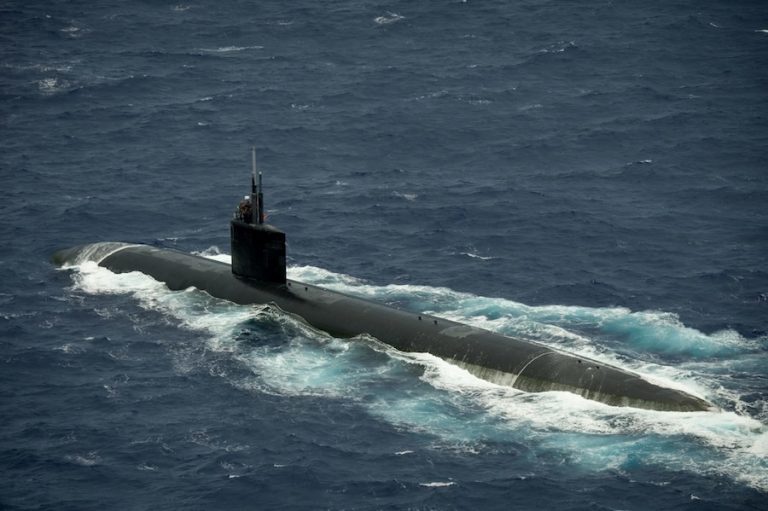
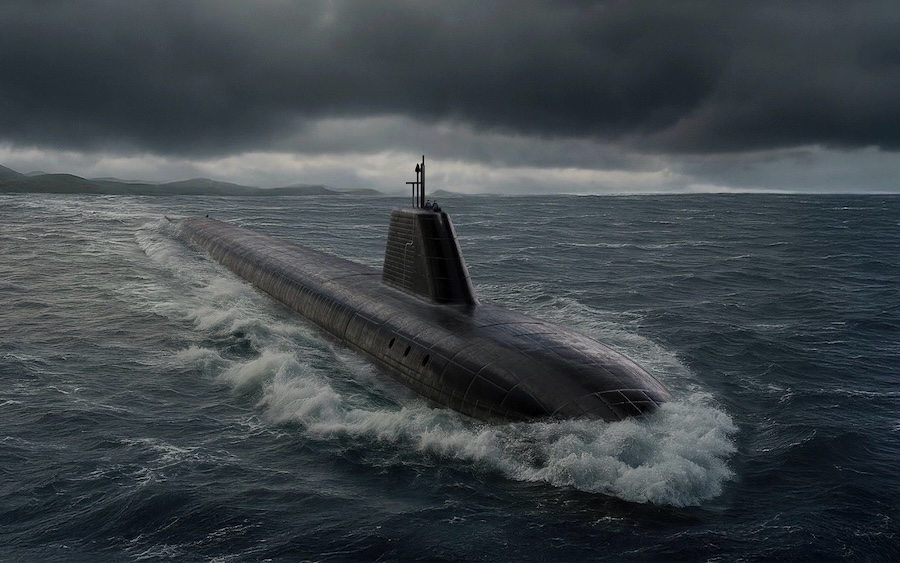
The Ministry of Defence separately estimates that Dreadnought will support more than 30,000 UK jobs at its peak and describes it as the country’s largest engineering project. The four submarines will replace the Barrow-built Vanguard-class fleet from the early 2030s.
Dreadnought is being delivered through an alliance comprising the Ministry of Defence, BAE Systems and Rolls-Royce. The alliance described the boats as the “biggest, most powerful and technically advanced submarines ever built for the Royal Navy”.
At more than 150 metres long, they will be the largest submarines operated by the Royal Navy. Each boat will carry a crew of 130 and be capable of launching Trident II D5 ballistic missiles.
The programme is intended to preserve Britain’s Continuous At Sea Deterrence, under which a nuclear-armed submarine remains on patrol at all times. It sits at the centre of a wider government effort to renew the country’s independent nuclear deterrent.
BAE Systems’ Barrow-in-Furness site employs approximately 13,500 people and builds all of Britain’s nuclear-powered submarines. The government’s nuclear deterrent “triple-lock” commits it to building all four Dreadnought boats at Barrow, maintaining continuous deterrence patrols and delivering future upgrades.
The programme draws on a wider industrial network that includes Rolls-Royce Submarines, whose 4,000 personnel develop and manufacture nuclear reactor cores. Sheffield Forgemasters employs about 700 people producing large, high-integrity steel castings and forgings used in those reactors.
HMNB Devonport and Babcock’s Devonport Royal Dockyard employ around 8,000 people across co-located Royal Navy and industrial operations. Their work includes deep submarine maintenance, refuelling, defuelling and through-life support.
The broader Defence Nuclear Enterprise currently supports an estimated 47,600 jobs and expects workforce demand to reach around 65,000 by 2030. Its supply chain includes more than 6,000 British companies, with investment and employment concentrated particularly in north-west and south-west England and western Scotland.
Defence nuclear employees earn an average wage premium of approximately 20% over the national average, according to a Ministry of Defence survey of the main industry organisations. The government is also backing regional investment through initiatives including the £200 million Barrow Transformation Fund.
Meeting the sector’s projected labour requirements will require a substantial expansion of specialist training. The government and its partners aim to double defence nuclear apprentice and graduate intakes, creating 22,000 apprenticeships and 9,000 graduate positions over the next decade.
The Ministry of Defence is also recapitalising infrastructure, modernising naval bases and manufacturing processes, and expanding industrial capacity. The investment is intended to support the higher submarine production rate set out in the 2025 Strategic Defence Review.
Dreadnought is being developed alongside a £15 billion investment during the current Parliament in Britain’s sovereign nuclear warhead programme, which supports more than 9,000 jobs. That work includes Astraea, the replacement for the Mk4A warhead, which will retain compatibility with the Trident II D5 missile.
The Vanguard class entered service from 1994 and remains the operational platform for Britain’s submarine-based deterrent. Dreadnought’s entry into service in the 2030s is intended to sustain that capability for the next generation.