
The trials will take place at the Santa Margarida military training area under controlled and operationally relevant conditions. The systems will be assessed across realistic and contested scenarios designed to examine their performance through the full mission cycle.
The five finalists were selected after the first stage of the competition attracted more than 140 expressions of interest from organisations across Europe. EDA assessed submissions against administrative, technical and award criteria, including technological maturity, operational relevance, safety and demonstration feasibility.
Germany-based Helsing, Dutch company Destinus, Slovenia’s C-Astral, Portugal’s UAVision and Greece’s Spirit Aeronautical Systems submitted the five highest-ranked proposals. Each company will receive a €30,000 Stage 1 prize before advancing to operational testing.
Five additional companies placed among the competition’s top ten entries. They are Denmark’s Renegade UxS and Robotto, Germany’s Cerberon Defence Systems, France’s THALES LAS and Greece’s ALTUS LSA.
Each of those companies will receive a €10,000 Stage 1 prize. They will not, however, advance to the field-testing phase announced by EDA.
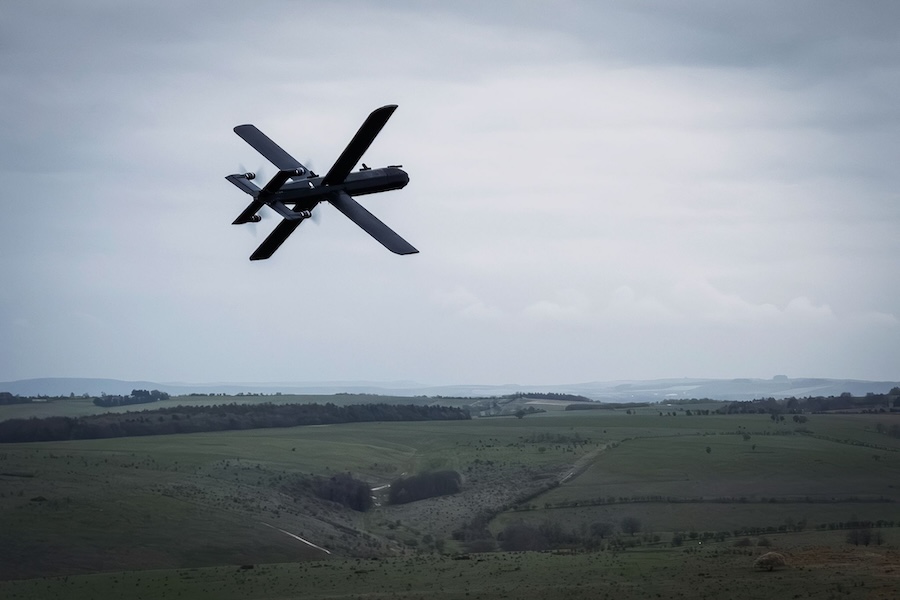
The five finalists will compete for a total of €1.8 million in prizes during Stage 2. Their loitering munitions will be evaluated by military users from EU Member States during the OPEX26 experimentation campaign.
The assessment will examine more than whether individual technologies function as intended. Military users will compare performance, resilience under operational conditions and effectiveness throughout the mission cycle using common scenarios.
EDA designed Sentinel Strike as a two-stage competition combining technical evaluation with operational experimentation. The approach allows competing technologies to be assessed under comparable conditions rather than relying solely on written proposals.
The agency said this model can provide Member States with operational data on emerging technologies more quickly. It is also intended to support future decisions on capability development by exposing systems to military users before investment decisions are made.
EDA stressed that selection for Stage 2 does not mean the systems are ready for acquisition or deployment. Sentinel Strike is not a procurement competition and does not guarantee defence contracts to the eventual winners.
Instead, the programme is intended to generate evidence that defence ministries can use when considering future loitering munition capabilities. The testing also seeks to develop broader lessons on how rapidly evolving defence technologies should be evaluated.
Recent conflicts have accelerated the development and battlefield use of loitering munitions. EDA said technological changes and operational adaptations are increasingly moving faster than traditional defence development cycles.
The Portugal trials will provide a common operational environment for comparing the five selected systems. The overall winners of the Sentinel Strike Challenge are expected to be announced in 2027.
Source: European Defence Agency (EDA).