The university, known as WAT, will manage training for Polish technicians, military personnel and employees of Military Aircraft Works No. 1, or WZL-1. It will also prepare future engineering personnel for the armed forces.
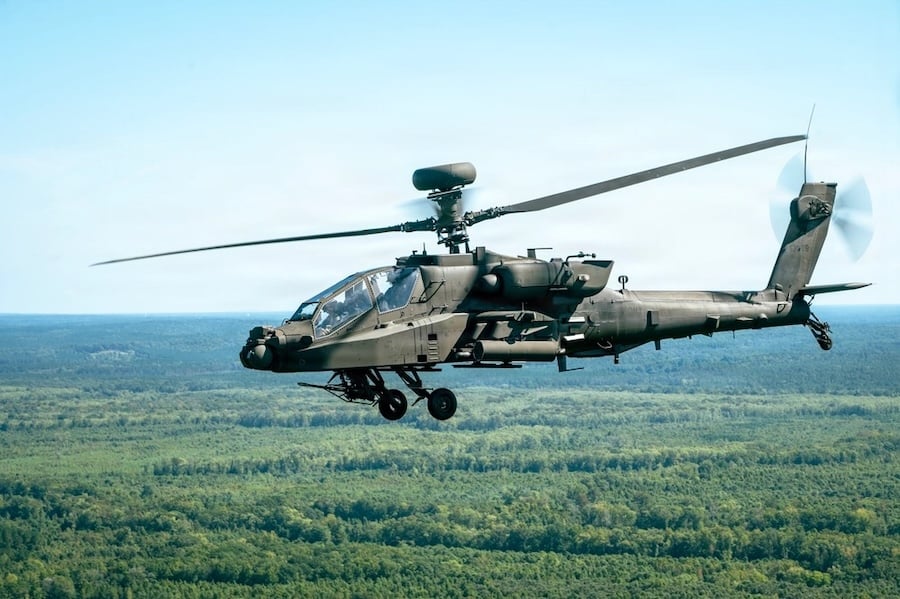
“WAT’s expertise in training well qualified technicians will assist the Polish Armed Forces goal of in-country sustainment of the T700/CT7 engine fleet and help equip Poland’s military personnel and mechanics with the necessary skills to maintain and support these engines to ensure readiness of the Polish Armed Forces helicopters,” said Shawn Warren, GE Aerospace’s vice president of Defense & Systems. The agreement places engine training within Poland’s preparations to support its Boeing AH-64E Apache Guardian fleet.
WAT plans to establish facilities for helicopter training and work on composite structures. Its contribution will include training infrastructure, instructors and equipment for practical instruction.
“At our university, we will establish the Boeing AH-64E Apache Guardian Helicopter Training Center and the Advanced Composite Structures Laboratory,” said Brig. Gen. Prof. Przemysław Wachulak, WAT’s rector-commandant. “As a certified training center, we will provide the infrastructure and experienced training instructors.”
“We will train engineers and technicians for the needs of military aviation,” Wachulak said. “For theoretical and practical training, we will use a virtual simulator, a helicopter, and a training engine.”
The university’s future responsibilities will also include certifying and maintaining the flight training process under European Military Airworthiness Requirements, according to Wachulak. He said the agreements extend WAT’s established engineering and aviation education into training linked directly to modern helicopter deployment.
The agreement follows a separate memorandum of understanding signed by GE Aerospace and WAT in September 2025. That document covers potential cooperation on training for the F110-GE-129 engine used in Boeing’s F-15EX fighter and the establishment of an Aircraft Engine Additive Manufacturing Laboratory at the university.
The T700/CT7 family powers 15 helicopter and fixed-wing aircraft types for more than 130 customers in over 50 countries. More than 25,000 engines have been delivered, with the family accumulating over 130 million flight hours, according to GE Aerospace.
In Europe, more than 1,300 T700/CT7 engines have been delivered or are on order for 20 military and commercial customers. The family supports missions including transport, attack, medical evacuation, air rescue, firefighting, special operations and maritime patrol.
GE Aerospace’s Polish operations span more than 30 years and employ over 2,300 people across five locations. WAT was established in 1951 and operates under the supervision of Poland’s minister of national defense.