Both concepts form part of a broader plan to reduce reliance on the United States and other foreign suppliers. Israel also aims to expand the design and production capacity of its domestic defense industry.
“I can envision Israel producing its own stealth fighter aircraft,” a senior Israeli official told reporters in Washington. “If the assessment is that one day others may stop supplying these systems, then we should begin producing them ourselves.”
“The goal is ten years from now,” the official said. He added that Israel also planned to develop unmanned combat aircraft during that period.
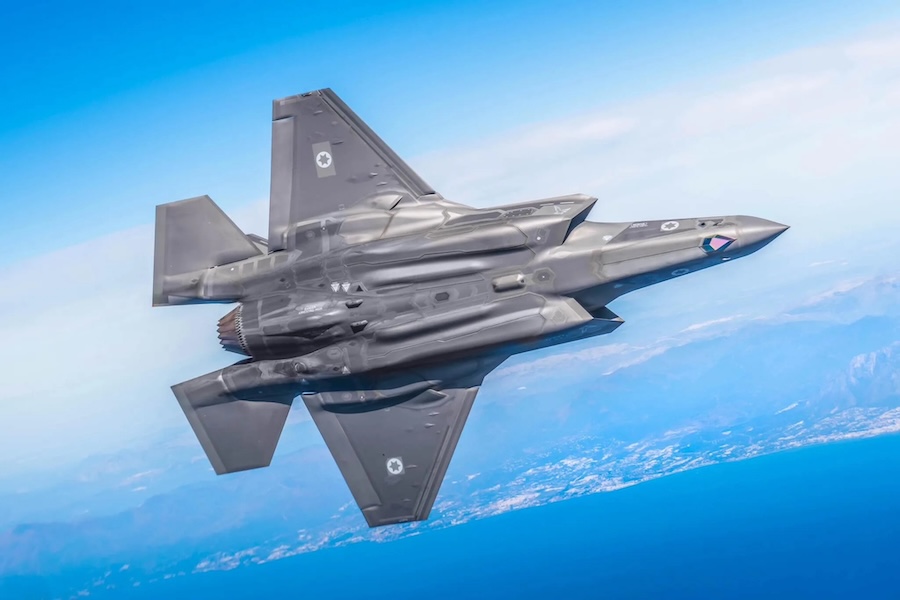
The proposed Israeli fighter could draw on design concepts associated with the F-35. The available reporting does not indicate that a formal development program has been launched.
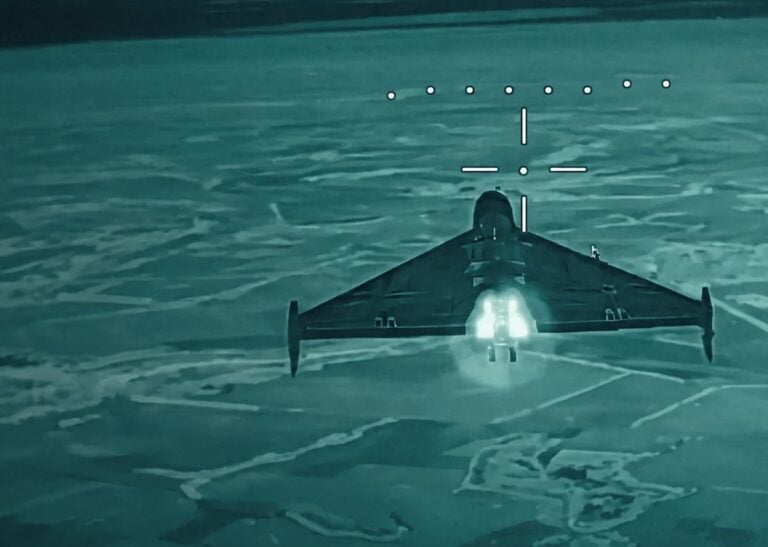
The autonomous aircraft would be a separate platform equipped with advanced sensors and precision-strike capabilities. Artificial intelligence would act as its onboard decision-making system instead of a pilot.
The aircraft could be connected to networked combat systems and deployed as an unmanned wingman. Potential roles would include intelligence collection, electronic warfare, reconnaissance and direct combat.
Such systems could undertake high-risk missions without exposing pilots to hostile fire. They could also extend the range and combat capacity of conventional fighter formations.
Israeli assessments remain at an early stage, according to the additional reporting. The government has not ruled out international cooperation in developing the future aircraft concepts.
Israel currently operates 48 F-35 fighters from an initial order for 50 aircraft. It placed an additional order for 50 F-35s in 2024, with initial deliveries expected by 2031.
The long-term plan could eventually create a mixed force of imported and domestically produced aircraft. That force could combine crewed stealth fighters with autonomous combat platforms.
The unmanned concept resembles the U.S. Air Force’s Collaborative Combat Aircraft program. CCA platforms are designed to support crewed fighters, including the F-35 and Boeing’s future F-47.
Pilots could direct several autonomous aircraft to scout ahead, engage targets or enter heavily defended areas. The model is intended to distribute combat power while reducing risks to aircrews.
The U.S. Air Force informed Congress in May that it planned to acquire more than 150 Collaborative Combat Aircraft by fiscal 2031. The service has placed the program among its leading modernization priorities.
Col. Yishai Cohen, head of the Integration Department at Israel’s Directorate of Defense Research and Development, declined to confirm whether Israel was examining such aircraft. “I think it takes us back to the question about surprises for the next war” against Iran, he said.
Prime Minister Benjamin Netanyahu has outlined a long-term policy to reduce Israel’s dependence on U.S. military support. The strategy has so far focused primarily on artillery, missiles, electronic warfare and cyber systems.
Israel has previous experience developing domestically designed combat aircraft. Israel Aircraft Industries, now Israel Aerospace Industries, developed the Lavi before the program was canceled in 1987 for budgetary and political reasons.
IAI also manufactured the Kfir fighter for the Israeli Air Force until its retirement from domestic service in the mid-1990s. The company continues to support foreign Kfir operators, including Sri Lanka.
A new stealth fighter program would require sustained funding, industrial capacity and long-term production planning. Cohen said a domestic initiative covering capabilities such as CCA platforms “needs a budget allocated.”
“There is a huge race in all countries to achieve those capabilities,” Cohen said. “So for us, to be able to develop and produce in Israel, because we want to be independent and at scale, that’s something that was not necessarily deep in the DNA of MAFAT.”
“Now, for my colleagues and me, that is a main lesson learned – we need to not only be in charge of development, but then scale and produce it independently in Israel for the needs of the IDF,” he said. Cohen said the ministry was seeking to retain key technologies regardless of developments affecting overseas suppliers.
Source: The Jerusalem Post.