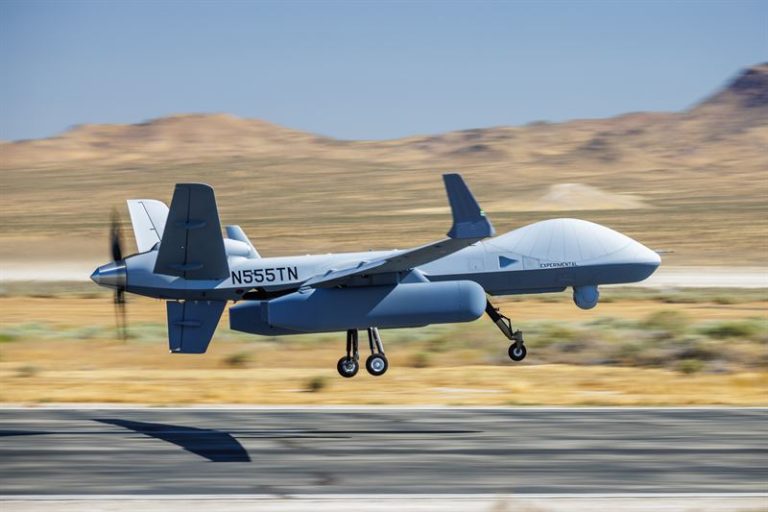
The acquisition is being conducted through a Foreign Military Sale with the U.S. Air Force. The package also includes Ground Control Stations for operating the aircraft.
The order extends a relationship between Italy and General Atomics that has lasted more than two decades. Italian MQ-9As support intelligence, surveillance and reconnaissance missions over national territory and the Mediterranean, as well as NATO operations.
“Italy has been a very important partner for GA-ASI for more than 20 years,” said David R. Alexander, president of General Atomics Aeronautical Systems. “The Italian Air Force has continued to be a leader in the utilization of MQ-9A to support a wide range of Intelligence, Surveillance, and Reconnaissance (ISR) missions in Italy, over the Mediterranean, and in support of NATO operations.”
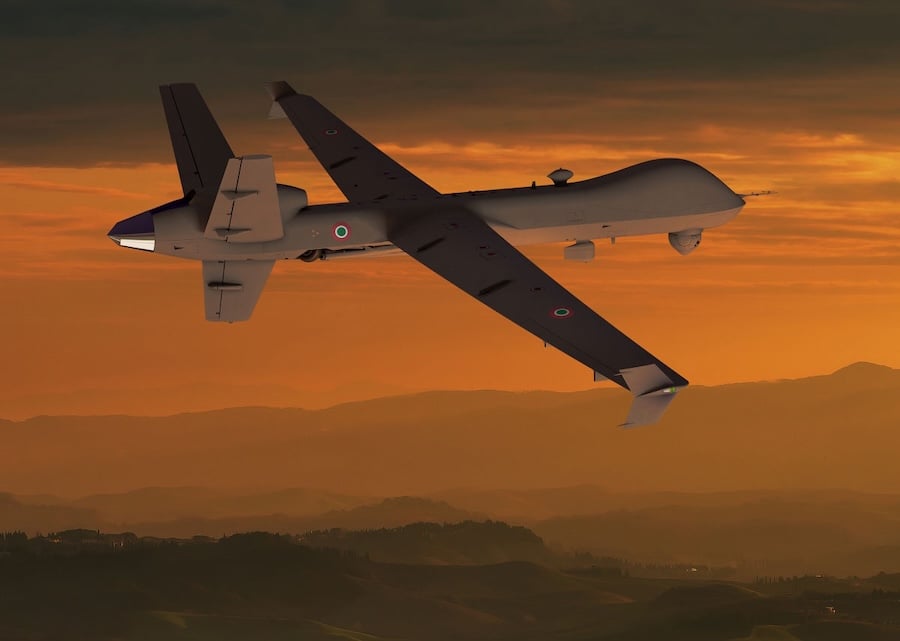
The MQ-9A Block 5 can remain airborne for up to 26 hours and operate at altitudes of up to 45,000 feet, or 13,716 meters. It has a payload capacity of 4,600 pounds, or 2,087 kilograms, including 3,750 pounds of external stores.
Its surveillance package can provide full-motion video, synthetic aperture radar imagery and moving-target indication. The aircraft also supports maritime radar missions and automatic takeoff and landing.
The Block 5 uses a fault-tolerant flight-control system and a triple-redundant avionics architecture. General Atomics said the design was engineered to meet or exceed the reliability standards applied to crewed aircraft.
The two aircraft will add capacity to Italy’s existing MQ-9A fleet without introducing a new unmanned platform. Their delivery will also extend the Italian Air Force’s ability to conduct persistent surveillance across domestic, Mediterranean and NATO missions.